Is CM Dhami Leading Uttarakhand's First 'Uniform Civil Code Day' Celebrations?
Synopsis
Uttarakhand's inaugural 'Uniform Civil Code Day' was celebrated with fervor, as CM Dhami lauded its significance for social justice and equality. The event showcased the UCC's positive impact on women's rights and the state's legislative progress, marking a historic moment in the region.
Key Takeaways
Uttarakhand celebrates its first 'Uniform Civil Code Day' CM Dhami emphasizes social justice and equality UCC abolishes regressive practices affecting women Legislative journey of the UCC concluded successfully Positive impact on marriage registrations and women's empowerment
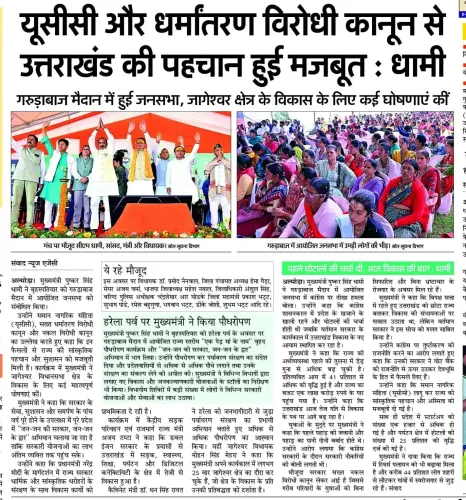
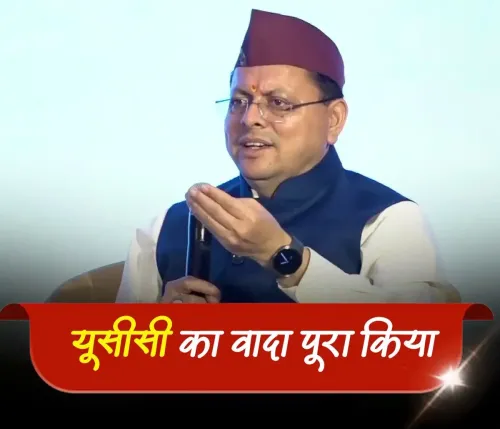
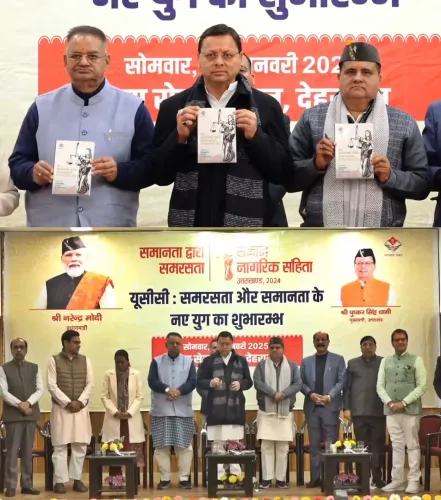
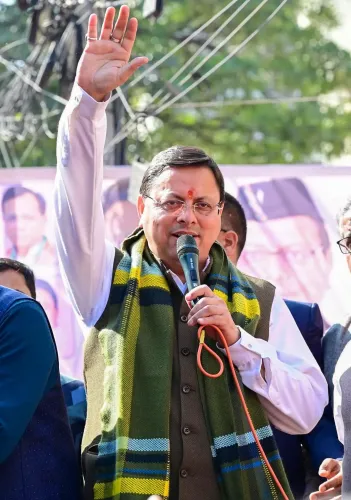
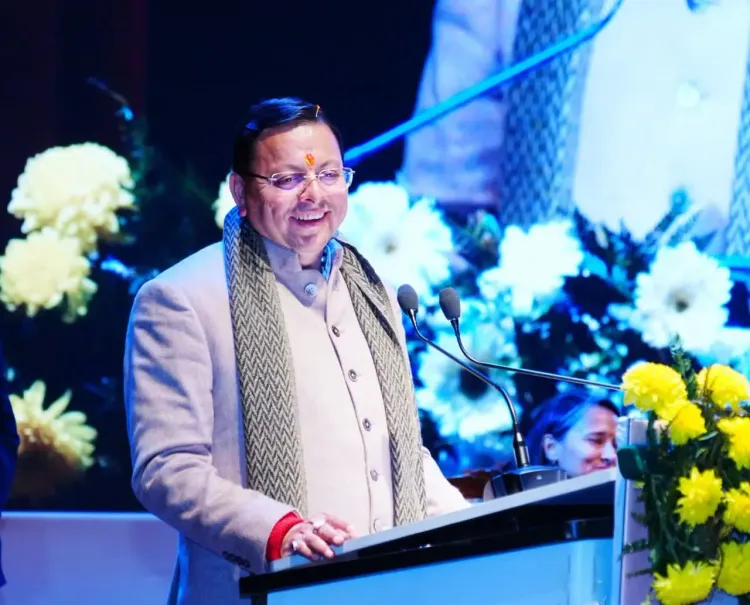
Dehradun, Jan 27 (NationPress) Uttarakhand has celebrated its inaugural 'Uniform Civil Code Day' on Tuesday, marking a pivotal moment in the state's journey. The event took place at the Himalayan Cultural Centre in Garhi Cantt, where Chief Minister Pushkar Singh Dhami addressed attendees and recognized the officials instrumental in crafting and executing the Uniform Civil Code (UCC).
The Chief Minister began his remarks by declaring the day a “golden chapter” in Uttarakhand’s narrative, recognizing this landmark initiative as a significant stride toward fostering social justice, equality, and constitutional values through the UCC.
CM Dhami underscored that the code reflects the Sanatan culture, which has consistently upheld the values of equality and justice, invoking Lord Shri Krishna’s teachings in the Bhagavad Gita: “I am equal to all living beings; I harbour neither hatred nor favouritism.”
He articulated that the UCC's execution aligns with the aspirations of Dr. B.R. Ambedkar and the authors of the Indian Constitution, who integrated the code within Article 44 of the directive principles of State Policy.
Furthermore, he pointed out that the UCC was part of the BJP’s election manifesto in the lead-up to the 2022 Uttarakhand Assembly elections, with strong backing from Prime Minister Narendra Modi.
Dhami elaborated on the legislative timeline: The UCC Bill was approved by the State Assembly on February 7, 2024, and received presidential assent on March 11, 2024. After fulfilling all necessary legal steps, the UCC was officially implemented on January 27, 2025.
The Chief Minister identified one of the principal benefits of the UCC as the empowerment of women, especially Muslim women in Uttarakhand. The UCC has abolished practices including halala, iddat, polygamy, child marriage, and triple talaq.
He proudly shared that since the UCC's rollout, there have been no reported cases of polygamy or halala in the state, with Muslim women embracing the changes. Dhami emphasized that outdated social practices that perpetuated inequality have no place in a modern, just society.
The Chief Minister reiterated that the UCC is not aimed at any specific religion but is a measure to eradicate social evils and promote unity through equality.
Under the UCC, uniform regulations govern marriage, divorce, inheritance, and property rights for all religions. Importantly, it guarantees that children, irrespective of their parentage, have equal rights to inheritance.
The UCC also stipulates the registration of live-in relationships, providing safeguards for the rights, dignity, and safety of those involved, and ensuring that children born from such arrangements are recognized as legitimate.
Dhami expressed satisfaction with the successful launch of the UCC, highlighting a notable rise in marriage registrations. Before the UCC's introduction, Uttarakhand registered an average of just 67 marriages daily; that figure has now surged to over 1,400 registrations per day. More than 30 percent of the state's gram panchayats have achieved 100 percent marriage registration, with over 5 lakh applications processed at a 95 percent resolution rate.
He also discussed recent amendments to the UCC, which incorporate strict measures to nullify marriages where identity is concealed or false information is presented. These amendments also impose severe penalties for fraud or coercion in marriages and live-in arrangements.
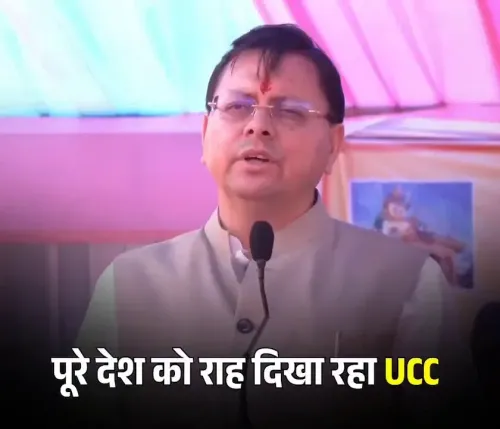
Dhami emphasized that the UCC's implementation is a stride toward national unity.
Referencing leaders like Dr. Syama Prasad Mookerjee and Pandit Deendayal Upadhyaya, who championed the abrogation of Article 370 and the inception of the UCC, the Chief Minister asserted that this law embodies the realization of long-cherished national goals.
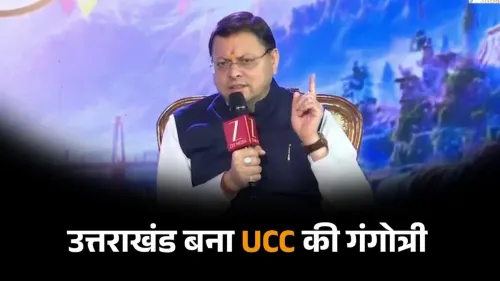
He concluded by noting that just as the River Ganga flows from Uttarakhand to nourish the nation, the UCC's implementation will inspire other regions to adopt similar measures. Dhami also dismissed the myths surrounding the law, particularly those related to domicile status and live-in registrations, affirming that the UCC is designed to safeguard the rights of all citizens.
The event was graced by several dignitaries, including Cabinet Ministers Ganesh Joshi and Dr. Dhan Singh Rawat, MP Naresh Bansal, MLAs, senior government officials, and members of the UCC committee.
Point of View
The implementation of the Uniform Civil Code in Uttarakhand represents a crucial step toward fostering equality and social justice across diverse communities. It reflects a broader commitment to modernizing laws that impact citizens' rights, and its widespread acceptance could set a precedent for other states.
NationPress
19 Sept 2026
Frequently Asked Questions
What is the Uniform Civil Code?
The Uniform Civil Code (UCC) aims to replace personal laws based on the scriptures and customs of each major religious community in India with a common set governing every citizen.
How does the UCC empower women?
The UCC abolishes practices such as polygamy and triple talaq, thus providing women with equal rights in marriage, divorce, and inheritance.
When was the UCC implemented in Uttarakhand?
The UCC was officially implemented on January 27, 2025, after passing through the legislative process.
Is the UCC applicable to all religions?
Yes, the UCC applies uniformly to all religions, ensuring equal rights across personal laws related to marriage, divorce, and inheritance.
What are the benefits of the UCC?
The UCC promotes social justice, equality, and legal uniformity, ensuring that all citizens have the same rights and protections under the law.