Gen Z reshaping India's politics, says VCK chief Thirumavalavan
Synopsis
VCK President Thirumavalavan's warning to India's political class is blunt: Gen Z doesn't need a party, a union, or a manifesto to force political outcomes. The Dharmendra Pradhan resignation, he argues, is proof that decentralised, digital-first youth mobilisation can move faster than any established opposition — and no party yet knows how to predict or contain it.
Key Takeaways
Thirumavalavan described India's Gen Z as a powerful and unpredictable political force at a programme in Chennai on 2 August .
He cited the resignation of former Union Minister Dharmendra Pradhan as evidence of youth-led digital protest forcing political action.
Thirumavalavan argued that decentralised, social-media-driven mobilisation can produce results faster than conventional party-led protests.
Traditional parties including the Congress and Communist parties face an adaptation challenge as Gen Z movements follow no fixed ideological pattern.
The VCK chief warned that political organisations must understand Gen Z's aspirations or risk being outpaced in shaping electoral politics and public discourse .
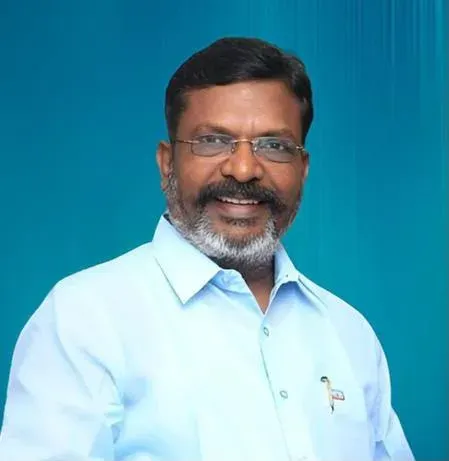
Viduthalai Chiruthaigal Katchi (VCK) President Thol. Thirumavalavan on Sunday, 2 August declared that India's Gen Z has emerged as a powerful and unpredictable political force, whose unconventional methods of mobilisation are challenging traditional party structures and compelling governments to act. Speaking at a public programme in Chennai, Thirumavalavan argued that the younger generation's approach to protest and advocacy was fundamentally different from anything political establishments had previously encountered.
A New Kind of Political Force
Thirumavalavan said it was becoming increasingly difficult for political parties and leaders to anticipate what young people wanted or the scale of social and political change they expected. He noted that the attitudes, priorities, and methods of Gen Z were markedly different from those associated with conventional political movements led by established parties or student organisations.
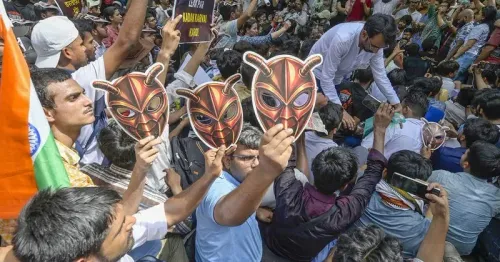
Unlike earlier generations that depended on party structures, student unions, and hierarchical leadership to organise protests, today's youth could communicate, mobilise, and amplify issues almost instantaneously through digital networks and social media platforms. This decentralised model, he argued, gave youth-led campaigns the capacity to build momentum rapidly and take political establishments by surprise.
Pradhan Resignation Cited as Evidence
The VCK chief pointed to the resignation of former Union Minister Dharmendra Pradhan as a concrete example of Gen Z's political impact. Thirumavalavan claimed that sustained pressure generated by young activists had played a significant role in forcing that political action. He argued that had the issue been pursued solely through conventional party-led demonstrations, such a swift response might not have materialised.
This comes amid a broader pattern of youth-led campaigns — particularly those driven through social media — that have succeeded in putting pressure on the Union government in recent months. Notably, these movements have not followed familiar ideological or organisational templates, making them harder for traditional parties to co-opt or counter.
Traditional Parties Facing an Adaptation Challenge
Thirumavalavan acknowledged that traditional opposition parties, including the Indian National Congress and the Communist parties, had organised several protests on major public issues over the years. However, he contended that the latest generation of protesters had demonstrated that decentralised, online-driven agitation could sometimes produce political results more quickly than established methods.
The VCK President said these emerging forms of political participation were capable of unsettling governments precisely because they did not follow familiar ideological or organisational patterns — making it difficult for conventional parties to predict the direction in which youth sentiment would move.
What Political Parties Must Do Next
Thirumavalavan stressed that political organisations across the spectrum would have to seriously understand the aspirations and evolving methods of the younger generation. He said Gen Z was poised to increasingly influence public discourse, electoral politics, and the broader political direction of the country in the years ahead.
As digital-native generations grow into voting blocs, India's political parties face a structural reckoning: adapt their communication, outreach, and responsiveness — or risk being outmanoeuvred by movements that need no central leadership to make an impact.
Point of View
They also succeed without accountability to any party platform, making their demands harder to negotiate or institutionalise. India's established left and regional parties, including the VCK itself, face a paradox — they must engage this force without absorbing it, or risk irrelevance among the very demographic that will dominate the electorate within a decade.
NationPress
17 Sept 2026
Frequently Asked Questions
What did VCK chief Thirumavalavan say about Gen Z and Indian politics?
Thirumavalavan said India's Gen Z has emerged as a powerful and unpredictable political force whose decentralised, digital-first methods of protest are challenging traditional party structures and compelling governments to respond. He made these remarks at a public programme in Chennai on 2 August.
Why did Thirumavalavan cite Dharmendra Pradhan's resignation?
He cited the resignation of former Union Minister Dharmendra Pradhan as evidence that sustained pressure from young activists could force swift political action — faster than conventional party-led demonstrations might have achieved.
How is Gen Z's political mobilisation different from earlier generations?
Unlike earlier generations that relied on political parties, student unions, and hierarchical leadership to organise protests, Gen Z uses social media and digital platforms to communicate, mobilise, and amplify issues almost instantaneously, without needing a central organisational structure.
Which traditional parties did Thirumavalavan reference?
He referenced the Indian National Congress and the Communist parties as examples of established political forces that have organised protests on major issues over the years, but argued that Gen Z's decentralised model has sometimes proven faster and more effective.
What does Thirumavalavan say political parties must do in response?
He said political organisations must seriously understand the aspirations and evolving methods of Gen Z, warning that the younger generation is poised to increasingly influence public discourse, electoral politics, and the broader political direction of India in the years ahead.