Pradhan slams Rahul Gandhi over 'regime change' protests
Synopsis
Union Education Minister Dharmendra Pradhan on October 16, 2026, accused the Indian National Congress and Rahul Gandhi of using student protests as cover for a foreign-backed 'regime change' conspiracy, invoking Bangladesh's 2024 upheaval and the 1975 Emergency to argue that Congress has a historic record of subverting democracy.
Key Takeaways
Dharmendra Pradhan called the ongoing student protests a 'premeditated conspiracy' to destabilise India's political order, citing open 'Regime Change' slogans.
He drew a direct link to Bangladesh's August 2024 government change driven by student protests, framing the Indian protests as inspired by foreign precedent.
Pradhan accused Rahul Gandhi of repeatedly insulting electoral mandates and sowing distrust in democratic institutions when electoral results go against the Congress.
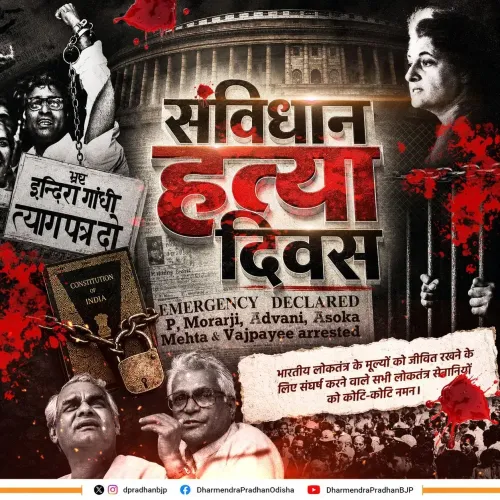
The post invokes the 1975–77 Emergency to argue that undermining democracy is a foundational Congress trait, not a new development.
The minister personally condemned Gandhi's approach as 'deeply shameful' and called it a 'hateful attitude towards democracy.' The BJP's framing — linking domestic protests to foreign forces and Bangladesh — represents a newer evolution of its long-running anti-Emergency rhetorical strategy against Congress.
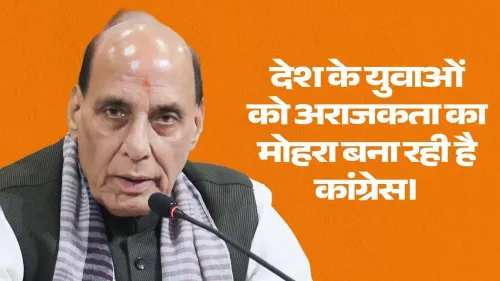
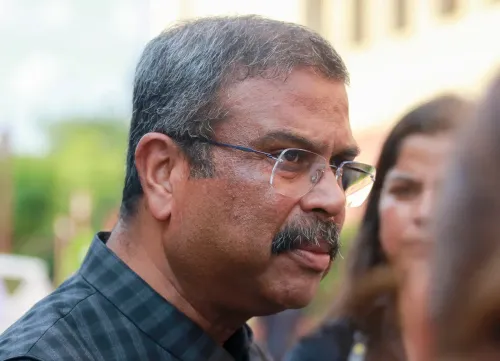
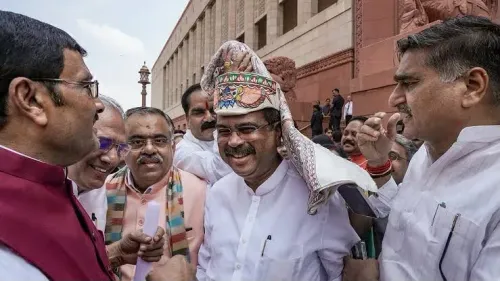
Student demonstrations invoking Bangladesh's 2024 upheaval as a template for political change in India have drawn a sharp broadside from Union Education Minister Dharmendra Pradhan, who on Friday, October 16, 2026, accused the Indian National Congress and Rahul Gandhi of orchestrating what he called a deliberate conspiracy to spread anarchy under the cover of student grievances.
The 'regime change' charge and the Bangladesh comparison
Pradhan's post, written in Hindi, opens on the claim that the true character of the ongoing protests — launched, he says, in the name of national interest, systemic reform, and student welfare — is now plain for all to see. The trigger, he argues, is the open invocation of 'Regime Change' as a goal and the drawing of explicit inspiration from Bangladesh, where student-led street pressure toppled a government in August 2024. He describes this as a 'sochi-samjhi saazish' — 'a premeditated conspiracy' — to destabilise India's political order with foreign backing.
The minister's framing is pointed: those who dream of capturing power 'on the strength of foreign forces,' he writes, should understand that in India, political transition happens only through democratic process. The Indian public, he adds, will never accept an anti-democratic route to power.
Hundred electoral defeats and a pattern of disrespecting mandates
The post then pivots to a direct attack on Opposition Leader Rahul Gandhi, tagging both him and the Indian National Congress. Pradhan dubs Gandhi a 'leader of the opposition who has racked up a century of defeats,' a reference to Gandhi's string of electoral losses across multiple contests. He accuses Gandhi of repeatedly insulting the public's electoral mandate and, when electoral outcomes do not go the Congress's way, of deliberately sowing distrust in democratic institutions while disrupting daily life for political gain.
Pradhan connects this, explicitly, to what he calls a deeper 'Congress mentality' — invoking the 1975–77 Emergency imposed by Indira Gandhi's government, during which fundamental rights were suspended and opposition leaders jailed. He argues that Gandhi, who famously carries a copy of the Constitution during protests, is himself anti-constitutional in practice, and that the public has rejected him repeatedly on exactly those grounds.
BJP's recurring playbook: Emergency, Bangladesh, and foreign hands
The post fits a well-established BJP rhetorical pattern: framing opposition-aligned street movements not as expressions of policy disagreement but as existential threats to constitutional order, backed by foreign interests. The Bangladesh reference is relatively new to this template — the August 2024 fall of Sheikh Hasina's government after weeks of student agitation created a vivid regional precedent that ruling-party leaders have since used to question any student-led political movement in India. The 1975 Emergency reference, by contrast, is the BJP's oldest and most reliable counter-narrative against Congress claims of being democracy's guardian.
Pradhan closes with an unusually blunt personal rebuke: 'Rahul Gandhi ji, loktantra ke prati aapka yeh nafratti ravaiyya behad sharmnaak hai!' — 'Rahul Gandhi, your hateful attitude towards democracy is deeply shameful!'
Whether the student protests Pradhan references escalate further — or whether they find a platform in the approaching winter session of Parliament — will determine how long this particular exchange stays at the centre of India's political conversation.
Point of View
Giving the ruling party a vivid, recent regional example to deploy whenever protests acquire political momentum. By framing Congress's electoral defeats as evidence of public rejection of 'anti-democratic' behaviour — rather than the party's own organisational weaknesses — BJP leaders like Pradhan are simultaneously defending their mandate and tightening the narrative around Gandhi's repeated personal losses. The Emergency reference grounds the current attack in a 50-year-old wound, ensuring that any Congress counter on democratic credentials carries that historical liability.
NationPress
16 Oct 2026
Frequently Asked Questions
Why is Dharmendra Pradhan comparing India protests to Bangladesh?
Pradhan argues that protesters openly invoking Bangladesh's 2024 student-led government change as inspiration reveals an intent to destabilise India's political order rather than address genuine student grievances. He frames this Bangladesh comparison as evidence of a foreign-backed 'regime change' agenda.
What did Dharmendra Pradhan say about Rahul Gandhi and the Constitution?
Pradhan said Rahul Gandhi, who publicly carries a copy of the Constitution, is himself 'anti-constitutional' in practice. He accused Gandhi of using constitutional symbolism to mask what he called a consistent pattern of disrespecting electoral mandates and undermining democratic institutions.
What is the '1975 Emergency' connection Pradhan is making?
Pradhan invoked the Emergency imposed by Indira Gandhi's Congress government from 1975 to 1977, during which fundamental rights were suspended and political opponents jailed. He uses it to argue that the Congress party has a deep-rooted history of crushing democratic rights, contradicting the party's current claim to be democracy's defender.
Who is Dharmendra Pradhan and why is he commenting on protests?
Dharmendra Pradhan is India's Union Education Minister and a senior BJP leader. As the minister responsible for education, student-related political protests fall within his policy ambit, and as a senior party figure he frequently leads political messaging targeting the Congress and Rahul Gandhi.
What is the BJP's position on 'regime change' protests in India?
The BJP has consistently characterised opposition-aligned street movements as threats to constitutional order backed by foreign forces. Pradhan's post states explicitly that in India, political change happens only through democratic elections, and that the public will never accept any extra-electoral path to power.