Rahul Gandhi Demands Sacking of Dharmendra Pradhan Over Education Crisis
Synopsis
Congress leader Rahul Gandhi on 23 July 2026 publicly demanded the removal of Education Minister Dharmendra Pradhan, an apology to students, and action against those who allegedly assaulted protesters, accusing the Modi government of destroying India's education system.
Key Takeaways
Rahul Gandhi posted a bilingual attack on 23 July 2026 , holding the Modi government responsible for the 'capture and destruction' of India's education system.
Gandhi made three specific demands: sack Dharmendra Pradhan , apologise to students, and act against those who assaulted them.
The post was pinned to Gandhi's profile, signalling it is a sustained Congress political priority.
The criticism targets the implementation of NEP 2020 and the government's handling of campus unrest and examination controversies.
Gandhi speaks as Leader of the Opposition in Lok Sabha and MP from Rae Bareli , giving the attack institutional weight beyond a routine party statement.
Parliamentary debates on the Education Ministry budget and regulatory bodies such as UGC and NMC are expected to become key arenas for this standoff.
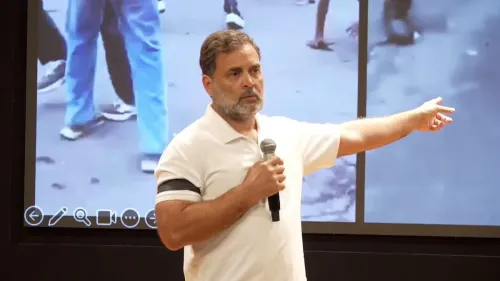
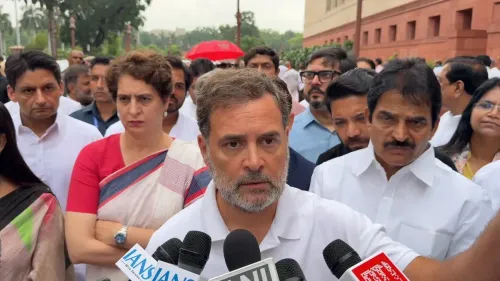
Congress leader and Leader of the Opposition Rahul Gandhi on Thursday, 23 July 2026, launched a sharp attack on the Modi government, holding it directly responsible for what he described as the systematic destruction of India's education system and demanding immediate action in favour of protesting students.
Posting in both English and Hindi on X, Gandhi addressed his remarks pointedly at the government, writing: 'You are the one who has harmed the future of our youth the most. You allowed and encouraged the total capture and destruction of our education system — and protected every person responsible for it.' In Hindi, he added: 'आपने न सिर्फ हमारी education system पर पूरा कब्ज़ा होने और उसे बर्बाद होने दिया, उसे बढ़ावा भी दिया' ('You not only allowed the complete capture and destruction of our education system, you actively promoted it').
Gandhi listed three specific demands on behalf of students: the sacking of Union Education Minister Dharmendra Pradhan, a formal apology to students, and action against those who allegedly assaulted them.
Context
The post arrives amid a broader wave of student unrest that has periodically gripped campuses across India over concerns ranging from examination irregularities to campus autonomy and administrative accountability. Gandhi, as Leader of the Opposition in Lok Sabha and MP from Rae Bareli, has consistently positioned himself as a voice for youth and students against what the Congress party frames as the politicisation of educational institutions under the current dispensation. The bilingual post — pinned to Gandhi's profile — signals that the Congress intends to keep this issue at the forefront of its political messaging.Policy Backdrop
The National Education Policy (NEP) 2020, approved by the Union Cabinet in July 2020, represented the most sweeping overhaul of India's education framework since the 1986 policy. It introduced multidisciplinary learning, vocational training integration, and restructured regulatory bodies. While the government has championed it as a transformative reform, opposition parties have repeatedly argued that its rollout has been uneven and that institutional autonomy has been eroded in the process. Dharmendra Pradhan, as Union Minister of Education, has been the face of NEP implementation and has faced sustained opposition criticism over the management of national entrance examinations and responses to campus protests. The Right to Education Act, 2009, which mandates free and compulsory education for children aged 6 to 14, also continues to face implementation challenges that opposition figures cite as evidence of systemic neglect.Stakeholders and Impact
The demands Gandhi has articulated reflect the concerns of a broad constituency: students sitting for competitive entrance examinations, faculty at central universities, and parents anxious about the integrity of admissions processes. The call for the minister's removal is among the most direct political escalations the opposition has made on the education front in recent months. For the BJP-led government, the pressure tests its ability to manage public confidence in institutions such as the University Grants Commission (UGC) and the National Medical Commission (NMC), both of which have been subjects of controversy. The student community, a numerically significant and politically active demographic, remains a key battleground ahead of any electoral cycle.What's Next
Parliamentary proceedings on the Education Ministry's budget and any proposed legislative amendments to regulatory bodies are expected to become flashpoints for this debate. If the opposition sustains pressure through coordinated protests and parliamentary interventions, the government will face growing calls to demonstrate accountability on campus safety and examination integrity. The pinning of this post by Gandhi suggests the Congress party views the education issue as a durable political lever — one that connects youth unemployment anxieties to institutional credibility, and is unlikely to fade from the national conversation soon.Point of View
Bilingual post is a deliberate escalation, designed to fuse the Congress party's youth-outreach narrative with a concrete ministerial accountability demand — making it harder for the government to dismiss as routine opposition noise. By naming Dharmendra Pradhan specifically and listing three actionable demands, the Congress moves from broad criticism to a targeted political campaign with measurable outcomes. This mirrors the opposition's broader strategy of converting systemic policy grievances — examination failures, campus unrest, regulatory overreach — into personalised accountability moments that resonate with first-time voters. If the government does not respond substantively, the Congress will likely use parliamentary proceedings to amplify the same three demands before a wider national audience.
NationPress
21 Oct 2026
Frequently Asked Questions
Why is Rahul Gandhi demanding the sacking of Dharmendra Pradhan?
Rahul Gandhi has demanded the removal of Education Minister Dharmendra Pradhan, accusing him and the Modi government of allowing the destruction of India's education system and failing to protect students who were allegedly assaulted during protests.
What are the three demands Rahul Gandhi made on behalf of students?
Gandhi listed three demands: first, that Dharmendra Pradhan be removed from his post; second, that the government apologise to students; and third, that action be taken against those who allegedly assaulted students.
What is the National Education Policy 2020 and why is it controversial?
The National Education Policy 2020 was approved by the Union Cabinet in July 2020 to overhaul India's school and higher education framework. Opposition parties have argued its rollout has been uneven and has eroded institutional autonomy.
Who is Dharmendra Pradhan?
Dharmendra Pradhan is the Union Minister of Education in the Modi government, responsible for national education policy including the implementation of NEP 2020 and oversight of bodies such as the UGC.
What is Rahul Gandhi's current political position?
Rahul Gandhi is the Leader of the Opposition in the Lok Sabha and serves as a Member of Parliament from Rae Bareli, representing the Indian National Congress.