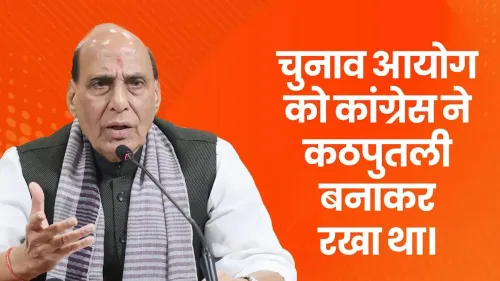
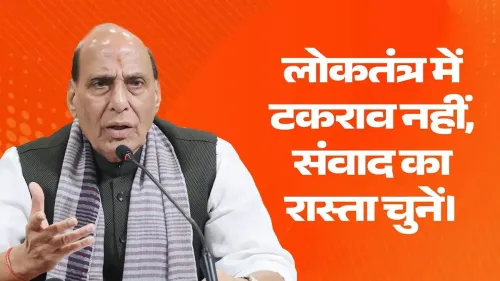
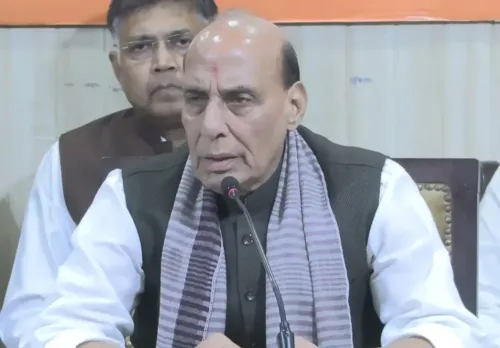
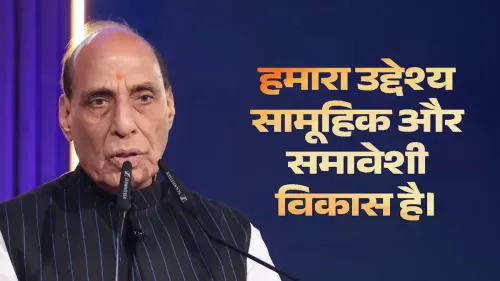
Rajnath Singh accuses Congress of 'Regime Change' agenda
Synopsis
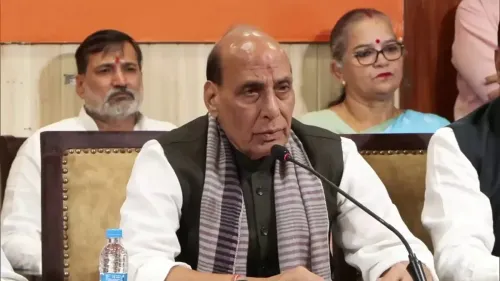
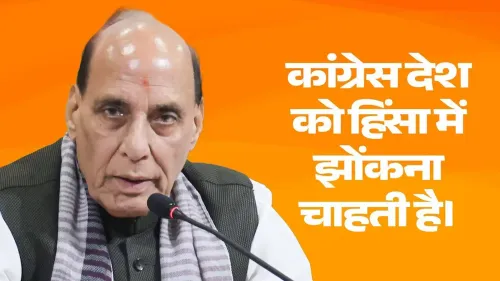
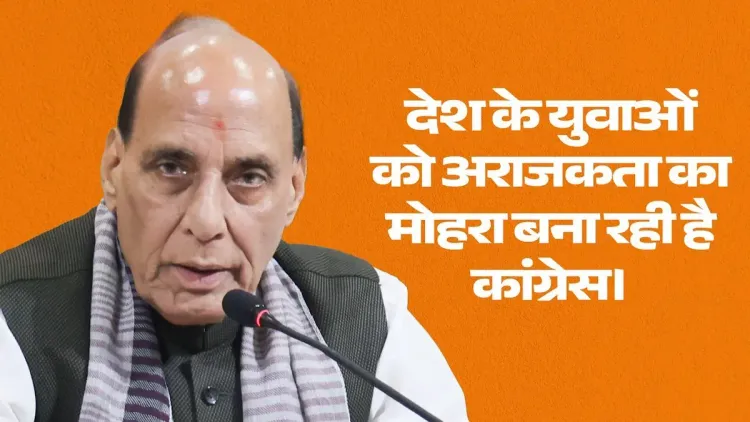
Defence Minister Rajnath Singh, in a pointed X post on October 16 2026, accused Congress and its allies of using 'Regime Change' rhetoric and the cover of election reform to weaken democratic institutions and seize power, warning that India's youth were being turned into instruments of political anarchy.
Key Takeaways
Rajnath Singh on October 16, 2026 accused Congress and allies of openly pursuing a 'Regime Change' agenda.
He charged that Indian youth were being weaponised as 'pawns of anarchy' instead of being directed toward nation-building.
Singh framed the opposition's calls for election reform as a pretext to weaken democratic institutions and grab power.
The statement signals the BJP's intent to contest any upcoming electoral-reform narrative on institutional-integrity grounds.
As a former Chief Minister, former Home Minister, and current Defence Minister, Singh is among the most senior BJP voices on this issue.
A sharp political broadside landed on Friday, October 16, 2026, when Union Defence Minister Rajnath Singh accused the Congress party and its allies of pursuing a 'Regime Change' agenda — and of using India's youth as foot soldiers in what he called a politics of anarchy.
In a post on X, Singh wrote — 'कांग्रेस और उसके सहयोगियों की Regime Change की बातों से उनकी मंशा स्पष्ट होती है' — translating to: 'The talk of Regime Change by Congress and its allies makes their intentions clear.' He added that instead of channelling the energy of youth toward nation-building, they were being turned into 'pawns of a politics of anarchy.'
The 'election reform' charge
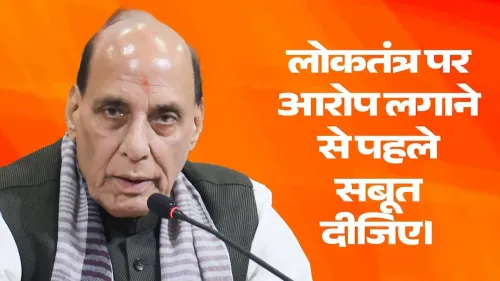
The sharpest line in Singh's post targeted what he described as a cynical misuse of electoral reform rhetoric. 'Using election reforms as a pretext to weaken democratic institutions and seize power by any means — that is their real agenda,' he wrote. The framing is deliberate: it positions the BJP not merely as a political rival but as a defender of institutional integrity against destabilisation from below.
The invocation of 'democratic institutions' is loaded terrain in Indian politics. The ruling BJP and the Indian National Congress-led opposition have clashed repeatedly over the neutrality and functioning of bodies such as the Election Commission of India, the judiciary, and investigative agencies. Both sides have, at various points, accused the other of attempting to hollow out these institutions for electoral advantage.
Youth as a battleground
Singh's specific targeting of the youth mobilisation argument is telling. For the better part of a decade, opposition campaigns have sought to energise first-time voters around issues of unemployment, inflation, and democratic backsliding. By framing that mobilisation as 'anarchy,' the Defence Minister is staking out a counter-narrative ahead of what promises to be a charged parliamentary session — one where electoral reform bills could land as flashpoints.
As a three-time cabinet heavyweight — former Chief Minister of Uttar Pradesh, former Union Home Minister, and now the country's Defence Minister — Singh carries institutional heft when he speaks on the health of democratic systems. His words are not those of a backbencher; they signal where the BJP's top brass wants the political argument to go.
What the timing signals
The post arrives as parliamentary discussions on electoral reform remain an active fault line. Singh's salvo appears calibrated to pre-empt any opposition push on the subject — rebranding it, before it gains traction, as a vehicle for power-grab rather than genuine reform. Whether Congress responds in kind, or lets the charge sit, will shape the terms of that coming debate.
One thing is certain: the battle for the narrative on India's democratic institutions has moved squarely to the front page — and the BJP has drawn first blood this week.
Point of View
' the BJP is borrowing a global vocabulary of institutional threat and applying it to domestic opposition politics. This follows a consistent BJP playbook of elevating political conflicts to a civilisational register, casting the ruling party as protector of the republic rather than a contestant within it. The youth angle is especially strategic: it contests the opposition's core mobilisation base on moral rather than policy grounds.
NationPress
16 Oct 2026
Frequently Asked Questions
What did Rajnath Singh say about Congress and Regime Change?
Rajnath Singh accused Congress and its allies of making their true intentions clear through 'Regime Change' talk, charging that they were using election reform rhetoric as a cover to weaken democratic institutions and seize power by any means.
Why is Rajnath Singh accusing Congress of misusing youth?
Singh alleged that instead of directing the energy of young Indians toward nation-building, Congress and its allies were turning them into pawns of 'anarchy politics' — a charge aimed at delegitimising opposition youth mobilisation efforts.
What is the BJP's position on election reforms in India?
The BJP, through Singh's statement, has signalled that it views current opposition demands for electoral reform as politically motivated attempts to weaken independent democratic institutions rather than genuine systemic improvements.
Who is Rajnath Singh and why does his statement matter?
Rajnath Singh is India's Union Defence Minister, a senior BJP leader, and a former Chief Minister of Uttar Pradesh and former Union Home Minister — making him one of the ruling party's most authoritative voices on matters of governance and democratic institutions.
What could happen next after Rajnath Singh's attack on Congress?
Parliamentary sessions are expected to feature debates on electoral reform; Singh's statement appears designed to define the BJP's counter-narrative ahead of those discussions, likely prompting a formal response from Congress leadership.