Rajnath Singh fires back at Congress over Election Commission row
Synopsis
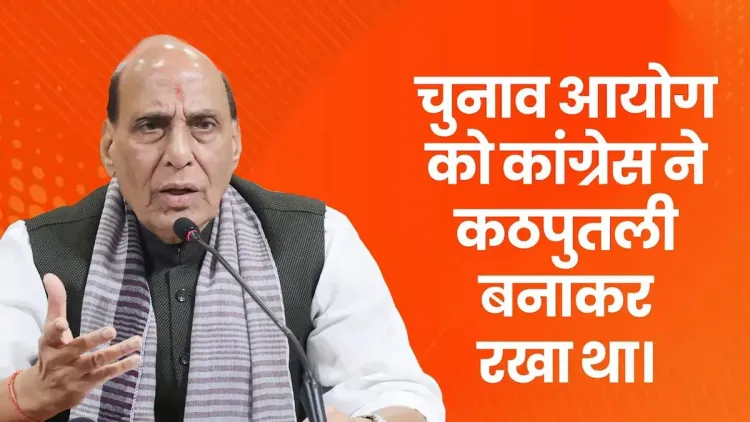
Union Defence Minister Rajnath Singh on October 16 hit back at Congress for questioning the Election Commission's impartiality, citing the party's own 1993 amendment that expanded the Commission during a dispute with then-CEC T.N. Seshan.
Key Takeaways
Rajnath Singh on October 16, 2026 accused Congress of hypocrisy for challenging the Election Commission of India 's neutrality.
Singh referenced Congress's conduct 'during its own rule,' pointing to a pattern the BJP consistently invokes in this debate.
In 1993 , a Congress government expanded the Election Commission to a three-member body amid a public standoff with Chief Election Commissioner T.N.
A Supreme Court ruling in 2023 ordered a reformed appointment process for Election Commissioners, acknowledging long-standing concerns.
The BJP regularly uses Congress-era precedents to counter opposition criticism of the Commission's independence.
The specific Congress trigger for Singh's post on this date remains unconfirmed, but Election Commission appointments remain a live political flashpoint.
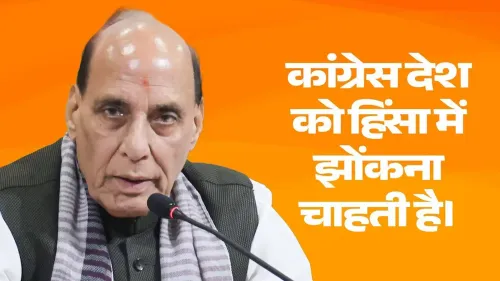
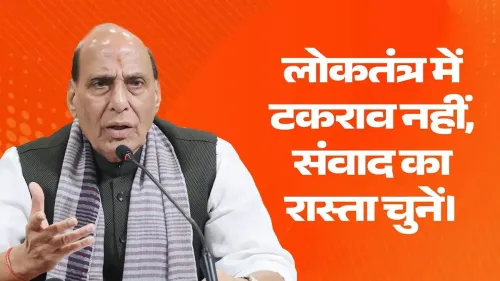
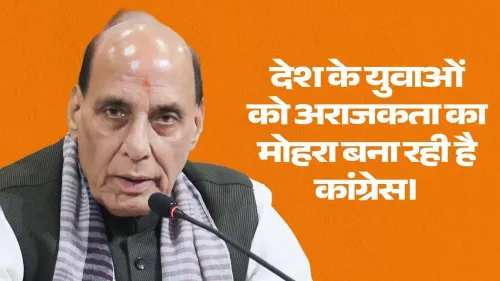
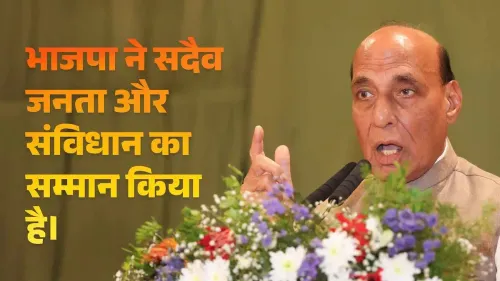
Glass houses and stone throws — that is the sharp message Union Defence Minister Rajnath Singh directed at the Indian National Congress on Friday, October 16, 2026, as the BJP's political counter-offensive over the Election Commission of India's credibility moved to a new front.
Posting in Hindi on X, Singh did not mince words: 'चुनाव आयोग पर सवाल उठाने वाली कांग्रेस को अपना इतिहास नहीं भूलना चाहिए' — 'The Congress that raises questions about the Election Commission must not forget its own history.' He added that the same party which, during its own rule, 'raised serious questions about the Election Commission's impartiality and appointments,' was today 'invoking the name of democracy.' His closing line carried the sharpest edge: 'Before pointing fingers at others, Congress must give an account of its own past.'
The 1993 amendment Congress cannot easily dismiss
The charge Singh levels has a specific historical spine. In 1993, a Congress government amended the Representation of the People Act to expand the Election Commission from a single-member body into a three-member commission. The move came in the midst of a public clash with the then-serving Chief Election Commissioner T.N. Seshan, whose assertive, reformist style had rattled the political establishment. Critics at the time, and repeatedly since, have argued the expansion was designed to dilute Seshan's authority — a charge Congress has contested. That episode has become a durable talking point whenever the ruling BJP needs to deflect accusations of institutional interference.
A well-worn BJP counter-punch, sharpened for the moment
Singh's post fits a deliberate pattern in BJP communication strategy: when the opposition attacks the Commission's independence or the process by which its members are appointed, the BJP reaches for Congress-era precedents to reframe the argument. The logic is straightforward — if institutional manipulation is the allegation, the historical record of the party making it becomes fair game. The Defence Minister, a senior leader with both a former Home Minister's institutional heft and a former Chief Minister's political instincts, lends weight to a message that junior spokespersons routinely deliver.
The specific Congress statement or episode that triggered Singh's post on this particular day cannot be independently confirmed, but the broader context is unmistakable: with future state elections looming and questions about Election Commission appointments remaining a live political flashpoint, both sides are staking out territory early.
Why Election Commission appointments keep sparking political fire
The appointment process for Election Commissioners has been a contested space for years. A landmark Supreme Court ruling in 2023 directed that appointments be made by a committee rather than solely on the executive's recommendation — a judgment that acknowledged long-standing concerns across party lines. Parliament subsequently passed legislation on the subject, which the opposition argued did not go far enough. That unresolved tension means any party-political rhetoric about the Commission lands on already charged ground.
For Rajnath Singh, a politician whose career spans decades of institutional debate, the message is calibrated: history, not just the present, must be the judge. Whether Congress chooses to engage that history, or contest the framing, will define the next move in this particular political exchange.
Point of View
And Singh's deployment of it signals that the BJP intends to fight the Election Commission credibility debate on terrain it considers favourable. The broader arc here is significant: with appointment procedures for Election Commissioners having been litigated all the way to the Supreme Court, any fresh political skirmish over the body's independence feeds directly into a governance legitimacy debate that will intensify ahead of major elections. Singh's intervention, coming from the Cabinet's second-ranking voice rather than a party spokesperson, is a deliberate escalation in register.
NationPress
16 Oct 2026
Frequently Asked Questions
What did Rajnath Singh say about Congress and the Election Commission?
Rajnath Singh said Congress must not forget its own history of questioning the Election Commission's impartiality and appointments before accusing others, arguing the party must account for its past before pointing fingers.
What did Congress do to the Election Commission in 1993?
In 1993, a Congress government amended the Representation of the People Act to expand the Election Commission from a single-member to a three-member body, a move that critics linked to the government's public conflict with the assertive Chief Election Commissioner T.N. Seshan.
Why is the Election Commission appointment process controversial in India?
Both ruling and opposition parties have historically accused each other of using executive influence over Election Commissioner appointments. A 2023 Supreme Court ruling directed that a committee — not the executive alone — should oversee appointments, but subsequent legislation remained contested.
Who is Rajnath Singh and why does his statement carry weight?
Rajnath Singh is India's Union Defence Minister, a senior BJP leader, a former Union Home Minister, and a former Chief Minister of Uttar Pradesh. His seniority means his statements are read as considered party positions rather than routine political messaging.
What is the BJP's standard response to Congress criticism of the Election Commission?
The BJP routinely counters such criticism by citing Congress-era actions — particularly the 1993 amendment seen as aimed at curbing CEC T.N. Seshan — to argue that Congress has historically been far from a champion of the Commission's independence.