India-UK CETA delivers early wins, could add £25.5 bn to bilateral trade

Synopsis
Three months in, the India-UK CETA is already moving goods — $140 million in zero-duty shipments on day one, 15% bilateral trade growth in August, and a British trade mission of over 100 companies. The long-run stakes are higher: official modelling projects £25.5 bn in added annual bilateral trade and a potential doubling of Indian goods exports to the UK by FY31.
Key Takeaways
The India-UK CETA entered into force on 15 July 2026 , making it India's most comprehensive trade agreement and the UK's largest since Brexit .
Indian exporters shipped over 50 consignments worth ~ $140 million under zero-duty terms on the first day of implementation.
Bilateral goods trade rose nearly 15% year-on-year to ~ $2 billion in August 2026 ; UK imports into India surged 24% .
Official UK modelling projects a long-run annual trade boost of £25.5 billion and GDP gains of £4.8 billion for the UK and £5.1 billion for India.
Bank of Baroda estimates Indian goods exports to the UK could reach $24 billion by FY31 , up from ~ $13.5–14 billion , at a 12.5% CAGR .
The deal eliminates duties on 96.8% of tariff lines from day one, benefiting textiles, leather, footwear, gems and jewellery, and processed foods.
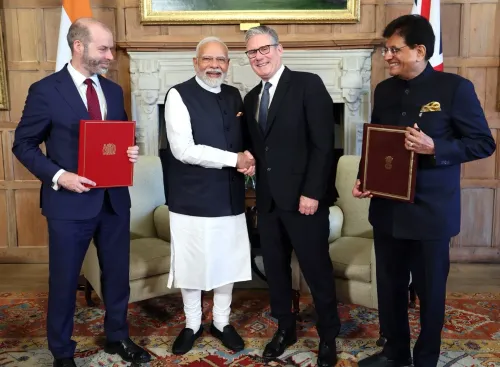
Three months after the India-UK Comprehensive Economic and Trade Agreement (CETA) entered into force on 15 July 2026, the pact is already reshaping commercial ties between the two nations and could deliver substantial long-term economic gains, according to a new report by India Narrative. The deal is the most comprehensive trade agreement India has ever concluded and the United Kingdom's largest bilateral pact since Brexit.
Early Commercial Impact
The agreement's real-world effect was visible from day one of implementation, when Indian exporters shipped over 50 consignments worth approximately $140 million under zero-duty terms. By August 2026, bilateral goods trade had risen nearly 15 per cent year-on-year to approximately $2 billion, with Indian exports up around 10 per cent and UK imports into India climbing faster at 24 per cent.
The India Narrative report also highlighted that a high-level British trade mission comprising over 100–200 companies, three cabinet ministers, and seven northern English mayors arrived in India within the first three months — a signal, the report noted, that commercial realities are already shifting. Notably, tariff-free Scottish salmon arrived in India within a fortnight of the deal's commencement, Scotch whisky began clearing at the new reduced rate, and the first cars under the automotive tariff-rate quota entered Indian shores.
Projected Long-Term Gains
Official UK modelling projects a long-run annual boost to bilateral trade of £25.5 billion, with GDP gains of £4.8 billion for the UK and £5.1 billion for India. Real wages in the UK are expected to rise by nearly $2.9 billion as a result of the agreement, according to the report.
Bank of Baroda estimates cited in the report suggest Indian goods exports to the UK could rise from approximately $13.5–14 billion toward $24 billion by FY31, implying a 12.5 per cent CAGR, against a $900 billion UK import market.
What the Deal Covers
The agreement eliminates duties on 96.8 per cent of tariff lines from day one, with further tariff phase-outs scheduled over time. Sectors that benefit immediately include textiles, leather, footwear, gems and jewellery, and processed foods. India has also opened its services and procurement markets under the deal, including a central-government procurement market estimated at approximately £38 billion a year.
Strategic Value for Both Sides
For the United Kingdom, CETA offers a post-Brexit growth anchor and preferential access to one of the world's fastest-expanding large economies, along with a platform for services, finance, and high-value manufacturing exports. For India, the pact delivers immediate export competitiveness in labour-intensive goods, deeper services integration, professional mobility relief, and — critically — a potential template for pursuing similarly ambitious free trade agreements with other advanced economies.
What Comes Next
With the foundational tariff architecture now in place, analysts will watch whether the initial trade surge sustains through FY27 and whether services-sector provisions — particularly on professional mobility — translate into measurable flows. The pace at which India leverages CETA as a template for future FTAs with the European Union and other G7 partners could determine the broader strategic dividend of the agreement.
Point of View
15% goods trade growth in August — are encouraging, but the real test of CETA's value lies in the services chapters, which are harder to measure and slower to materialise. India's gains in textiles and gems are low-hanging fruit; what the economy actually needs is professional mobility reciprocity and services market access in finance and IT. The Bank of Baroda export projection of $24 billion by FY31 requires a sustained 12.5% CAGR against a UK market that itself faces structural headwinds. Perhaps more strategically significant than any trade number is whether CETA accelerates India's FTA push with the EU — if it does, this deal will have punched well above its bilateral weight.
NationPress
16 Oct 2026
Frequently Asked Questions
What is the India-UK CETA and when did it come into force?
The India-UK Comprehensive Economic and Trade Agreement (CETA) is the most comprehensive trade deal India has ever concluded and the UK's largest bilateral pact since Brexit. It entered into force on 15 July 2026, eliminating duties on 96.8% of tariff lines from day one.
How much could the India-UK CETA boost bilateral trade?
Official UK government modelling projects a long-run annual boost to bilateral trade of £25.5 billion. Bank of Baroda estimates cited in the India Narrative report suggest Indian goods exports to the UK alone could rise from $13.5–14 billion to $24 billion by FY31 at a 12.5% CAGR.
Which Indian sectors benefit most from the CETA?
Sectors gaining immediate export competitiveness include textiles, leather, footwear, gems and jewellery, and processed foods, all of which benefit from day-one duty elimination. India also gains from services integration and professional mobility provisions under the agreement.
What are the early signs that the CETA is working?
On the first day of implementation, Indian exporters shipped over 50 consignments worth about $140 million under zero-duty terms. In August 2026, bilateral goods trade rose nearly 15% year-on-year to about $2 billion, and a UK trade mission of over 100 companies and three cabinet ministers visited India within three months of the deal entering force.
What does the CETA mean for the United Kingdom post-Brexit?
For the UK, CETA provides a post-Brexit growth anchor and preferential access to one of the world's fastest-growing large economies. Official projections estimate GDP gains of £4.8 billion for the UK in the long run, with real wages expected to rise by nearly $2.9 billion as a result of the pact.