India-UK CETA takes effect: bilateral trade set to surge beyond £48 billion

Synopsis
The India-UK CETA came into force on 15 July, with the first export consignment — gems and jewellery — flagged off from Mumbai's SEEPZ the same day. With bilateral trade already at £48 billion annually and analysis pointing to significant further growth, the pact is being read as the foundation of a larger strategic economic partnership, not just a tariff deal.
Key Takeaways
The India-UK Comprehensive Economic and Trade Agreement (CETA) came into force on 15 July .
Bilateral trade currently stands at approximately £48 billion annually and is expected to grow further under the pact.
The first export consignment of gems and jewellery was flagged off from SEEPZ, Andheri, Mumbai to mark the agreement's launch.
Deputy British High Commissioner Steve Hickling described the deal as the beginning of 'an even stronger and larger economic partnership.' The agreement cleared the UK Parliament and Indian processes after nearly a year of negotiations.
Industry representatives say the pact will boost employment, exports, and help establish Indian products in the European market .
The India-United Kingdom Comprehensive Economic and Trade Agreement (CETA) came into force on Wednesday, 15 July, with officials and industry leaders describing the pact as a transformative milestone that is expected to deepen economic ties, expand bilateral trade, and unlock fresh opportunities for businesses across both nations.
What the Agreement Signals
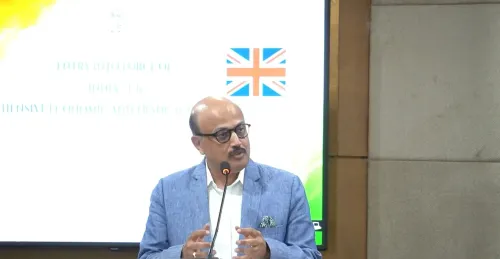
Deputy British High Commissioner Steve Hickling, speaking on the sidelines of a flag-off ceremony for the first export consignment held at Sanand, near Ahmedabad, said the deal reflects the depth of the political and economic relationship between the two countries. 'I think it really underlines the strength of the economic and political relationship between the UK and India, and it signals the beginning of an even stronger and larger economic partnership between the two countries,' he said.
Hickling noted that bilateral trade between India and the United Kingdom currently stands at approximately £48 billion annually, with analysis suggesting the figure will grow significantly following the agreement's implementation. 'We are already at about £48 billion annually, and the analysis indicates that it will grow even further,' he added.
First Export Consignment Flagged Off
To mark the agreement's commencement, the first consignment of gems and jewellery exports to the United Kingdom was flagged off from the Special Economic Zone (SEEPZ) in Andheri, Mumbai. The ceremony underscored India's intent to leverage the pact for high-value export sectors from day one.
Gyaneshwar Patil, Zonal Development Commissioner at SEEPZ, described the launch as a significant milestone, noting that the agreement had been under negotiation for nearly a year before receiving approval from the UK Parliament and subsequently clearing the necessary processes on the Indian side.
Industry Welcomes the Pact
Vishwanath Hublikar, General Manager (Export-Import) at H.K. Designs (India) LLP, said the agreement arrives at an opportune moment as Indian exporters seek to diversify their markets amid global geopolitical uncertainties. 'India is looking at Europe as a good market and in this stage, launching this UK CETA agreement is a good opportunity — it will improve employment, increase India's exports, and also be an opportunity to establish Indian products in the European market,' he said.
Broader Strategic Context
The India-UK CETA has been years in the making, with negotiations spanning multiple rounds and political transitions on both sides. This comes amid a broader global push by India to secure free trade agreements with major economies, including ongoing discussions with the European Union and the Gulf Cooperation Council. Notably, the UK's post-Brexit trade strategy has placed considerable emphasis on deepening ties with fast-growing Indo-Pacific economies, making India a priority partner.
With the agreement now operational, attention shifts to implementation — whether tariff concessions translate into measurable export growth and whether small and medium enterprises in both countries can access the benefits in practice. Sectoral guidelines and customs protocols are expected to be operationalised in the weeks ahead.
Point of View
But the harder work begins now. Bilateral trade at £48 billion is a solid base, yet the pact's real test lies in whether Indian SMEs — particularly in gems, jewellery, textiles, and IT services — can navigate UK customs protocols and rules-of-origin requirements to actually capture the tariff benefits. Past trade agreements India has signed have often seen utilisation rates well below potential. The flag-off ceremony signals intent; the export data over the next four quarters will reveal whether intent becomes impact.
NationPress
14 Oct 2026
Frequently Asked Questions
What is the India-UK CETA?
The India-UK Comprehensive Economic and Trade Agreement (CETA) is a bilateral free trade pact that came into force on 15 July. It is designed to expand bilateral trade beyond the current £48 billion annual level and create new business opportunities in both countries.
When did the India-UK trade agreement come into effect?
The agreement came into force on Wednesday, 15 July. It had been under negotiation for nearly a year before receiving approval from the UK Parliament and clearances from the Indian side.
What was the first export under the India-UK CETA?
The first export consignment under the agreement was a shipment of gems and jewellery, flagged off from the Special Economic Zone (SEEPZ) in Andheri, Mumbai, on the same day the pact came into force.
How much do India and the UK currently trade?
Bilateral trade between India and the United Kingdom currently stands at approximately £48 billion annually, according to Deputy British High Commissioner Steve Hickling. Analysis cited by officials suggests this figure will grow significantly under the new agreement.
Why does the India-UK CETA matter for Indian exporters?
Industry representatives say the pact arrives at a critical time, as Indian exporters are seeking to diversify markets amid global geopolitical uncertainties. It is expected to boost employment, increase India's export volumes, and help establish Indian products more firmly in the European market.