Venezuela quake death toll climbs to 4,829, over 1,284 aftershocks recorded
Synopsis
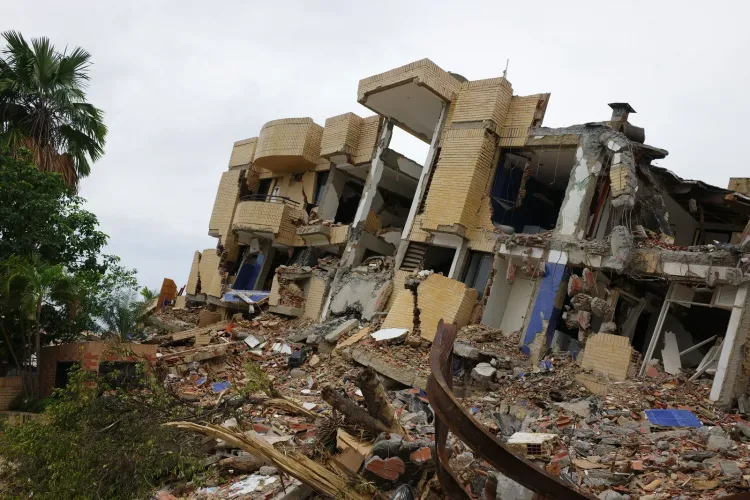
Venezuela's twin magnitude 7.2 and 7.5 earthquakes have now killed 4,829 people — a toll that keeps climbing three weeks after the June 24 strikes. With 1,284 aftershocks recorded, over 63,000 rescue personnel deployed, and 28 countries sending aid, the scale of this disaster is among the worst in Venezuela's modern history.
Key Takeaways
The death toll from Venezuela's June 24 earthquakes has risen to 4,829 as of 16 July , confirmed by National Assembly President Jorge Rodriguez .
The number of injured stands at 16,740 ; 1,284 aftershocks have been recorded since the twin quakes.
106 temporary camps are sheltering 20,857 displaced people, with more than 63,000 personnel deployed in rescue operations.
The coastal state of La Guaira is the worst-hit, with 10,981 people in shelters.
Acting President Delcy Rodriguez acknowledged aid from 28 countries , with over 2,000 tonnes of international supplies being distributed.
The death toll from the June 24 earthquakes in Venezuela has risen to 4,829, Venezuelan National Assembly President Jorge Rodriguez confirmed on Wednesday, 16 July. The number of injured remains at 16,740, according to figures Rodriguez released in a social media update, as the country continues one of its most intensive disaster response operations in recent memory.
Scale of the Disaster
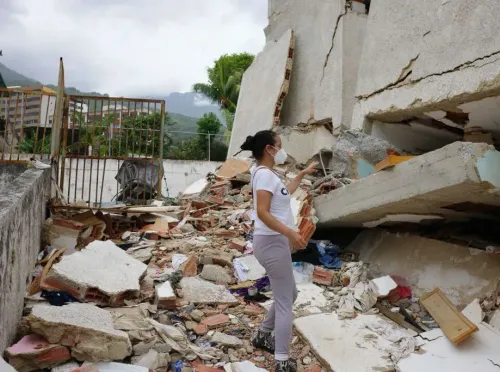
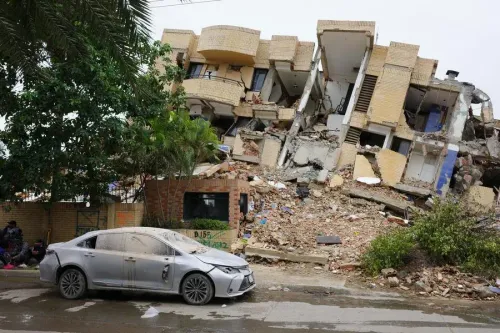
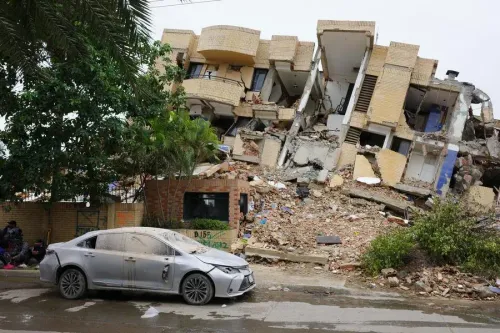
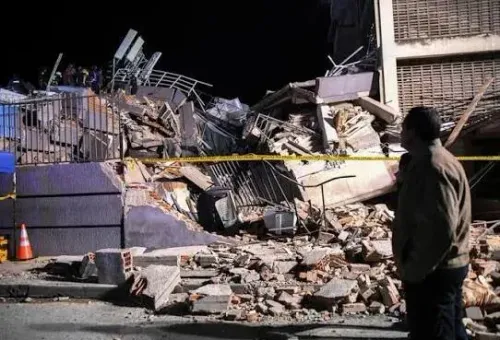
The twin earthquakes — measuring magnitude 7.2 and 7.5 — struck central Venezuela on 24 June, triggering widespread destruction across coastal and inland states. Since then, the country has recorded 1,284 aftershocks, compounding the trauma for survivors and complicating rescue efforts on the ground.
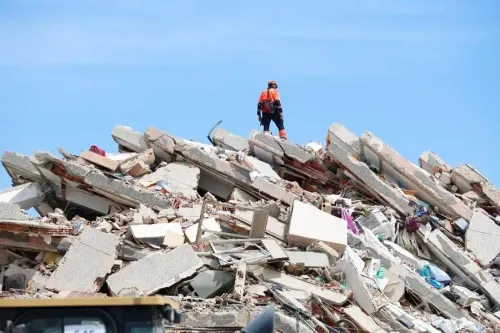
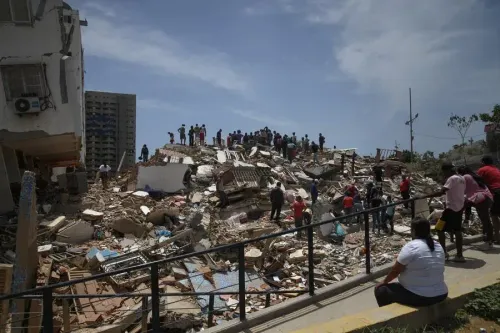
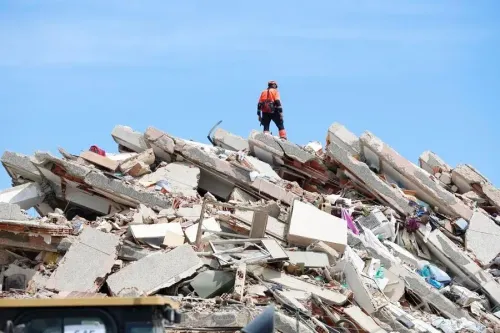
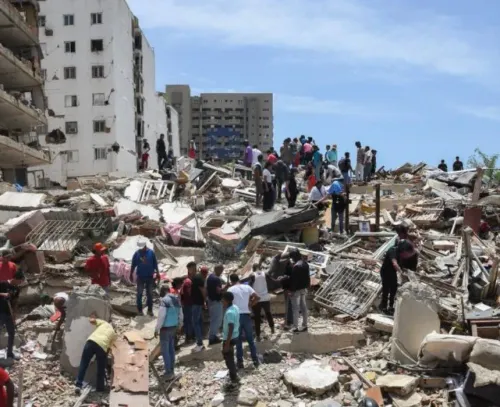
Authorities have established 106 temporary camps now sheltering 20,857 displaced persons, while more than 63,000 personnel remain deployed in ongoing search and rescue operations, according to the latest official update.
Worst-Hit Regions
The coastal state of La Guaira, where the two quakes caused the most severe damage, accounts for 10,981 people currently housed in shelters. The capital, Caracas, has 6,133 in temporary accommodation, while the central state of Miranda shelters an additional 1,323 people. An earlier update on 11 July by Hector Rodriguez, vice president for social affairs, had placed the total number moved to shelters at 18,437, reflecting the rapidly evolving scale of displacement.
International Aid and Government Response
Venezuela's acting President Delcy Rodriguez expressed gratitude for humanitarian assistance provided by 28 countries, after inspecting a collection centre in Caracas where more than 2,000 tonnes of international aid are being sorted for distribution to temporary camps.
'Venezuela never tires of thanking the countries, the peoples of the world, and the governments of the world that have offered a helping hand,' Rodriguez said. She added that each contributing country would be able to track how its aid is being deployed, ensuring transparency in the relief effort.
Rodriguez also struck a forward-looking tone: 'The most important thing is to look to the future, how we are going to recover, how we are going to rebuild the affected areas.'
What Comes Next
With aftershocks continuing and tens of thousands still in temporary camps, the transition from emergency rescue to long-term rehabilitation will be Venezuela's central challenge in the weeks ahead. The government has not yet announced a formal reconstruction timeline, and the scale of infrastructure damage in La Guaira and surrounding areas suggests recovery will be prolonged. International aid organisations are expected to play a sustained role as Venezuela assesses the full extent of losses.
Point of View
829 from a single seismic event places this among the deadliest natural disasters in Latin America this decade, yet global attention has been uneven. Venezuela's pre-existing humanitarian crisis — weakened infrastructure, limited state resources — almost certainly amplified the casualty count beyond what comparable quakes produce in better-prepared nations. The presence of 28 donor countries is notable given Venezuela's fraught international relationships; disaster diplomacy is quietly doing what years of political negotiations could not. The real test will come when cameras leave and the reconstruction bill arrives.
NationPress
15 Oct 2026
Frequently Asked Questions
What is the current death toll from the Venezuela earthquakes?
The death toll from the June 24 earthquakes in Venezuela has risen to 4,829, according to National Assembly President Jorge Rodriguez, who confirmed the figure in a social media update on 16 July. The number of injured remains at 16,740.
How strong were the Venezuela earthquakes?
Two back-to-back earthquakes of magnitude 7.2 and 7.5 struck central Venezuela on 24 June. The quakes have since been followed by 1,284 aftershocks, according to official figures.
Which areas of Venezuela were worst affected?
The coastal state of La Guaira suffered the most severe damage, with 10,981 people currently in shelters. Caracas accounts for a further 6,133 displaced persons, and the central state of Miranda has 1,323 people in temporary accommodation.
How many people are in temporary shelters in Venezuela?
As of 16 July, 20,857 people are housed across 106 temporary camps set up by authorities. An earlier update on 11 July had placed the figure at 18,437, reflecting the rapidly growing displacement.
Which countries are providing aid to Venezuela after the earthquakes?
Acting President Delcy Rodriguez confirmed that 28 countries have provided humanitarian assistance. More than 2,000 tonnes of international aid are being sorted at a collection centre in Caracas for distribution to earthquake-affected camps.