Jharkhand woman dies in botched abortion after illegal sex test, 2 held in Dhanbad
Synopsis
A pregnant woman in Dhanbad died after an illegal sex determination test revealed a female foetus and her husband allegedly forced her into a botched abortion. The case — involving an arrest, a sealed clinic, and an FSL investigation — lays bare the continuing reality of PC-PNDT Act violations more than three decades after the law was passed.
Key Takeaways
Kiran Kumari of Dhanbad, Jharkhand died on 29 October 2026 following a botched abortion after an alleged illegal foetal sex determination test.
Her brother alleged that her husband, Sonu Kewat , arranged the sex test and pressured her into terminating the pregnancy after learning the foetus was female.
Police arrested Sonu Kewat (husband) and Sachin Kewat (operator of Central Diagnostic Centre, Shyamdih Chowk ); the clinic has been sealed.
Preliminary police findings indicate death was caused by an improperly conducted abortion and severe blood loss.
A Forensic Science Laboratory (FSL) team has been called in for scientific examination of the case.
The incident is a violation of the PC-PNDT Act, 1994 , which strictly bans prenatal sex determination and gender-selective abortion in India.
A woman identified as Kiran Kumari died during a botched abortion procedure in Dhanbad, Jharkhand, after an illegal foetal sex determination test was allegedly conducted at a local diagnostic centre. The incident, which came to light on 29 October 2026, has prompted police arrests and the sealing of the facility, and has reignited scrutiny of clinics that reportedly continue to carry out procedures banned under Indian law.
What Happened
According to family members, Kiran Kumari was three to four months pregnant with the couple's second child. The couple already had a daughter. Her brother, Chandrika Kumar, alleged that her husband arranged for a sex determination test and, upon learning that the foetus was female, pressured her into undergoing an illegal abortion.
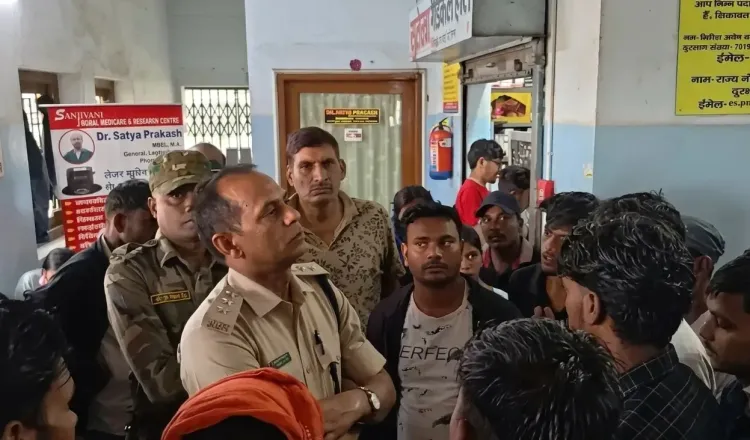
During the procedure, Kiran allegedly suffered severe and uncontrolled bleeding, causing her condition to deteriorate rapidly. She was rushed to Sanjeevani Hospital, where she was declared dead on arrival. Family members, enraged by her death, staged a protest at the hospital premises, demanding strict action against those responsible and alleging that doctors and adequate medical assistance were not available in time.
Arrests and Action Taken
Police moved swiftly following the incident. Sonu Kewat, the victim's husband, and Sachin Kewat, the operator of Central Diagnostic Centre located at Shyamdih Chowk, were both arrested. The diagnostic centre has been sealed by authorities.
Katras Sub-Divisional Police Officer Ajit Kumar Vimal confirmed the incident, stating that a police team reached the spot as soon as information was received and began a formal investigation. Preliminary findings, according to the officer, suggest the death resulted from an improperly conducted abortion and severe blood loss.
Forensic Investigation Under Way
A team from the Forensic Science Laboratory (FSL) has been deployed to conduct scientific and technical examinations of all aspects of the case, including the diagnostic centre's equipment and records. The findings are expected to determine the full scope of legal culpability.
The Legal Framework and Wider Context
Prenatal sex determination and gender-selective abortion are strictly prohibited in India under the Pre-Conception and Pre-Natal Diagnostic Techniques (PC-PNDT) Act, 1994. The law was enacted to combat the country's deeply entrenched problem of female foeticide, which has historically skewed sex ratios in several states. Jharkhand's child sex ratio has remained a concern for administrators and health authorities for years.
Notably, this incident underscores a persistent enforcement gap — illegal sex determination services continue to operate despite the legal prohibition, often in smaller urban centres and towns. This is not an isolated case; similar incidents have been reported periodically across states including Rajasthan, Uttar Pradesh, and Haryana, pointing to systemic failures in monitoring diagnostic facilities.
As the FSL completes its examination and police build their case, the question of whether additional medical personnel at Sanjeevani Hospital face liability will likely come under scrutiny as well.
Point of View
Now over three decades old, remains chronically under-enforced at the ground level. The fact that a diagnostic centre could conduct an illegal sex determination test, precipitate a fatal abortion, and operate largely unchecked until a death occurred points not just to individual criminality but to a failure of the routine inspection and monitoring regime that district health authorities are mandated to conduct. The family's additional allegation — that medical assistance at Sanjeevani Hospital was delayed — adds another layer of institutional accountability that investigators should not overlook. Sporadic arrests after tragedies are not a substitute for proactive surveillance of registered diagnostic facilities.
NationPress
29 Oct 2026
Frequently Asked Questions
What happened to Kiran Kumari in Dhanbad, Jharkhand?
Kiran Kumari, a resident of Dhanbad, Jharkhand, died on 29 October 2026 after undergoing an illegal abortion following a foetal sex determination test at Central Diagnostic Centre. Her family alleges her husband arranged the sex test and, upon learning the foetus was female, pressured her into the procedure, during which she suffered fatal blood loss.
Who has been arrested in the Dhanbad abortion death case?
Two people have been arrested: Sonu Kewat, the victim's husband, and Sachin Kewat, the operator of Central Diagnostic Centre at Shyamdih Chowk, Dhanbad. The diagnostic centre has also been sealed by police.
What law was violated in this case?
The incident constitutes an alleged violation of the Pre-Conception and Pre-Natal Diagnostic Techniques (PC-PNDT) Act, 1994, which strictly prohibits prenatal sex determination and gender-selective abortion across India. Violations can attract imprisonment and fines for both the service provider and those who seek or abet the procedure.
What is the current status of the investigation?
Katras Sub-Divisional Police Officer Ajit Kumar Vimal confirmed a formal investigation is under way, with preliminary findings indicating death from an improperly conducted abortion and severe blood loss. A Forensic Science Laboratory (FSL) team has been deployed to conduct scientific and technical examinations of all aspects of the case.
Why does the PC-PNDT Act exist and why are such cases still occurring?
The PC-PNDT Act, 1994, was enacted to address the practice of female foeticide and the resulting skewed sex ratio in India. Despite the law, cases of illegal sex determination continue to surface periodically, pointing to persistent enforcement gaps, inadequate monitoring of diagnostic facilities, and deep-rooted social preference for male children in parts of the country.