Is the Arrest of Former President Yoon Suk Yeol Legal?
Synopsis
The legal battle intensifies for former South Korean President Yoon Suk Yeol as a court hearing approaches to assess the legitimacy of his arrest. Yoon, detained for attempting to impose martial law, fights back with a petition claiming his arrest was unjust. Will he regain his freedom after this crucial hearing?
Key Takeaways
Court Hearing: Scheduled for Friday at 10:15 a.m.
Legal Challenge: Yoon's team argues the arrest was illegal.
Background: Yoon has been detained over martial law attempts.
Legal Requirement: Court must review evidence within 48 hours.
Political Implications: The case highlights tensions in governance.
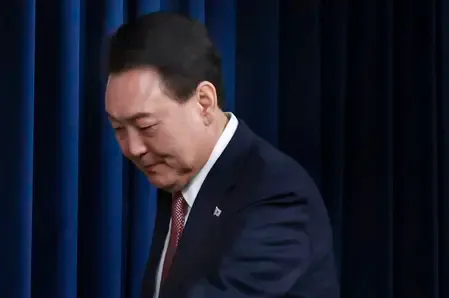
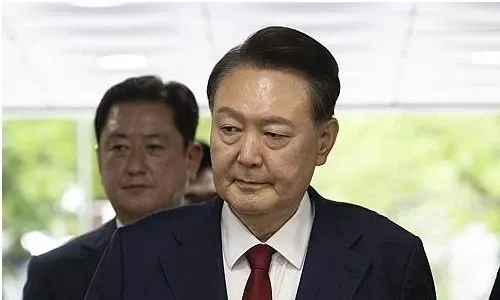
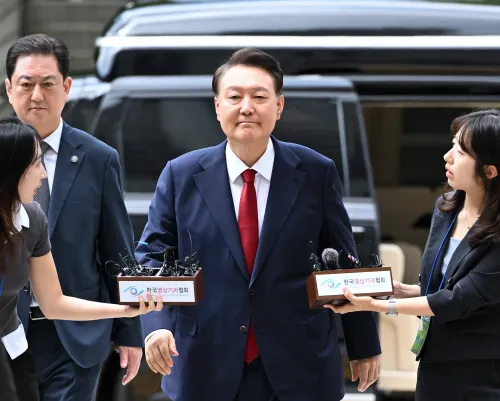
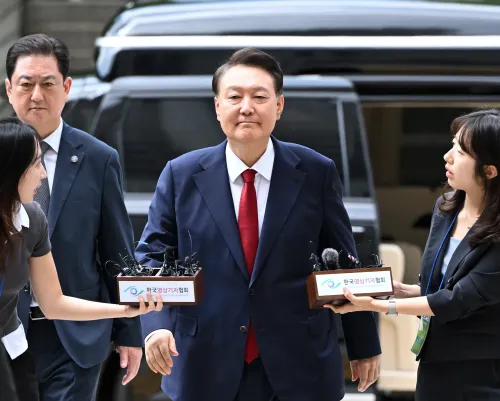
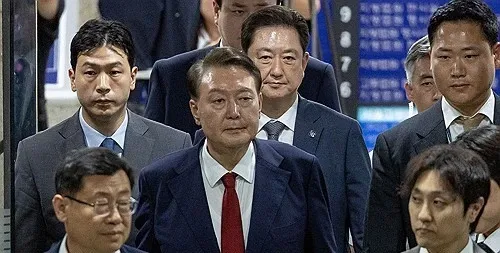
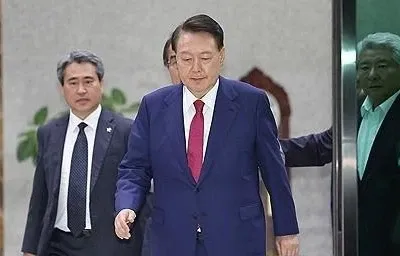
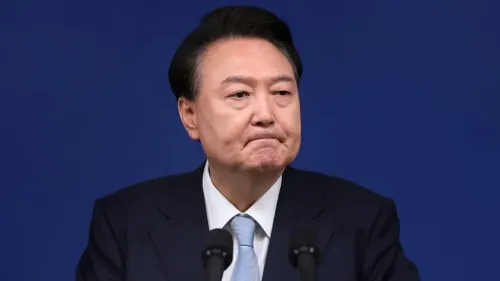
Seoul, July 16 (NationPress) A court hearing to determine the legality of ex-President Yoon Suk Yeol's arrest is scheduled for later this week, a court announced on Wednesday, as Yoon seeks to reclaim his freedom following his detention stemming from a failed attempt to impose martial law.
The hearing is set for 10:15 a.m. Friday, according to the Seoul Central District Court, shortly after Yoon's legal team indicated that they had submitted a request for a review of the legality of his arrest.
The petition claims that the arrest was "illegal" and "unjust", both in terms of substance and procedure, as stated by his lawyers in a press release.
Legally, the court is mandated to interrogate the defendant and examine evidence within 48 hours of the request being filed, prior to making a decision on the legality of the arrest.
Based on the court's ruling, Yoon might be released from the Seoul Detention Centre, where he has been held since last Thursday following a warrant issued for his arrest related to five significant charges connected to his martial law proposal.
Yoon had previously taken similar actions in January after his initial arrest, according to reports from Yonhap news agency.
At that time, his detention was found to be legal, but a subsequent request to annul his arrest was approved, allowing for his release in March.
Earlier today, special counsel Cho Eun-suk's team made a third attempt to summon former President Yoon Suk Yeol for questioning regarding his martial law initiative, as two earlier attempts failed due to his lack of cooperation.
The team had sent instructions to the Seoul Detention Centre in Uiwang, just south of the capital, to transport Yoon to its interrogation room at the Seoul High Prosecutors Office on Wednesday.
Since his second arrest last Thursday, Yoon has been held at the detention centre due to charges surrounding his martial law attempt in December.
On Tuesday, a special counsel team also attempted to bring Yoon from his detention cell for questioning regarding his martial law efforts.
The team, led by special counsel Cho Eun-suk, requested that the Seoul Detention Centre in Uiwang bring Yoon to its interrogation room by 2 p.m.
The former president has consistently refused to respond to multiple summons from the special counsel team since his second arrest last Thursday.
Point of View
The unfolding events surrounding former President Yoon Suk Yeol's arrest reflect a significant moment in South Korean governance. The legal complexities and implications of his case are under scrutiny, revealing the tensions between authority and civil liberties in the nation.
NationPress
30 Sept 2026
Frequently Asked Questions
What is the reason behind Yoon Suk Yeol's arrest?
Yoon Suk Yeol was arrested over his attempt to impose martial law, which has raised significant legal and political questions.
When is the court hearing scheduled?
The hearing is scheduled for 10:15 a.m. on Friday.
What does Yoon's legal team claim regarding his arrest?
Yoon's legal team contends that his arrest was illegal and unjust, both substantively and procedurally.
Where is Yoon currently held?
Yoon is currently being held at the Seoul Detention Centre.
What could be the outcome of the court hearing?
Depending on the court's decision, Yoon may be released from custody or remain detained.