Will South Korea's Ex-President Yoon Face Judgment This Week?
Synopsis
The upcoming conclusion of former South Korean President Yoon Suk Yeol's trial has captured widespread attention. With potential penalties including the death penalty, the verdict could redefine political accountability in South Korea and set a precedent for future governance.
Key Takeaways
Yoon Suk Yeol's trial for insurrection is concluding this week.
The potential for severe penalties, including the death penalty , is a central concern.
The case involves multiple defendants, including key former officials.
The trial highlights issues of political accountability in South Korea.
Legal analysts predict a verdict could come in early February.
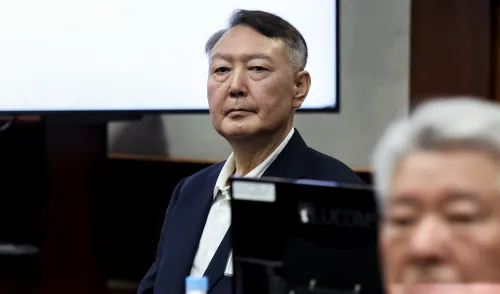
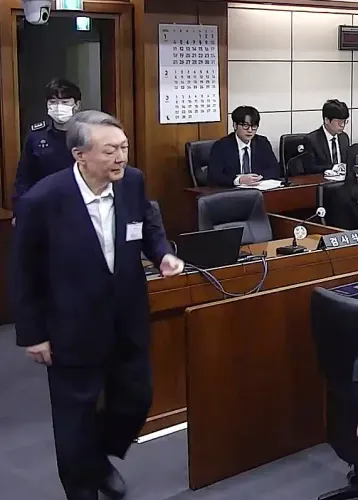
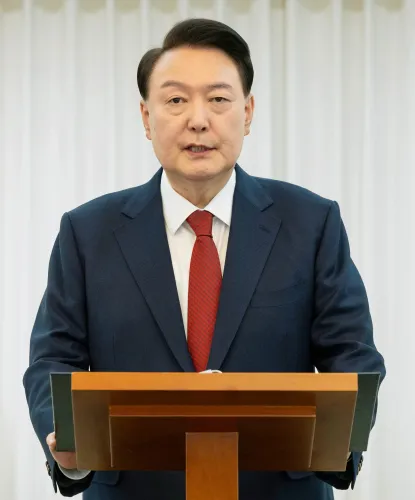
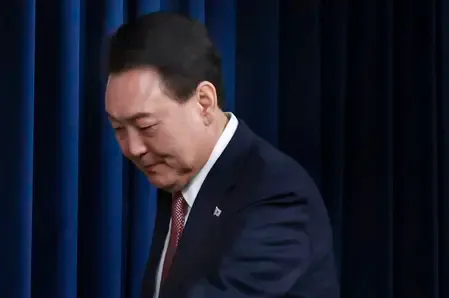
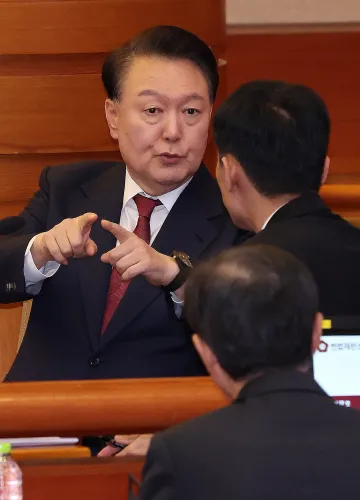
Seoul, Jan 5 (NationPress) The trial of former South Korean President Yoon Suk Yeol regarding allegations of orchestrating an insurrection through a brief declaration of martial law is anticipated to reach its conclusion this week. Speculation surrounds the potential severity of his punishment, which could include the death penalty.
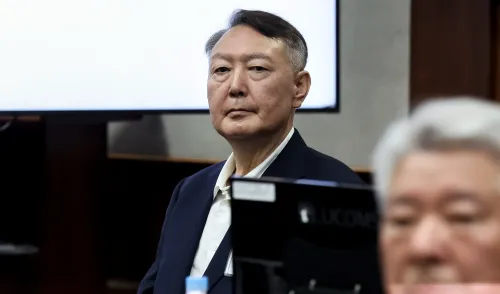
The Seoul Central District Court has scheduled four hearings for this week—on Monday, Tuesday, Wednesday, and Friday—focused on the insurrection trial involving Yoon, former Defense Minister Kim Yong-hyun, former National Police Agency chief Cho Ji-ho, and five additional defendants, according to sources familiar with the legal proceedings.
Kim, Cho, and the other five are accused of being instrumental in the insurrection connected to the martial law attempt in December 2024, and their cases were consolidated with Yoon's just last week.
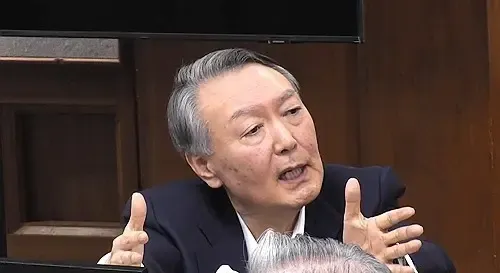
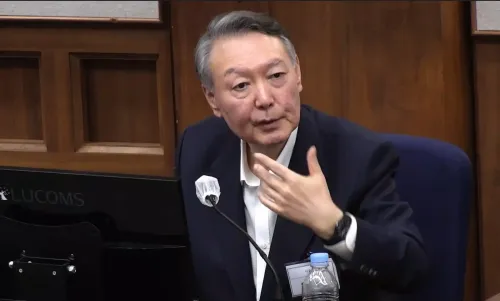
This Monday and Tuesday, the court will finish questioning the former defense minister before moving into final deliberations scheduled for Wednesday and Friday.
Given the number of defendants involved, the concluding hearings are expected to extend late into the night. However, for former police chief Cho, who is currently battling blood cancer, his final arguments might be postponed until January 22.
Legal analysts predict that the court’s sentencing could occur in early February.
In Yoon's instance, special counsel Cho Eun-suk is likely to request one of three forms of punishment permissible by law for an insurrection leader: the death penalty, life imprisonment, or life imprisonment without forced labor.
Yoon faces charges for conspiring with the former defense minister and others to incite a riot aimed at undermining the Constitution through an unlawful martial law declaration without a state of war or equivalent national emergency.
Specifically, he is accused of deploying troops and police to blockade the National Assembly compound, preventing lawmakers from rejecting his decree, and issuing orders for the arrest and detention of the assembly's speaker and leaders of both the ruling and opposition parties.
Notably, Yoon was the first sitting president to be indicted while in custody, as reported by Yonhap news agency in January last year. He was released in March following a court ruling that annulled his arrest but found himself detained again in July on further charges linked to his martial law initiative.
Point of View
It is crucial to recognize the significance of this trial not only for Yoon Suk Yeol but also for the broader political landscape of South Korea. The decisions made in this court will resonate well beyond the courtroom and could shape the nation's approach to governance and accountability.
NationPress
28 Sept 2026
Frequently Asked Questions
What is the main charge against Yoon Suk Yeol?
Yoon Suk Yeol is charged with leading an insurrection through the illegal declaration of martial law without a national emergency.
What are the possible penalties Yoon could face?
Possible penalties include the death penalty, life imprisonment, or life imprisonment without forced labor.
When will the court's decision be announced?
The court's sentencing is expected to be announced in early February.
How has Yoon's situation impacted South Korean politics?
Yoon's trial has sparked widespread debate regarding political accountability and governance in South Korea.
What is the significance of this trial?
This trial may set a precedent for how political figures are held accountable for their actions in South Korea.