6G, AI & Quantum to Define India's Techade: Minister Chandra Sekhar
Synopsis
India's Minister of State for Communications Dr Pemmasani Chandra Sekhar declared at COAI DIGICOM Summit 2026 that 6G, AI, and quantum computing will define India's 'techade'. With 1.22 billion subscribers, Rs 3.72 lakh crore in sector revenue, and 88 lakh fraud connections severed, India's telecom story is impressive — but its sub-1% R&D spend remains a glaring vulnerability.
Key Takeaways
Dr Pemmasani Chandra Sekhar , Minister of State for Communications, declared at the COAI DIGICOM Summit 2026 on April 25, New Delhi , that 6G, AI, and quantum computing will define India's 'techade'.
India completed its 5G rollout in 22 months , with over 5.1 lakh base stations and more than 400 million subscribers — among the fastest deployments globally.
The telecom sector's gross revenue rose 10.7% in FY25 to Rs 3.72 lakh crore , with FDI inflows exceeding Rs 2.4 lakh crore till June 2025.
Over 88 lakh fraudulent connections were cut off via ASTR , and the Financial Fraud Risk Indicator has prevented losses of approximately Rs 2,300 crore .
The PLI scheme for telecom products has seen 42 companies approved , with cumulative sales crossing Rs 65,000 crore and exports surpassing Rs 12,000 crore .
Indian telecom operators spend less than 1% of revenue on R&D , far below the 15–25% invested by global leaders — a critical gap flagged by the minister himself.
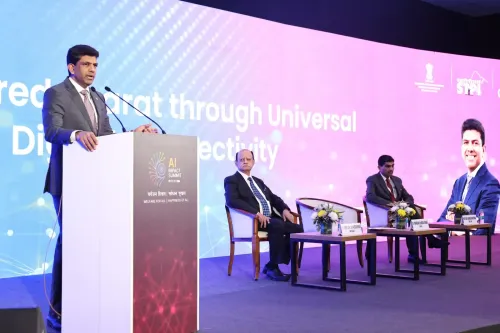
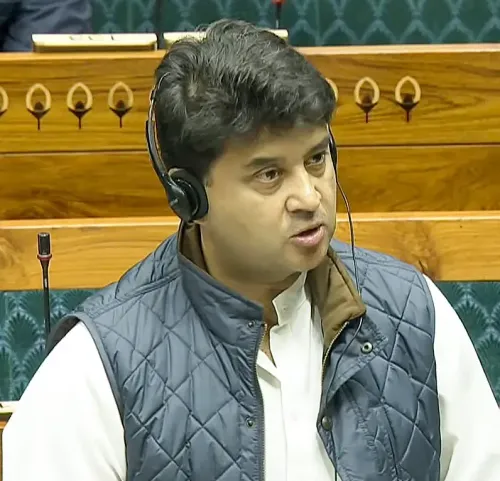
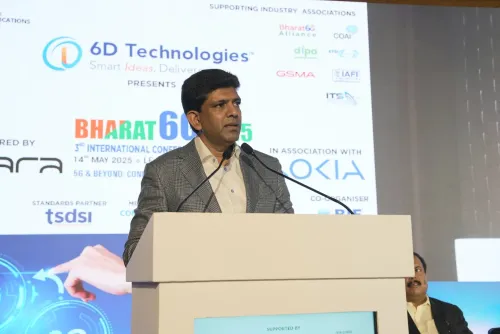
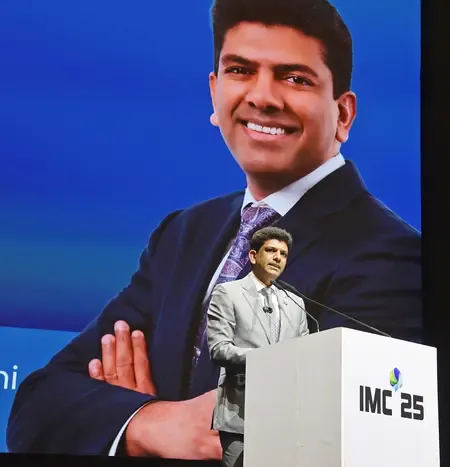
India's next decade of technological dominance — widely referred to as the 'techade' — will be driven by transformative forces including 6G, Artificial Intelligence (AI), and quantum computing, Dr Pemmasani Chandra Sekhar, Minister of State for Communications and Rural Development, declared on Friday, April 25, in New Delhi. Speaking at the inauguration of the second edition of the COAI DIGICOM Summit 2026, the minister underlined that India's formidable telecom transformation has laid the groundwork for this next wave of innovation. The remarks signal a clear government intent to position India as a global technology leader well beyond its current 5G milestone.
India's Telecom Sector: A Decade of Transformation
Dr Chandra Sekhar opened by acknowledging how dramatically India's telecom landscape has evolved, while stressing that the pace of global technological change demands continued urgency. He noted that technology presents both unprecedented opportunities and complex challenges that require a unified response from government and industry alike.
He pointed to the landmark Telecommunications Act, 2023, which represents the first comprehensive overhaul of India's telecom laws in over 140 years. The legislation introduces clearer authorisation frameworks, stronger consumer protections, and dedicated provisions for emerging technologies — a structural shift that analysts say was long overdue.
The minister also referenced the 2021 Telecom Reforms Package, which improved sector-wide financial health through rationalised Adjusted Gross Revenue (AGR) norms, a four-year moratorium on past dues, removal of bank guarantees, and a framework enabling equity conversion by the government.
Policy Pillars: Spectrum, Connectivity and Right-of-Way
On infrastructure policy, Dr Chandra Sekhar highlighted Right-of-Way reforms implemented via the Gati Shakti Sanchar portal and spectrum rationalisation through the National Frequency Allocation Plan 2025, both of which have streamlined approvals and improved investment predictability for telecom players.
BharatNet, described as the world's largest rural broadband programme, remains a centrepiece of the government's connectivity vision. The programme aims to connect over 2.6 lakh Gram Panchayats across India, with long-term operational sustainability built into its design — a critical distinction from earlier, more fragmented rural connectivity efforts.
India's 5G rollout, completed in approximately 22 months, stands as one of the fastest large-scale deployments globally, with over 5.1 lakh base stations activated and more than 400 million subscribers onboarded. The country now boasts over 1.22 billion total telecom subscribers, among the lowest tariffs in the world, and one of the highest per-capita data consumption rates globally.
Revenue Growth, FDI and Manufacturing Momentum
The financial health of India's telecom sector has shown marked improvement. The sector's gross revenue rose 10.7 per cent in FY25 to reach Rs 3.72 lakh crore, reflecting both subscriber growth and rising data monetisation. Foreign Direct Investment (FDI) inflows of over Rs 2.4 lakh crore recorded till June 2025 signal robust global investor confidence in India's telecom story.
On the manufacturing side, the Production Linked Incentive (PLI) scheme for telecom and networking products has gained significant traction. With 42 companies approved, cumulative sales have crossed Rs 65,000 crore and exports have surpassed Rs 12,000 crore — a direct outcome of the government's push to reduce import dependency and build domestic supply chains.
Digital Fraud Crackdown: Sanchar Saathi, ASTR and Chakshu
Addressing the growing menace of telecom fraud, Dr Chandra Sekhar outlined a multi-layered citizen protection framework. Initiatives including Sanchar Saathi, the Digital Intelligence Platform, Chakshu, and ASTR have been deployed to detect and dismantle fraudulent networks at scale.
Over 88 lakh fraudulent telecom connections have been disconnected through the ASTR system, while the Chakshu platform has been expanded and more than 1,200 organisations have been onboarded onto the Digital Intelligence Platform. The Financial Fraud Risk Indicator (FRI) has helped prevent estimated losses of approximately Rs 2,300 crore — a figure that underscores the scale of the fraud challenge India faces.
The R&D Gap: India's Achilles Heel in the Global Tech Race
Despite the sector's impressive growth metrics, Dr Chandra Sekhar sounded a note of caution on a critical structural weakness: Indian telecom operators invest less than 1 per cent of revenue in R&D, compared to 15–25 per cent by leading global players. This gap, if left unaddressed, risks making India a consumer rather than a creator of next-generation technologies like 6G and quantum communications.
This concern is not new — India's chronic underinvestment in telecom R&D has been flagged by industry bodies for years. However, with the global race for 6G standards already underway — led by South Korea, Japan, and the United States — the urgency to bridge this gap has never been greater. India's ambition to contribute to global 6G standardisation through bodies like the International Telecommunication Union (ITU) will ring hollow without a dramatic increase in domestic R&D commitment.
As India prepares for the next phase of its digital journey, the convergence of 6G deployment timelines (expected post-2030), the National AI Mission, and quantum technology programmes under the National Quantum Mission will determine whether the 'techade' narrative translates into genuine global technological leadership or remains aspirational. The government's ability to incentivise private R&D investment — and not just infrastructure rollout — will be the defining test in the years ahead.
Point of View
Record FDI, and a fraud-busting infrastructure that is world-class. But Minister Chandra Sekhar's own admission about sub-1% R&D spending exposes the central contradiction: India is building highways for a car it hasn't yet designed. The global 6G race is being run by nations that invest billions in fundamental research, not just network deployment. Without a structural shift in how Indian telecom companies allocate capital — and without government mandates or incentives to force that shift — India risks being a premium customer of 6G technology rather than its architect. The 'techade' slogan needs a balance sheet to back it up.
NationPress
20 Sept 2026
Frequently Asked Questions
What is India's 'techade' and which technologies will shape it?
India's 'techade' refers to the country's vision of leading global technology advancement over the next decade. According to Minister Dr Pemmasani Chandra Sekhar, it will be shaped by 6G, Artificial Intelligence, and quantum computing, building on India's existing telecom transformation.
How many 5G base stations and subscribers does India have in 2025?
India has over 5.1 lakh 5G base stations and more than 400 million 5G subscribers as of 2025. The rollout was completed in approximately 22 months, making it one of the fastest large-scale 5G deployments in the world.
What is BharatNet and how many villages will it connect?
BharatNet is India's rural broadband programme, described as the largest of its kind in the world. It aims to connect over 2.6 lakh Gram Panchayats across India with high-speed internet, with long-term operational frameworks built into the project.
How much telecom fraud has India prevented through ASTR and Chakshu?
India has disconnected over 88 lakh fraudulent telecom connections using the ASTR system. The Financial Fraud Risk Indicator (FRI) has helped prevent losses of approximately Rs 2,300 crore, while over 1,200 organisations have been onboarded on the Digital Intelligence Platform.
What is India's R&D spending in telecom and why is it a concern?
Indian telecom operators spend less than 1 per cent of their revenue on R&D, compared to 15–25 per cent by leading global players. This gap is a significant concern as India seeks to contribute to next-generation technologies like 6G and quantum communications on the global stage.