Ambuja Cements partners Leilac for low-carbon cement at Kutch plant
Synopsis
Ambuja Cements and UK clean-tech firm Leilac are betting that a single plant in Kutch, Gujarat can prove out one of the world's largest low-carbon cement pathways — and if it works, scale it to capture over a million tonnes of CO₂ a year. For India's cement sector, the world's second-largest, this is a rare commercial-scale test of whether decarbonisation and economics can coexist.
Key Takeaways
Ambuja Cements (Adani Group) and Leilac Limited (UK) announced a partnership on 22 June to develop a commercial-scale low-carbon cement project.
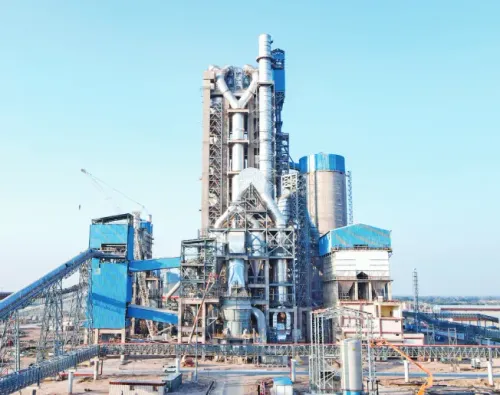
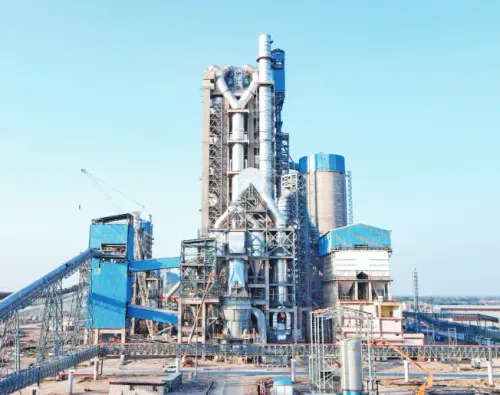
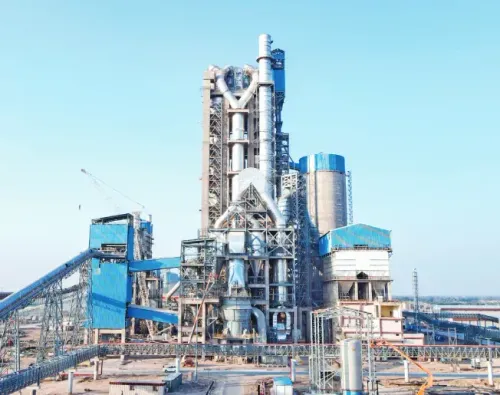
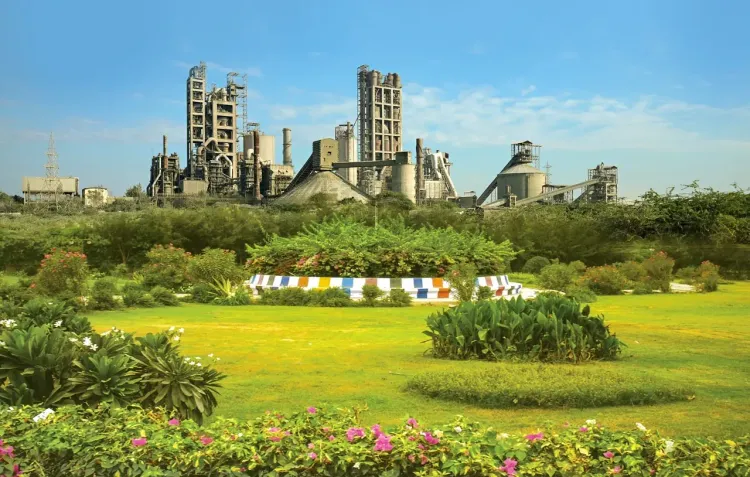
The demonstration site is Ambuja's 6.6 MTPA Sanghi plant in Sanghipuram, Kutch, Gujarat .
If successful, the project can be scaled 7–8 times to capture more than 1 million tonnes of CO₂ annually.
The technology targets zero coal consumption through hybrid electric heating and carbon capture using renewable electricity.
The initiative supports Ambuja's SBTi-validated net zero target for 2050 , backed by nearly 1 GW of captive green power .
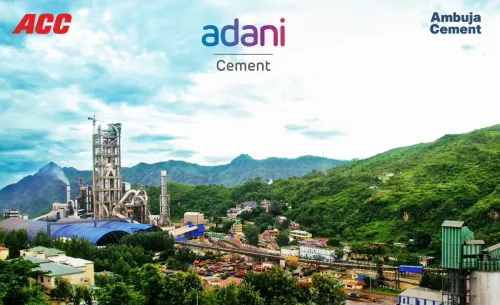
Ambuja Cements, part of the Adani Group, on Monday, 22 June announced a strategic partnership with Leilac Limited, a UK-headquartered clean technology company, to develop what could become one of the world's largest commercial-scale pathways for low-carbon cement production. The project will be based at Ambuja's 6.6 MTPA Sanghi plant in Sanghipuram, Kutch, Gujarat.
What the Project Involves
The commercial demonstration project will evaluate the integration of Leilac's carbon capture and hybrid electric heating technology into Ambuja's existing manufacturing operations. The technology is designed to reduce coal consumption to zero while allowing flexible use of alternate fuels, and to capture unavoidable process carbon dioxide through greater deployment of renewable electricity.
Once successfully demonstrated, the project could be scaled up by 7 to 8 times, enabling the capture of more than one million tonnes of carbon dioxide annually. This would establish a replicable, scalable pathway for low-carbon cement production not only in India but globally.
What the Companies Said
Karan Adani, Director of Ambuja Cements, said: 'The cement industry's transition to a lower-carbon future will require bold thinking, technological innovation and collaboration across the value chain. Our partnership with Leilac reflects our commitment to evaluating next-generation technologies that can reduce process emissions while improving energy efficiency and supporting long-term sustainable growth.'
He added: 'This initiative aligns with our vision of building world-class manufacturing operations for the future.'
Daniel Rennie, CEO of Leilac Limited, said: 'Ambuja Cements operates one of the world's largest and most advanced cement manufacturing networks. We're delighted to begin this collaboration to deliver a commercial-scale project for low-cost, low-carbon cement production. Together, we aim to demonstrate an economic, replicable and future-proof solution for the global cement industry.'
How It Fits Ambuja's Decarbonisation Strategy
The partnership is a key step in Ambuja Cements' broader decarbonisation roadmap, which includes an SBTi-validated net zero target for 2050. The company is already advancing the electrification of cement manufacturing, backed by nearly 1 GW of captive green power, and is laying the groundwork to scale breakthrough carbon capture solutions.
The collaboration is also expected to improve the economics of carbon capture, strengthening the business case for large-scale deployment of carbon capture and utilisation (CCU) technologies across the sector.
Why This Matters for Indian Industry
Cement production is one of the most carbon-intensive industrial processes globally, responsible for roughly 8% of global CO₂ emissions. India, as the world's second-largest cement producer, faces significant pressure to decarbonise the sector while sustaining infrastructure-led growth. This project, if it scales as projected, could offer the industry a commercially viable template — a development that has so far eluded most global players.
Notably, this is among the first large-scale carbon capture integrations at an Indian cement facility, and its success or failure will be closely watched by peers and policymakers alike. The forward path depends on the demonstration results at Sanghipuram and the pace at which Ambuja can bring its renewable energy capacity to bear on the process.
Point of View
Not just symbolically. The real question is economics: carbon capture has a track record of being technically viable but commercially marginal. Ambuja's near-1 GW captive green power base gives it an unusual cost advantage that most Indian cement makers lack, which means the results here may not be replicable industry-wide even if the demonstration succeeds. Policymakers watching this project should resist treating a single plant's outcome as a sector-wide solution without a credible cost-pass-through framework.
NationPress
22 Jun 2026
Frequently Asked Questions
What is the Ambuja Cements and Leilac partnership about?
Ambuja Cements and UK-based Leilac Limited have partnered to develop a commercial-scale low-carbon cement production pathway at the Sanghi plant in Sanghipuram, Kutch, Gujarat. The project integrates Leilac's carbon capture and hybrid electric heating technology to reduce emissions and coal use in cement manufacturing.
Where will the low-carbon cement project be located?
The project is located at Ambuja Cements' 6.6 MTPA Sanghi plant in Sanghipuram, Kutch, Gujarat. This site was chosen as the demonstration facility for the commercial-scale carbon capture integration.
How much CO₂ could the project capture if scaled up?
If the demonstration is successful and the project is scaled up by 7 to 8 times, it could capture more than one million tonnes of carbon dioxide annually. This would make it one of the largest low-carbon cement operations in the world.
How does this fit into Ambuja Cements' sustainability goals?
The partnership directly supports Ambuja Cements' SBTi-validated net zero target for 2050. The company is also advancing electrification of its manufacturing process, backed by nearly 1 GW of captive green power, as part of its broader decarbonisation strategy.
What is Leilac's technology and how does it work?
Leilac's technology combines carbon capture with hybrid electric heating to enable cement production with significantly lower emissions. It is designed to reduce coal consumption to zero, allow flexible use of alternate fuels, and capture unavoidable process CO₂ using renewable electricity.