Anand Mahindra backs Kabaddi's global rise at 2026 championship
Synopsis
Mahindra Group chairman Anand Mahindra used the Commonwealth Kabaddi Championship 2026 to recount the NBA International conversation that inspired the Pro Kabaddi League and to argue that India's eventual loss of kabaddi dominance will be the sport's greatest victory.
Key Takeaways
Mahindra Group chairman Anand Mahindra posted on 27 October 2026 about the Commonwealth Kabaddi Championship 2026 , calling it a sign of growing global interest in the sport.
He recalled a conversation 'over 15 years ago ' with a then-executive at NBA International who endorsed launching a professional kabaddi league, citing the sport's compact, TV-friendly format.
The Pro Kabaddi League was launched in 2014 following the IPL franchise model, becoming one of India's most-watched sports leagues by television audience.
Mahindra acknowledged India's current dominance but predicted that supremacy 'will be challenged sooner than we think' as the game spreads globally.
He welcomed that future competition, arguing the real beneficiary of kabaddi's globalisation will be the sport itself — described as 'India's own ancient sport.'
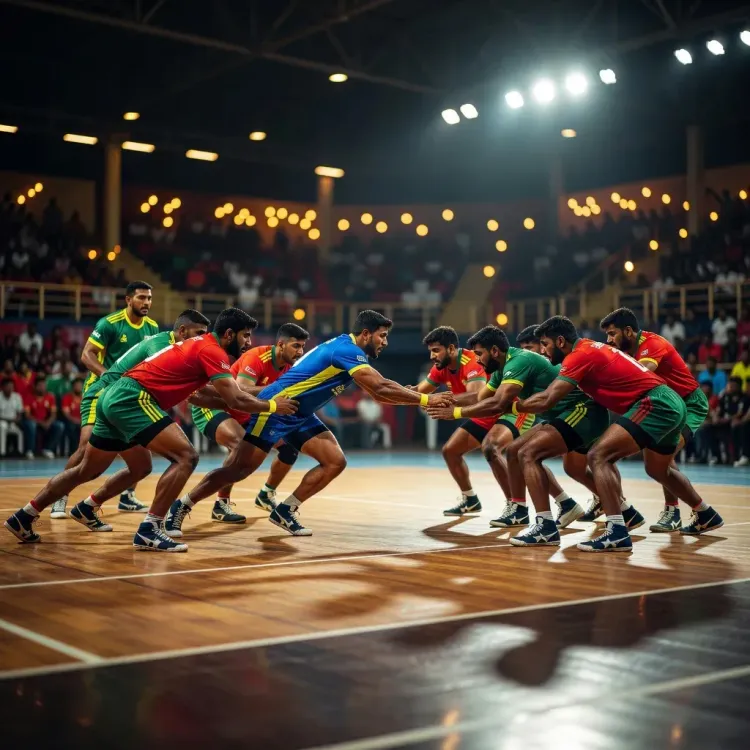
A sport once confined to village dust and school grounds is now drawing the attention of boardrooms and broadcast networks — and Mahindra Group chairman Anand Mahindra wants the world to know it. On Tuesday, 27 October 2026, Mahindra took to X to reflect on the Commonwealth Kabaddi Championship 2026, framing it not merely as a tournament but as evidence of a civilisational sport finally finding its global footing.
The NBA conversation that seeded Pro Kabaddi
Mahindra's post carries more than fan enthusiasm — it carries a founding story. He recalled a conversation 'over 15 years ago' with a friend who was then running NBA International, the global expansion arm of the National Basketball Association. She had, he wrote, 'enthusiastically endorsed the idea' of a professional kabaddi league and 'couldn't understand why India wasn't doing more to promote a sport that seemed tailor-made for television.'
That endorsement from someone steeped in the world's most commercially sophisticated basketball operation was no small thing. The sport's fundamentals — 'a compact court, non-stop action, powerful athletes in muscular confrontations, and matches short enough to hold the attention of a generation with shrinking attention spans' — mapped almost perfectly onto modern broadcast logic.
How Pro Kabaddi turned a hunch into a league
The result of that conviction was the Pro Kabaddi League (PKL), launched in 2014 to professionalise India's indigenous contact sport using a franchise model borrowed explicitly from the Indian Premier League. It was a calculated bet: apply the IPL's commercial architecture — city franchises, star auctions, prime-time broadcast slots — to a sport that already had deep rural roots but almost no organised urban or international presence.
The bet paid off. PKL quickly became one of the most-watched sports leagues in India by television audience, validating the 'tailor-made for television' thesis Mahindra had heard from his NBA counterpart a decade earlier. It demonstrated that the IPL model was not cricket-specific — it was a scalable template for any sport with the right visual rhythm.
India still rules — but the window may be narrowing
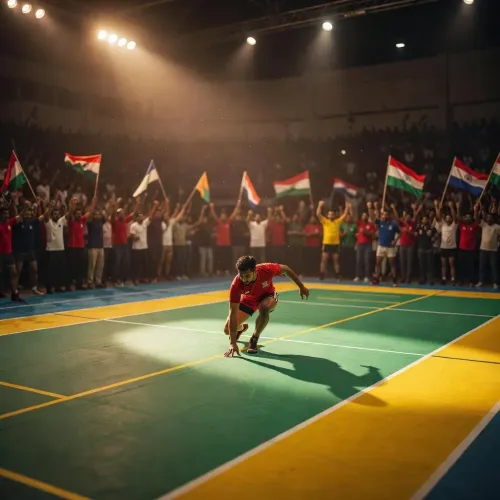
Mahindra is clear-eyed about where India stands today. 'India still rules the Kabaddi court,' he wrote, referencing a clip from the championship. But he added a striking forward look: 'I suspect that supremacy will be challenged sooner than we think.' Rather than treating that prospect as a threat, he embraces it. 'When that happens, the real winner will be Kabaddi, India's own ancient sport.'
It is a position with real strategic logic. Global competition typically accelerates investment, broadcast rights, sponsorship, and infrastructure in any sport. The moment a rival nation seriously threatens India's dominance, kabaddi becomes a geopolitical sporting event — and those command premium attention and premium money. Mahindra, in effect, is rooting for the sport's expansion even at the cost of Indian invincibility.
The Commonwealth Kabaddi Championship 2026 is the clearest signal yet that the sport's international footprint is growing. For a game that only recently had to explain its rules to foreign audiences, competing at a Commonwealth-level tournament marks a structural shift — from cultural curiosity to recognised international sport.
Point of View
And the Commonwealth Championship now validates that thesis publicly. The willingness to root for India's eventual competitive decline in the sport is a sophisticated position — it signals that the PKL's long-term value is tied to the sport's global premium, not to Indian monopoly. For investors and broadcasters watching kabaddi's international trajectory, this framing shifts the conversation from domestic viewership to global rights — a far larger prize.
NationPress
27 Oct 2026
Frequently Asked Questions
What is the Commonwealth Kabaddi Championship 2026?
The Commonwealth Kabaddi Championship 2026 is an international kabaddi tournament for Commonwealth nations, marking a significant step in the sport's recognition and global expansion beyond South Asia.
Who founded Pro Kabaddi League and when was it launched?
The Pro Kabaddi League was launched in 2014 to professionalise kabaddi using a franchise model similar to the IPL. Anand Mahindra has been closely associated with its conceptualisation and promotion.
What did the NBA International executive say about kabaddi?
According to Anand Mahindra, the executive — who ran NBA International at the time — said she 'couldn't understand why India wasn't doing more' to promote kabaddi, calling it 'tailor-made for television' because of its compact court, non-stop action, and short match duration.
Why does Anand Mahindra want India's kabaddi dominance to be challenged?
Mahindra argues that when rival nations seriously compete with India in kabaddi, the sport itself becomes more globally prominent, attracting more investment, broadcast interest, and international audiences — making that a net win for kabaddi.
How did the Pro Kabaddi League grow after its launch?
After its 2014 launch on the IPL franchise model, the Pro Kabaddi League became one of the most-watched sports leagues in India by television viewership, proving that the franchise model could scale beyond cricket to traditional Indian sports.