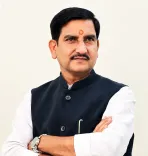
Anand Mahindra: India's First Hybrid SUV Was Built in 2006
Synopsis
Anand Mahindra revealed on X that Mahindra showcased India's first diesel-electric hybrid passenger vehicle on a Scorpio platform at the Delhi Auto Expo in 2006, but deliberately chose not to commercialise it because the market was not ready — reframing restraint as a core innovation strategy.
Key Takeaways
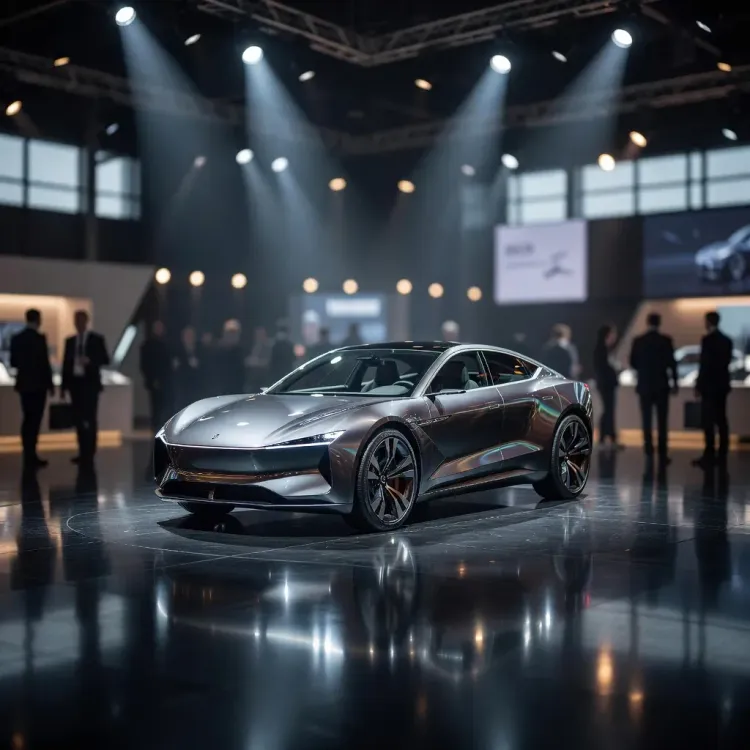
Mahindra unveiled India's first diesel-electric hybrid passenger vehicle on a Scorpio platform at the Delhi Auto Expo in 2006 , two decades ago.
The company chose not to commercialise the concept, citing a market that 'simply wasn't ready' for hybrid technology at that time.
Anand Mahindra dismissed the V6/V8 capability argument, stating building such engines 'was never rocket science' — the real question was whether India needed more high-displacement, fuel-heavy engines.
The post frames deliberate non-commercialisation as an innovation decision in itself, not an engineering limitation.
India's Auto Fuel Policy of 2003 had set a framework for cleaner automotive technologies, providing the policy backdrop under which the hybrid concept was developed.
The episode illustrates the long lead time between concept demonstration and viable hybrid or electric adoption in India's mass market.
Twenty years before hybrid SUVs became a dinner-table conversation in India, Mahindra Group chairman Anand Mahindra says his company had already built one — and made a deliberate choice to walk away from it. In a pointed post on X on Thursday, 15 October 2026, Mahindra revealed that the Group unveiled India's first diesel-electric hybrid passenger vehicle, built on a Scorpio platform, at the Delhi Auto Expo in 2006 — and chose not to commercialise it because, as he put it, 'the market simply wasn't ready.'
The Scorpio hybrid that never hit showrooms
The concept vehicle, demonstrated publicly at Auto Expo 2006, was a rare early bet on hybrid drivetrain technology in a market then dominated by straightforward diesel workhorses. Mahindra's decision to shelve it was not a failure of engineering — it was, by the chairman's own account, a market call. India in the mid-2000s was a price-sensitive, affordability-first arena. Consumers and infrastructure were simply not aligned with the premium a hybrid powertrain would have demanded.
The episode sits against a broader backdrop: Indian automakers of that era were quietly experimenting with alternative powertrains as global oil prices climbed and India's Auto Fuel Policy of 2003 began nudging the industry toward cleaner technologies. Most of those experiments never left the concept stage. Mahindra's hybrid Scorpio was one of them — though, as today's post makes clear, it was not forgotten inside the company.
The V6, V8 question — and the philosophy behind it
Mahindra's post also took a swing at the perennial criticism that Indian manufacturers lack the engineering ambition to build large-displacement engines. His response was brisk and unapologetic: building V6 and V8 engines 'was never rocket science.' The harder question, he argued, was whether India needed 'more gas-guzzlers.' His answer, clearly, was no.
It is a framing that cuts two ways. On one hand, it positions Mahindra's restraint as purposeful environmental foresight. On the other, it pre-empts a common criticism from enthusiast quarters who have long argued that Indian OEMs lack high-performance pedigree. Mahindra's counter: choosing not to build something can itself be the innovation.
A veteran industrialist's message to a younger generation
The post closes with a line of advice — 'Look before you leap. Pause before you punch' — addressed to someone named Nitin, whose identity and context could not be independently verified. The sentiment, however, is clear: in business and in engineering, restraint and market timing are as consequential as technical capability.
For India's automotive sector, now navigating a crowded field of hybrid incentive debates and updated emission roadmaps, the story of the 2006 diesel-electric Scorpio concept is a reminder that the gap between what a company can build and what it chooses to build has always been where strategy lives.
Two decades on, the market India wasn't ready for in 2006 looks a lot like the market every major OEM is racing to serve today — and Mahindra was already there first.
Point of View
Infrastructure-light consumer base could not absorb the cost premium a hybrid drivetrain demanded. Two decades later, as hybrid incentives and tightening emission norms finally create the demand conditions Mahindra anticipated, the chairman's recollection serves a dual purpose: it defends the Group's innovation credentials and subtly signals that Mahindra's current EV and hybrid positioning is the product of long institutional memory, not a reactive pivot. For investors watching the Indian EV space, it is a reminder that OEM credibility in the next mobility cycle will partly be judged by who was thinking about it earliest.
NationPress
15 Oct 2026
Frequently Asked Questions
Did Mahindra really build a hybrid car in 2006?
Yes. Mahindra unveiled India's first diesel-electric hybrid passenger vehicle, built on a Scorpio platform, at the Delhi Auto Expo in 2006. The company chose not to commercialise it, citing market unreadiness.
Why did Mahindra not commercialise the hybrid Scorpio?
Anand Mahindra stated that 'the market simply wasn't ready' — India's consumer base in the mid-2000s was oriented toward affordability, and the infrastructure and demand conditions for hybrid vehicles had not yet materialised.
Why doesn't Mahindra make V6 or V8 engines?
Anand Mahindra addressed this directly, saying building V6 and V8 engines 'was never rocket science.' He argued the real question was whether India needed more fuel-heavy, large-displacement engines, and Mahindra's answer was no.
What was India's first hybrid SUV?
According to Anand Mahindra, the Mahindra diesel-electric hybrid concept built on the Scorpio platform and shown at the Delhi Auto Expo in 2006 was India's first hybrid passenger vehicle.
What is Anand Mahindra's view on innovation?
In his post, Anand Mahindra articulated that 'sometimes innovation is about what you choose not to build' — framing market-timing restraint and deliberate non-commercialisation as strategic innovation decisions, not engineering failures.