Anand Mahindra Says India Startup Boom Will 'Surprise World'
Synopsis
Mahindra Group chairman Anand Mahindra has said the next stage of Indian-led entrepreneurship will unfold inside India, declaring on X that the country's startup boom has 'only just begun' and will 'surprise the world', while affirming that Indian Americans will remain as entrepreneurial as ever despite unspecified challenges.
Key Takeaways
Anand Mahindra posted on X on June 4, 2026 that India's startup boom has 'only just begun'.
He said Indian Americans will remain 'as entrepreneurial as ever' despite unspecified challenges.
The next stage of enterprise, he argued, will be based 'right here within India'.
India is among the world's largest startup ecosystems by number of unicorns.
Startup India (2016) and Make in India (2014) underpin the current policy framework.
Union Budget 2027 provisions on startup taxation and talent incentives are the next watchpoint.
Mahindra Group chairman Anand Mahindra on Thursday, June 4, 2026 said the next big stage of Indian entrepreneurship will play out inside India, predicting that the country's startup boom has 'only just begun' and will 'surprise the world'. In a post on X, the industrialist invoked an old American phrase to argue that the most consequential chapter of Indian-led enterprise is still ahead.
'Time to use the old American phrase: You ain't seen nothing yet..!' Mahindra wrote, adding that 'despite the challenges, Indian Americans will remain as entrepreneurial as ever'. He went on to say that 'the new stage will be right here within India where the startup boom has only just begun' and that 'it will surprise the world'.
Context
Mahindra, who heads one of India's largest diversified conglomerates with interests spanning automobiles, information technology, financial services and renewable energy, is among the most-followed Indian business voices on social media. His commentary regularly straddles entrepreneurship, innovation and broader social trends, and is closely tracked by founders, investors and policymakers.
The post frames a two-track view of Indian enterprise: the established success of the Indian-American diaspora in the United States, and a domestic startup wave that Mahindra suggests is entering a more ambitious phase. He does not specify which 'challenges' he is alluding to.
Policy backdrop
India's startup ecosystem has been shaped by a sequence of central government initiatives over the past decade. Startup India, launched in 2016, introduced simplified compliance, tax benefits for eligible early-stage companies and a national network for incubation and mentorship. The Make in India programme, announced in 2014, sought to lift the share of manufacturing in the economy and encourage domestic enterprise across sectors.
Successive Union Budgets have layered on incentives, including extensions of tax holidays for recognised startups and easier rules for employee stock options. Digital public infrastructure, from UPI to Aadhaar-linked know-your-customer systems, has also lowered the cost of building consumer-facing products at scale.
Stakeholders and impact
India is now widely counted among the world's largest startup ecosystems by number of unicorns, with founders raising both domestic and global venture capital across fintech, software-as-a-service, electric mobility, climate technology and consumer brands. A deep engineering talent pool, improving broadband penetration and a rising base of domestic limited partners have together broadened the funding pipeline.
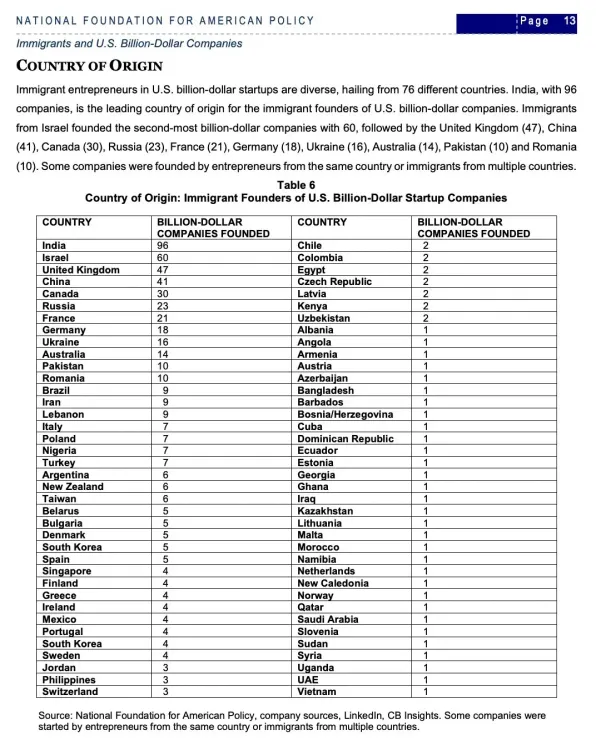
Mahindra's emphasis on Indian-American entrepreneurs reflects a long-running pattern in which the diaspora has founded and led major global technology and professional-services firms. In parallel, India has seen selective reverse migration of senior operators and investors returning from the United States, attracted by domestic growth opportunities and proximity to India-first markets.
For founders, statements from senior industrialists carry signalling weight with first-time investors and prospective hires, particularly at a moment when global venture funding cycles remain uneven. For policymakers, the framing of India as the next stage of diaspora-style entrepreneurship feeds into ongoing debates over taxation of startups, ease of doing business and incentives to retain founders within Indian jurisdictions.
What's next
Attention will turn to forthcoming policy signals, including provisions in the Union Budget 2027 on startup taxation, employee stock option treatment and talent-incentive schemes. Any new bilateral arrangements between India and the United States affecting skilled migration, professional visas and cross-border investment could also shape how the two ecosystems Mahindra references interact in the coming years.
If the domestic boom unfolds as Mahindra projects, the test will be whether India's next cohort of companies can scale beyond home demand into globally competitive franchises, the benchmark long set by diaspora-led firms abroad.
Point of View
From angel-tax treatment to listing norms. By tying domestic optimism to the established record of Indian-American founders, he is implicitly arguing that the diaspora's playbook can now be executed at scale from within India. The framing is bullish but carefully hedged, acknowledging 'challenges' without naming them. The real signal to watch is whether forthcoming Budget cycles and skilled-migration arrangements with the United States align with this narrative or complicate it.
NationPress
18 Oct 2026
Frequently Asked Questions
What did Anand Mahindra say about India's startup boom?
Anand Mahindra said India's startup boom has 'only just begun' and will 'surprise the world', in a post on X on June 4, 2026. He argued that the next stage of Indian-led enterprise will play out inside India rather than abroad.
What did Mahindra say about Indian Americans?
He said Indian Americans will 'remain as entrepreneurial as ever' despite challenges, which he did not specify. His framing positioned the diaspora's record as a baseline that India's domestic ecosystem is now poised to build on.
What is the Startup India initiative?
Startup India is a central government programme launched in 2016 to support early-stage companies. It offers simplified compliance, tax benefits for eligible startups and a national network for incubation, mentorship and funding access.
How large is India's startup ecosystem?
India is among the world's largest startup ecosystems by number of unicorns. Growth has been driven by digital public infrastructure, a deep engineering talent pool, rising domestic venture capital and policy support through Startup India and Make in India.
Why do Anand Mahindra's posts matter for startups?
As chairman of the Mahindra Group, his commentary is closely followed by founders, investors and policymakers. Endorsements from senior industrialists can shape sentiment among early-stage investors, prospective hires and global observers tracking India's enterprise story.