Anand Mahindra touts Zeo EV for last-mile logistics
Synopsis
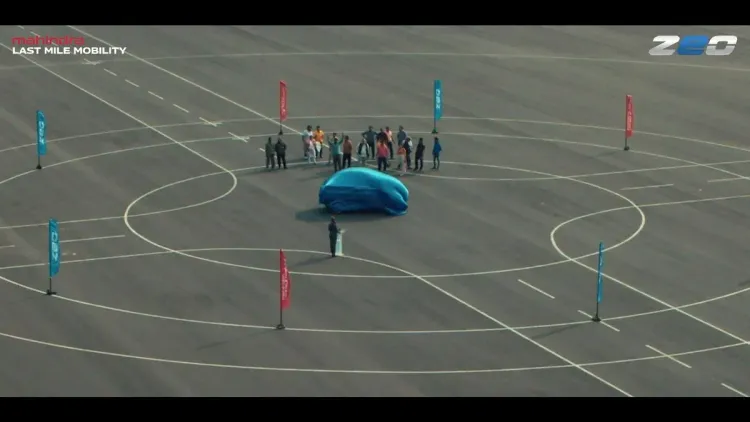
Mahindra Group chairman Anand Mahindra spotlighted the Zeo electric small commercial vehicle on X, positioning it as a zero-emissions answer to India's last-mile logistics demand — backed by a decade of EV policy incentives under NEMMP and FAME-II.
Key Takeaways
Anand Mahindra promoted the Mahindra Zeo on X on 10 November 2026 , emphasising its zero-emissions credentials for last-mile logistics.
The Zeo is a small electric commercial vehicle targeting urban delivery fleets and logistics operators.
India's FAME-II scheme (2019) provides demand incentives for electric commercial vehicles, supporting adoption of products like the Zeo.
Indian automakers have broadly accelerated electric small commercial vehicle launches amid tightening urban emission norms and e-commerce growth.
Anticipated FAME-III guidelines and state-level EV subsidy revisions in coming policy cycles could further shape Zeo's commercial reception.
Mahindra's branding fuses 'zero' and 'Zeo' to signal both environmental intent and a practical incremental business case for fleet operators.
India's last-mile delivery revolution may ride on something small — but the ambition behind it is anything but. Mahindra Group chairman Anand Mahindra took to X on Tuesday, 10 November 2026, to spotlight the Mahindra Zeo, the conglomerate's electric small commercial vehicle aimed squarely at urban logistics, with a pointed three-line pitch: 'Small loads, But big possibilities, Which all add up. Mahindra Zeo, with Zero emissions.'
The Zeo pitch: small vehicle, outsized ambition
The wordplay is deliberate — 'Zeo' folding 'zero emissions' into a brand identity that signals both environmental intent and commercial practicality. Mahindra is positioning the vehicle at the heart of India's booming last-mile logistics sector, where fleets of small trucks and cargo three-wheelers criss-cross every urban neighbourhood, burning diesel and stacking up tailpipe emissions block by block.
The Zeo's proposition is straightforward: replace those incremental diesel kilometres with battery-electric ones. Small load by small load, the carbon math changes.
India's EV commercial push — and the policy runway behind it
Mahindra is not operating in a vacuum. India's electric commercial vehicle push has been building through two successive policy frameworks. The National Electric Mobility Mission Plan (NEMMP) 2020, launched in 2013, first set the direction. The FAME-II scheme, notified in 2019, then put direct demand incentives behind electric commercial vehicles, cutting the sticker-price gap that kept fleet operators tethered to diesel.
Indian automakers have since accelerated electric small commercial vehicle launches, responding to both tightening urban emission norms and the explosive growth of e-commerce delivery networks. The Zeo's messaging fits this wider industry pivot away from diesel three-wheelers and compact trucks toward battery-electric alternatives built for city grids.
Who actually buys the Zeo — and why it matters
The real audience here is not the individual consumer — it is the small logistics operator running a ten-vehicle fleet for a neighbourhood grocery chain, or the last-mile delivery firm stitching together a city-wide fulfilment network. For them, total cost of ownership, charging infrastructure access, and state-level EV subsidies are the deciding variables.
Potential revisions to state EV subsidy structures and long-anticipated FAME-III guidelines in upcoming policy cycles could significantly shift that calculus — either accelerating adoption or complicating it. The sector is watching.
Mahindra's chairman framing the Zeo through a simple, additive logic — 'small loads... which all add up' — is as much a message to fleet buyers as it is to investors tracking the group's electric transition. Zero emissions, the tagline insists, is not a future aspiration. It is the product on offer today.
Point of View
Not aspiration, drive purchase decisions. The last-mile logistics market in India is structurally large and growing, making it a credible beachhead for electric commercial vehicles before the technology scales to heavier freight. For investors, the signal worth tracking is not the post itself but whether Mahindra can convert the strong policy tailwind from FAME-II — and a potential FAME-III — into actual fleet-replacement volume at competitive total-cost-of-ownership numbers.
NationPress
10 Nov 2026
Frequently Asked Questions
What is the Mahindra Zeo?
The Mahindra Zeo is an electric small commercial vehicle designed for last-mile logistics and urban delivery, offering zero tailpipe emissions as an alternative to diesel cargo three-wheelers and small trucks.
What did Anand Mahindra say about the Mahindra Zeo on X?
Anand Mahindra posted on X on 10 November 2026, writing: 'Small loads, But big possibilities, Which all add up. Mahindra Zeo, with Zero emissions' — framing the vehicle as a practical, incremental solution for emission-free urban logistics.
What government schemes support electric commercial vehicles in India?
The FAME-II (Faster Adoption and Manufacturing of Hybrid and Electric Vehicles) scheme, notified in 2019, provides demand incentives for electric commercial vehicles in India. It builds on the National Electric Mobility Mission Plan launched in 2013.
Who is the target buyer for the Mahindra Zeo?
The Mahindra Zeo targets small logistics operators, last-mile delivery firms, and fleet owners who currently run diesel small commercial vehicles for urban distribution and e-commerce fulfilment.
What is FAME-III and how does it relate to EVs like the Zeo?
FAME-III refers to the anticipated next phase of India's flagship EV demand-incentive programme. If notified, it could revise subsidy structures for electric commercial vehicles, potentially lowering fleet acquisition costs and accelerating adoption of vehicles like the Mahindra Zeo.