Anand Mahindra salutes India's never-say-die cricket spirit
Synopsis
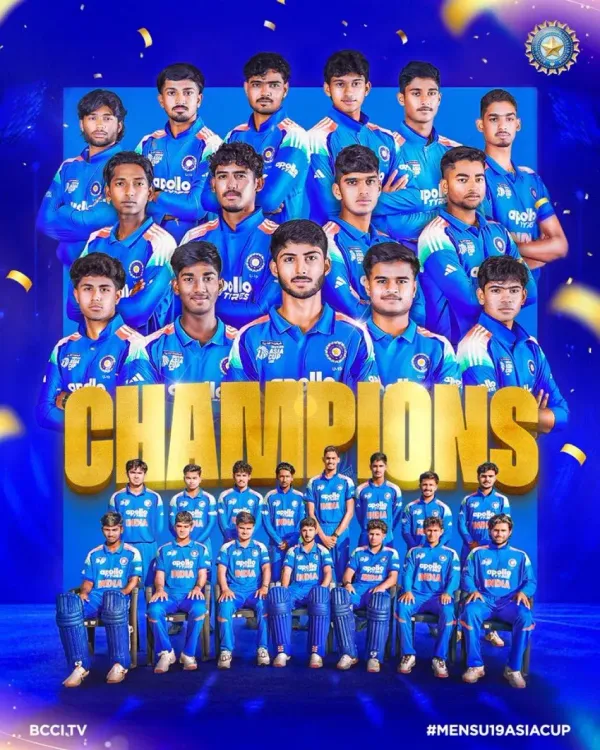
Mahindra Group chairman Anand Mahindra stunned fans on 14 November 2026 with an impassioned tribute to India's young cricketers, invoking the revolutionary verse 'Sarfaroshi ki tamanna' to celebrate a breathtaking, against-the-odds performance and salute the team's winning temperament.
Key Takeaways
Anand Mahindra posted a glowing tribute to the Indian cricket team on 14 November 2026 , calling the performance jaw-dropping.
He invoked the Urdu revolutionary verse 'Sarfaroshi ki tamanna' , historically associated with freedom fighter Ram Prasad Bismil , to underscore the team's fighting spirit.
Mahindra highlighted the 'never-say-die, winning temperament' of the next generation as the key to India staying on top in cricket.
India's sustained cricketing success is underpinned by an extensive domestic pipeline — from district cricket to the Ranji Trophy to India A programmes.
Commentary from high-profile figures like Mahindra amplifies the narrative of Indian cricket as a symbol of national resilience, reaching audiences well beyond sports fans.
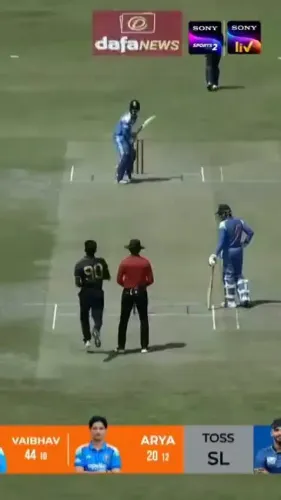
A cricket performance so dramatic it left one of India's most prominent industrialists rubbing his eyes in disbelief. Mahindra Group chairman Anand Mahindra took to X on Saturday, 14 November 2026, with an electrified salute to the Indian cricket team after what he described as a stunning, against-the-odds display by the next generation of players.
Invoking the immortal line from the revolutionary Urdu poem — 'Sarfaroshi ki tamanna aaj unke dilon mein thi' (the desire for sacrifice and glory burned in their hearts today) — Mahindra framed the team's performance not merely as a sporting result, but as a character statement. The nationalist verse, long associated with the freedom fighter Ram Prasad Bismil, carries unmistakable weight: you don't reach for it after a tidy win. You reach for it after something genuinely breathtaking.
Why this moment cuts deeper than a scorecard
What Mahindra is reacting to is bigger than the match itself. His post zeroes in on temperament — the 'never-say-die, winning' mentality he sees crystallising in the current crop of young Indian cricketers. That framing matters. India's cricketing dominance over the past decade has rested not just on individual brilliance but on a systematically built pipeline: domestic competitions, age-group tournaments, and coaching infrastructure designed to forge players who can hold their nerve when the game is on the line.
Public commentary from figures of Mahindra's stature amplifies that institutional story. When a business leader of his visibility salutes a cricket team's spirit with the words of a revolutionary martyr, the message travels far beyond sports commentary — it becomes a signal about national identity and collective resilience.
India's grassroots cricket engine and what it produces
The Indian national cricket team has consistently held top-tier rankings across ICC formats, a track record underpinned by one of the world's most extensive domestic cricket structures. Talent identification begins at the district level; state associations feed into the Ranji Trophy, the Duleep Trophy, and age-group India A programmes that stress-test players before they step onto the international stage. The result is a generation conditioned to chase, to absorb pressure, and to convert near-defeats into victories — precisely the quality Mahindra is saluting today.
That development machine is now a subject of global benchmarking. Cricket boards from other nations have studied India's model as a template for building depth rather than relying on a handful of stars. Mahindra's post — widely followed across industry and culture — will reach audiences well beyond diehard fans, reinforcing the narrative that Indian cricket's greatest export right now is not any single player, but a winning mindset.
If this generation of cricketers keeps producing moments that make industrialists quote revolutionary poetry at 7 PM on a Saturday, the pipeline is clearly working.
Point of View
Not just individual flair. For the Mahindra brand, whose own identity is built around rugged resilience and Indian pride, this alignment is strategic as much as it is sincere. More broadly, when industrialists of this stature publicly validate India's sporting infrastructure, it creates soft pressure on policymakers and boards to protect investment in grassroots programmes. The bigger pattern: corporate India and cricket have become mutually reinforcing storytellers of the country's rising self-confidence.
NationPress
14 Nov 2026
Frequently Asked Questions
What match was Anand Mahindra reacting to in his cricket post on 14 November 2026?
The specific match or series that triggered Mahindra's post on 14 November 2026 has not been officially confirmed in public reporting. His words suggest an extraordinary, comeback-style performance by the Indian cricket team.
What does 'Sarfaroshi ki tamanna' mean and why did Mahindra use it?
'Sarfaroshi ki tamanna' translates to 'the desire for sacrifice and glory' and comes from a famous revolutionary Urdu poem associated with freedom fighter Ram Prasad Bismil. Mahindra used it to convey that India's cricketers showed the same fearless, all-or-nothing spirit.
Who is Anand Mahindra and why does his cricket commentary matter?
Anand Mahindra is the chairman of the Mahindra Group, one of India's largest conglomerates. His widely followed social media posts on sport, business and society carry significant cultural weight and regularly shape public conversation.
How does India develop its young cricket talent?
India runs one of the world's most extensive domestic cricket systems, spanning district-level competitions, state associations, the Ranji Trophy, Duleep Trophy, and India A programmes specifically designed to build depth and prepare young players for international pressure.
Why do Indian business leaders often comment on cricket?
Cricket is deeply woven into Indian national identity, and corporate leaders frequently use the team's performances to signal broader values — resilience, ambition, and collective pride — that resonate with employees, customers, and the public alike.