CM Pema Khandu launches CM-STARS jobs scheme for Arunachal athletes

Synopsis
Arunachal Pradesh Chief Minister Pema Khandu has announced the CM-STARS scheme, approved by the State Cabinet, which will provide direct government employment to athletes winning medals at the Olympics, Paralympics, Asian Games, Asian Para Games, and Commonwealth Games, amending the Arunachal Sports Policy of 2017.
Key Takeaways
CM-STARS (Chief Minister's Sports Talent Appointment & Recognition Scheme) has been approved by the Arunachal Pradesh State Cabinet .
The scheme offers direct government employment to medal-winning athletes at the Olympic, Paralympic, Asian, Asian Para, and Commonwealth Games .
It was implemented through an amendment to the Arunachal Sports Policy, 2017 .
The scheme covers both able-bodied and para athletes across all five major international multi-sport events.
CM-STARS is part of a decade-long sports development push under Chief Minister Pema Khandu , marked by the #10YearsOfTeamArunachal milestone.
Detailed provisions including pay scales, number of posts, and department allocations are yet to be publicly announced.
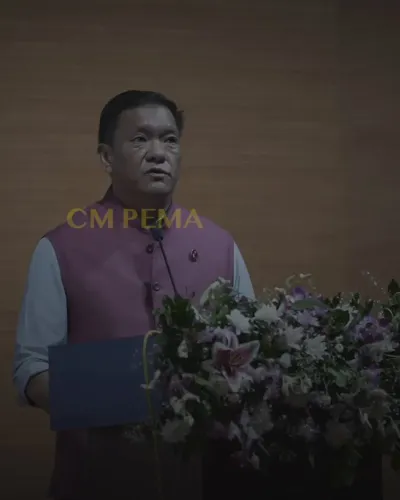
A gold medal is worth celebrating for a moment — but Arunachal Pradesh Chief Minister Pema Khandu wants it to also mean a government job for life. On Saturday, 14 November 2026, Khandu announced that the State Cabinet has approved the Chief Minister's Sports Talent Appointment & Recognition Scheme (CM-STARS), a landmark policy that will offer direct government employment to athletes who win medals at the world's biggest multi-sport stages.
What CM-STARS actually promises athletes
The scheme, cleared through an amendment to the Arunachal Sports Policy, 2017, extends government employment to medal-winning athletes across five tournaments: the Olympic Games, Paralympic Games, Asian Games, Asian Para Games, and the Commonwealth Games. That is a deliberate and wide net — covering athletes with disabilities on equal footing with able-bodied competitors, and recognising performance across the full spectrum of international competition.
Khandu framed the move in unmistakable terms: 'Recognising sporting excellence is not just about celebrating medals, it is also about securing the future of our athletes.' The distinction matters. Felicitation ceremonies and cash rewards are common; a guaranteed career in government service is something sturdier — and rarer.
A 2017 policy gets sharper teeth in 2026
The Arunachal Sports Policy, 2017 was designed to build the scaffolding of sports development in a state that has long punched above its weight in archery and athletics despite limited infrastructure. The original policy focused on training pipelines, talent identification, and facilities. The 2026 amendment grafts an employment guarantee onto that foundation — essentially converting the policy from a development framework into a performance-linked welfare architecture.
That evolution reflects a broader trend across Indian states. Several have used government jobs as the most durable incentive for athletic ambition, recognising that prize money evaporates but a grade-B post in a state department does not. For athletes from smaller northeastern states, where private-sector sports sponsorship is thin, the security of a government appointment can be the difference between continuing to train and hanging up their kit.
Where Arunachal fits in India's sports policy landscape
CM-STARS does not exist in isolation. At the national level, the Khelo India programme has poured resources into grassroots talent across the northeast, and Arunachal has been an active participant. State-level schemes like CM-STARS build a second tier of support — one that is specifically calibrated to the state's own athletes and its own budget.
The hashtags attached to Khandu's post — #10YearsOfTeamArunachal and #10YearsOfSeva — place CM-STARS within a decade-long narrative of sports investment and governance under his administration, signalling that this is not a standalone announcement but a capstone on a longer arc of policy.
The specifics that will determine real impact — pay scales, the number of posts to be created, which government departments will absorb the athletes, and the budget allocation for the next fiscal year — are yet to be publicly detailed. But the cabinet approval marks the threshold that matters most: the political decision is made.
For the young archer in Pasighat or the sprinter training on a dirt track in Itanagar, that cabinet stamp is not bureaucratic paperwork. It is a promise that if they reach the podium, the state will not let them fall off it.
Point of View
Where private sports sponsorship is negligible, linking a government post to a podium finish could meaningfully alter athlete retention and training commitment. The move also slots neatly into the BJP's broader 'sports as development' political narrative in the northeast ahead of future electoral cycles. The real test, however, will be in the rollout: pay bands, post categories, and absorbing departments will determine whether CM-STARS becomes a model others replicate or a promise that stalls in administrative fine print.
NationPress
14 Nov 2026
Frequently Asked Questions
What is the CM-STARS scheme in Arunachal Pradesh?
CM-STARS stands for Chief Minister's Sports Talent Appointment & Recognition Scheme. It is a policy approved by the Arunachal Pradesh State Cabinet that provides direct government employment to athletes who win medals at the Olympic Games, Paralympic Games, Asian Games, Asian Para Games, or Commonwealth Games.
Who is eligible for the CM-STARS scheme?
Medal-winning athletes from Arunachal Pradesh at the Olympic Games, Paralympic Games, Asian Games, Asian Para Games, and Commonwealth Games are eligible for direct government employment under CM-STARS.
How was CM-STARS approved and what policy does it amend?
CM-STARS was approved by the Arunachal Pradesh State Cabinet through an amendment to the existing Arunachal Sports Policy, 2017, which originally focused on sports infrastructure and talent identification.
Why is Arunachal Pradesh offering government jobs to athletes?
Chief Minister Pema Khandu stated the aim is to secure the future of athletes beyond just celebrating their medals. In a state with limited private sports sponsorship, a government job provides long-term financial stability that sustains athletes' careers and incentivises future talent.
How does CM-STARS fit into India's broader sports policy?
CM-STARS complements central schemes like Khelo India by adding a state-level employment safety net for high-performing athletes. Several Indian states have adopted similar job-for-medal policies, and Arunachal's move continues this trend in the northeast.