Apple may raise prices as AI demand drives memory, storage costs higher
Synopsis
Apple CEO Tim Cook has publicly warned that price increases on its products are ‘unavoidable’ — a rare admission that AI infrastructure’s voracious appetite for memory chips is now directly threatening what consumers pay for iPhones and MacBooks. With chipmakers redirecting DRAM capacity to AI servers, the AI boom is no longer just a Wall Street story; it is about to show up on your device price tag.
Key Takeaways
Apple CEO Tim Cook warned in an interview with The Wall Street Journal that product price increases are ‘unavoidable’ due to surging memory and storage chip costs.
Rising AI data centre demand is diverting DRAM and high-bandwidth memory supply away from consumer electronics, tightening availability.
Cook did not specify which Apple products would be affected, the magnitude of increases, or a timeline.
Industry groups representing automakers, retailers, and electronics makers have flagged similar supply and pricing concerns.
John Ternus , currently Senior VP of Hardware Engineering , will take over as Apple CEO on 1 September 2026 ; Cook moves to Executive Chairman .
Apple may increase prices on some of its products as surging memory and storage chip costs — driven by soaring demand from artificial intelligence (AI) data centres — continue to squeeze the company's margins, according to a report citing Apple CEO Tim Cook. The warning signals a potential shift in the tech giant's long-standing strategy of absorbing component cost increases rather than passing them on to consumers.
What Tim Cook Said
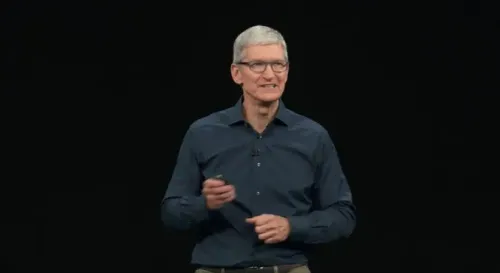
Speaking to The Wall Street Journal, Cook acknowledged that the company can no longer fully offset the sharp rise in component costs. “Unfortunately, price increases are unavoidable,” he was quoted as saying.
“We’re doing our best to mitigate the huge increases that are being passed to us, and we’ve been trying to shield our customers from the increases, but the situation has become unsustainable,” Cook added.
Cook did not specify when price increases would take effect, how large they would be, or which Apple products would be affected.
The AI-Driven Supply Crunch
At the heart of the issue is the dynamic random-access memory (DRAM) market, where supplies have tightened considerably as chipmakers redirect production capacity toward high-bandwidth memory (HBM) used in AI servers. Cook noted that increasing volumes of memory supply are being channelled into AI infrastructure, reducing availability for consumer electronics.
“There’s less supply at a time when consumers want devices and the memory guys are passing along huge price increases,” he said. Cook stressed that memory pricing and supply need to return to “reasonable levels” for consumer products to remain competitively priced.
Industry-Wide Concern
The pressure on Apple is not isolated. Industry groups representing automakers, retailers, and electronics manufacturers have warned that rising demand for memory chips could trigger broader consumer price increases and supply disruptions across sectors. The comments come amid growing concern over the impact of AI-driven demand on global semiconductor supply chains — a structural shift that analysts say could persist well into 2027.
Notably, this marks one of the clearest public admissions by a major consumer electronics CEO that AI infrastructure buildout is beginning to directly affect the prices ordinary consumers pay for devices.
Apple Leadership Transition
The remarks also come as Apple navigates a significant leadership change. In April 2026, the company announced that John Ternus, Senior Vice President of Hardware Engineering, will succeed Tim Cook as Chief Executive Officer, effective 1 September 2026, following a board-unanimous succession decision. Cook will transition to the newly created role of Executive Chairman, where he will engage with global policymakers and assist with select company matters.
What Comes Next
With no timeline or product-specific details disclosed, consumers and investors will be watching Apple’s next earnings call and product launch cycle for concrete signals on pricing. If memory costs remain elevated, analysts expect the pressure to show up first in higher-end devices such as the iPhone and MacBook lines, where DRAM and NAND flash components account for a larger share of bill-of-materials costs.
Point of View
For years, used its scale and supply-chain leverage to absorb component volatility and hold price lines. That the company is now signalling publicly that it cannot do so suggests the AI memory crunch is more severe — and more durable — than a typical semiconductor cycle. The deeper issue is structural: AI infrastructure and consumer electronics are now competing for the same foundational components, and AI is winning that bidding war. For consumers, this means the cost of the AI boom, long invisible in device pricing, is about to become tangible. Incoming CEO John Ternus will inherit both the pricing dilemma and the supply-chain restructuring that Apple will need to execute if it wants to avoid ceding ground to rivals who find alternative memory sourcing.
NationPress
18 Sept 2026
Frequently Asked Questions
Why is Apple considering raising product prices?
Apple is facing sharply higher costs for memory and storage chips, driven by surging demand from AI data centres that are diverting DRAM and high-bandwidth memory supply away from consumer electronics. CEO Tim Cook told The Wall Street Journal that the situation has become ‘unsustainable’ and that price increases are ‘unavoidable’.
Which Apple products will see price increases?
Tim Cook did not specify which products would be affected, how large the increases would be, or when they would take effect. Analysts expect higher-end devices such as the iPhone and MacBook lines to be most exposed, given their larger DRAM and NAND flash content.
How is AI demand affecting memory chip supply?
Chipmakers are redirecting production capacity toward high-bandwidth memory used in AI servers, tightening supply for conventional DRAM used in smartphones and computers. Cook noted that ‘increasing volumes of memory supply are being directed towards AI infrastructure, reducing availability for consumer electronics.’
Who will lead Apple after Tim Cook?
John Ternus, currently Senior Vice President of Hardware Engineering, will become Apple’s Chief Executive Officer on 1 September 2026, following a board-unanimous decision announced in April 2026. Cook will move to the newly created role of Executive Chairman.
Is Apple the only company facing this issue?
No. Industry groups representing automakers, retailers, and electronics manufacturers have all flagged that rising AI-driven demand for memory chips could lead to higher consumer prices and supply disruptions across multiple sectors, suggesting the pressure is industry-wide.