Should International Airports Install ATC Video Recording Systems?

Synopsis
In a significant move, the AAIB has called for the installation of video recording systems in ATC towers at international airports to enhance safety and accountability. This comes in light of a recent runway incident at Delhi Airport. The recommendation aims to ensure thorough investigations and bolster aviation safety standards.
Key Takeaways
Mandatory video recording systems in ATC towers recommended.
Enhances safety oversight and accountability.
Follows a runway incident at Delhi Airport .
Data will aid in reconstructing events and decision-making.
Available for investigation by AAIB and DGCA.
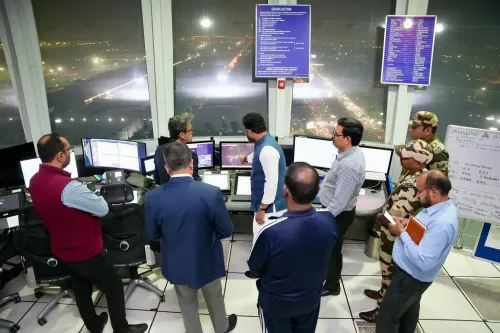
New Delhi, Jan 10 (NationPress) In an effort to enhance the analysis of air traffic controller (ATC) actions following incidents or accidents, the Aircraft Accident Investigation Bureau (AAIB) has put forth a recommendation for the compulsory installation of video recording systems within ATC towers at all international airports across the nation.
This initiative follows the AAIB's investigation into a runway incident at Delhi Airport last November, wherein an aircraft operated by Ariana Afghan Airlines mistakenly landed on an unauthorized runway at Indira Gandhi International Airport.
Reports indicate that the aviation accident regulatory body, functioning under the Ministry of Civil Aviation, stated that this measure would significantly bolster safety oversight and facilitate thorough post-event examinations.
It was highlighted that ATC towers at international airports must be equipped with technology capable of recording both video and background communications occurring within control rooms.
The AAIB emphasized that such data would be vital for reconstructing events and comprehending the decision-making processes of controllers during unusual or high-risk scenarios.
These recordings should be accessible for investigative purposes by both the AAIB and the Directorate General of Civil Aviation (DGCA).
The AAIB noted in its report that “The safety recommendation is made to evaluate the actions of controllers post any incident or accident,” stressing the urgency of implementing this at international airports throughout the nation.
The AAIB has already secured initial testimonies from the flight crew and the air traffic controllers involved in the November incident.
Additionally, approach radar recordings have been gathered for further technical assessment, along with ATC communication transcripts.
The investigation into the runway deviation incident is still ongoing.
While the preliminary report refrains from attributing blame, the recommendation signifies an increasing regulatory emphasis on leveraging technology-driven oversight tools to advance aviation safety and accountability.
Furthermore, the investigation's scope has expanded to encompass crew statements related to other arriving and departing flights occurring around the incident's timeframe.
Point of View
This recommendation by the AAIB underscores a pivotal moment in aviation safety protocols. By integrating advanced technology into air traffic control operations, we can significantly enhance the scrutiny of incidents, ensuring that accountability remains at the forefront of our aviation standards. This initiative is not just about compliance; it's about fostering a culture of safety and transparency in an industry that profoundly impacts public trust.
NationPress
19 Sept 2026
Frequently Asked Questions
What is the purpose of video recording in ATC towers?
The purpose of video recording in ATC towers is to analyze the actions of air traffic controllers during incidents or accidents, enhancing safety oversight and accountability.
Which airports will be affected by this recommendation?
This recommendation applies to all international airports across the country.
How will this affect aviation safety?
This will strengthen safety measures by ensuring thorough investigations and understanding of controller decision-making during critical situations.
Who is responsible for implementing these systems?
The responsibility for implementing these systems lies with the relevant authorities overseeing international airports and air traffic management.
Is this recommendation legally binding?
As of now, it is a recommendation from the AAIB and may require further action from regulatory bodies to become mandatory.