Bengaluru airport sees 33% mango export surge, ships 2.63 mn pieces to 38 nations
Synopsis
BLR Airport quietly became one of India's most consequential agri-export gateways this mango season — 2.63 million pieces, 38 countries, 33% growth, all on the back of cold-chain infrastructure that most passengers never see. Simultaneously, a AERA-mandated UDF reshuffle from September 2026 splits fees between arriving and departing travellers for the first time, actually lowering the combined base charge.
Key Takeaways
BLR Airport handled 1,226 metric tonnes of mangoes between April and July 2026 — a 33% year-on-year rise.
2.63 million mango pieces were shipped to 38 international destinations via 16 airlines .
The United Kingdom and United States were the top export markets.
A revised UDF structure takes effect on 1 September 2026 under an AERA tariff order for FY 2026–27 to FY 2030–31.
Combined domestic UDF drops to ₹425 (from ₹550 ); combined international UDF to ₹1,423 (from ₹1,500 ).
Incremental tariffs tied to Terminal 2 Phase-2 and related projects will apply only after commissioning.
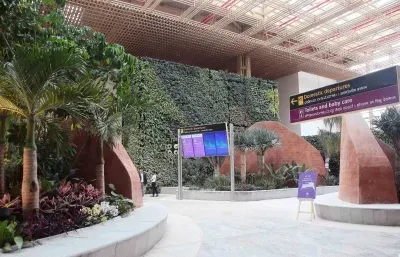
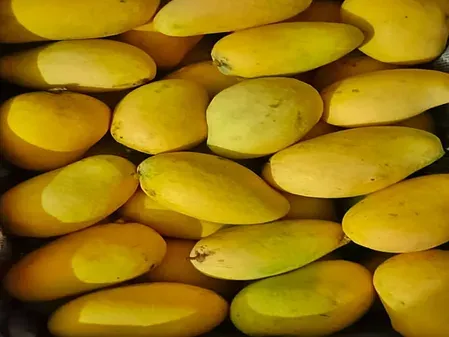
Kempegowda International Airport Bengaluru (BLR Airport) recorded a 33 per cent year-on-year growth in mango handling between April and July 2026, processing 1,226 metric tonnes of mangoes during the period, according to an official statement released on 21 August 2026. The airport dispatched 2.63 million pieces of mangoes to 38 international destinations, underscoring Bengaluru's growing stature as a premier agri-export hub.
Top Destinations and Airlines
The United Kingdom and the United States emerged as the leading markets for Indian mangoes routed through BLR Airport this season. Shipments were facilitated by 16 airlines over the four-month window, reflecting the breadth of connectivity the airport offers to exporters. The volume and airline diversity signal sustained and expanding international appetite for Indian mango varieties.
Cold-Chain Infrastructure Driving Growth
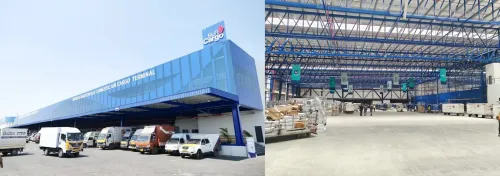
A significant factor behind the surge is BLR Airport's integrated cold-chain network, which ensures temperature-controlled handling of perishable agricultural consignments from airside intake to final loading. This infrastructure has made the airport a preferred gateway for Karnataka's mango exporters, who previously faced logistical bottlenecks in moving time-sensitive produce to long-haul international markets. Notably, this growth comes amid rising global demand for Indian mango varieties such as Alphonso, Kesar, and Totapuri.
Revised User Development Fee from September 2026
In a separate development, BLR Airport will implement a revised User Development Fee (UDF) structure from 1 September 2026, following a tariff order issued by the Airports Economic Regulatory Authority of India (AERA) for the fourth control period spanning FY 2026-27 to FY 2030-31.
Under the new structure, domestic departing passengers will pay ₹300 and arriving passengers ₹125. International departing passengers will be charged ₹997, while arriving international passengers will pay ₹426. The revised rates are applicable until August 2029, after which tariffs will be reviewed based on the completion of key infrastructure projects.
What Changes — and What Doesn't
Bangalore International Airport Limited (BIAL), the airport's operator, clarified that the revised structure does not represent an increase in the overall base UDF. The combined domestic UDF for arriving and departing passengers under the new regime totals ₹425, compared with the existing ₹550 levied solely on departing domestic passengers. For international travellers, the combined figure is ₹1,423, against the current ₹1,500 charged to departing passengers alone.
A notable structural change is the introduction of UDF for arriving passengers — a shift AERA has adopted in line with the approach at several major and newly commissioned airports across India. Until 1 September 2026, the existing fees of ₹550 for departing domestic and ₹1,500 for departing international passengers will remain in force.
Infrastructure Investments Ahead
The tariff order factors in major planned infrastructure at BLR Airport, including Terminal 2 Phase-2, its apron, airfield works, and road and landside facilities. BIAL stated that incremental tariffs linked to these projects will apply only after the respective infrastructure is completed, commissioned, and put into use, following the process prescribed by AERA.
'As one of India's fastest-growing airports, our focus remains on investing ahead of demand while ensuring that Bengaluru Airport continues to deliver safe, efficient and best-in-class infrastructure and passenger experience,' a BIAL spokesperson said. The airport's dual milestone — record agri-exports and a regulatory tariff reset — positions it at the centre of both Karnataka's trade ambitions and India's broader aviation expansion.
Point of View
Meanwhile, is more nuanced than headlines suggest — splitting the fee between arriving and departing passengers actually reduces the combined base charge, even as it sets the stage for incremental hikes once Terminal 2 Phase-2 lands. The real question is whether those infrastructure timelines hold, and whether AERA's review mechanism will protect passengers from tariff creep once capital projects are declared 'complete.'
NationPress
21 Aug 2026
Frequently Asked Questions
How much did mango exports grow at Bengaluru airport in 2026?
BLR Airport recorded a 33 per cent year-on-year growth in mango handling between April and July 2026, processing 1,226 metric tonnes and shipping 2.63 million mango pieces to 38 international destinations. The United Kingdom and the United States were the top markets.
Which airlines handled mango shipments from Bengaluru airport?
Mango consignments were handled through 16 airlines during the April–July 2026 period. The official statement did not name specific carriers, but the breadth of airline participation reflects the airport's wide international connectivity.
What is the new UDF at Bengaluru airport from September 2026?
From 1 September 2026, domestic departing passengers will pay ₹300 and arriving passengers ₹125. International departing passengers will be charged ₹997 and arriving international passengers ₹426, per the AERA tariff order for the fourth control period.
Does the revised UDF mean passengers will pay more at BLR Airport?
Not on a combined basis, according to BIAL. The total domestic UDF for a round-trip (arriving plus departing) falls to ₹425 from the existing ₹550 charged only to departing passengers. The combined international figure drops to ₹1,423 from ₹1,500. The key change is that arriving passengers now pay a fee for the first time.
When will the UDF at Bengaluru airport change again after September 2026?
The revised UDF rates are applicable until August 2029. After that, tariffs will be modified based on the completion of major infrastructure projects, including Terminal 2 Phase-2 and associated airside and landside facilities, following the process prescribed by AERA.