Adani Mundra Airport launches 8 routes, linking Kutch to Mumbai, Bengaluru

Synopsis
Kutch just got its first scheduled commercial flights — eight of them at once. Adani Mundra Airport's tie-up with Star Air links India's largest private port and its biggest operational SEZ to eight cities, closing a long-standing connectivity gap that has constrained the region's industrial and tourism potential.
Key Takeaways
Adani Mundra Airport launched its inaugural scheduled services on 23 June 2025 in partnership with Star Air .
Eight routes connect Mundra to Mumbai , Goa , Hindon , Surat , Belagavi , Bengaluru , Kolhapur , and Nanded .
The airport features a 1,900-metre runway capable of handling passenger and cargo aircraft.
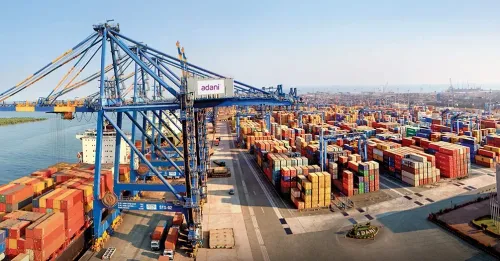
Mundra hosts India's largest private port and its largest notified multi-product SEZ .
The airport was inaugurated by AAHL Director Jeet Adani , extending the group's network of 8 international airports .
Adani Mundra Airport on Tuesday, 23 June launched its inaugural scheduled commercial flight services, connecting the Kutch region of Gujarat to eight cities across India in partnership with regional carrier Star Air. The milestone marks a significant step toward transforming Mundra into a fully integrated multi-modal logistics and business hub anchored by India's largest private port.
Routes and Connectivity
Star Air's new services from Mundra cover Mumbai, Goa, Hindon, Surat, Belagavi, Bengaluru, Kolhapur, and Nanded — a total of eight destinations launched simultaneously. The routes create an express air corridor that is expected to sharply reduce travel time for traders, logistics operators, and tourists accessing the region.
The airport was inaugurated by Adani Airport Holdings Limited (AAHL) Director Jeet Adani, underscoring the Adani Group's intent to build synergy between its port and aviation verticals at a single location.
Infrastructure at Mundra Airport
The terminal is built around a 1,900-metre runway capable of accommodating a wide range of passenger and cargo aircraft. Facilities include multiple check-in counters, spacious parking, comfortable lounges, a full-service food court, wheelchair accessibility, and dedicated passenger drop-off zones. The airport is positioned as a growth-oriented facility designed to scale with rising trade and passenger volumes.
Strategic Significance for Trade and Logistics
Mundra is home to India's largest private port and the country's largest notified, operational multi-product Special Economic Zone (SEZ) — both central to India's import-export ecosystem. Proponents argue that direct air connectivity provides the critical last-mile link that has long been missing, enabling cargo and personnel to move more fluidly between the port, the SEZ, and national supply chains.
This comes amid a broader push by the Adani Group to leverage its aviation expertise across its portfolio of eight international airports — at Navi Mumbai, Mumbai, Ahmedabad, Jaipur, Lucknow, Thiruvananthapuram, Mangaluru, and Guwahati. Mundra now adds a domestic-focused node to that network, with a distinctly industrial and logistics character rather than a purely passenger one.
What This Means for Kutch
Kutch, historically underserved by commercial aviation despite its industrial scale, stands to gain substantially from reduced travel friction. Faster executive and cargo connectivity could attract fresh investment into the SEZ, accelerate supply-chain integration for port users, and open the region's tourism assets — including the Rann of Kutch — to a wider domestic audience. Industry observers note that air connectivity is often a prerequisite for the next tier of industrial investment in emerging economic zones.
The full economic impact will depend on route viability and load factors as Star Air scales operations, with the coming months serving as a key indicator of sustained demand.
Point of View
SEZ, and now aviation assets at a single location, the Adani Group is building a vertically integrated trade corridor that few competitors can replicate. The real question is whether Star Air's load factors hold on thinner routes like Nanded and Kolhapur — route viability, not inauguration optics, will determine whether Mundra becomes a genuine logistics gateway or a prestige project with underutilised runways. For Kutch, the stakes are high: the region has the industrial mass to justify this investment, but aviation demand must be cultivated, not assumed.
NationPress
22 Sept 2026
Frequently Asked Questions
Which cities are now connected to Mundra Airport by Star Air?
Star Air connects Mundra to eight cities: Mumbai, Goa, Hindon, Surat, Belagavi, Bengaluru, Kolhapur, and Nanded. All eight routes were launched simultaneously on 23 June 2025.
Who inaugurated Adani Mundra Airport?
The airport was inaugurated by Jeet Adani, Director of Adani Airport Holdings Limited (AAHL). The launch marks the Adani Group's first airport with a primary industrial and logistics focus rather than a conventional passenger hub.
Why is Mundra Airport strategically important?
Mundra is home to India's largest private port and its largest notified, operational multi-product SEZ, making it a critical node in India's import-export network. Direct air connectivity is expected to provide the last-mile link that enables faster movement of trade personnel and time-sensitive cargo.
What infrastructure does Mundra Airport offer?
The airport has a 1,900-metre runway capable of handling passenger and cargo aircraft, multiple check-in counters, comfortable lounges, a full-service food court, wheelchair facilities, and dedicated passenger drop-off zones.
How does Mundra Airport fit into the Adani Group's aviation portfolio?
Mundra Airport adds a domestic logistics-focused node to the Adani Group's existing network of eight international airports at Navi Mumbai, Mumbai, Ahmedabad, Jaipur, Lucknow, Thiruvananthapuram, Mangaluru, and Guwahati.