BharatNet Achieves Connection of Over 2.15 Lakh Gram Panchayats; 4.09 Lakh Hotspots to Boost Rural Digital Access
Synopsis
In a groundbreaking development, India connects over 2.15 lakh Gram Panchayats through BharatNet, significantly enhancing rural digital infrastructure. With the rollout of 5G and a robust Wi-Fi network, the country is making strides toward a fully connected digital economy.
Key Takeaways
BharatNet connects over 2.15 lakh Gram Panchayats .
Optical fiber deployment increased to 42.36 lakh route kilometres .
5G now covers 99.9% of districts .
PM-WANI has established 4.09 lakh Wi-Fi hotspots .
Data costs have dropped to Rs 8-10 per GB .
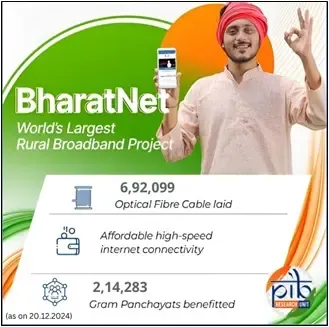
New Delhi, March 8 (NationPress) In a significant initiative to enhance digital connectivity, India has successfully connected over 2.15 lakh Gram Panchayats via BharatNet, according to government announcements made on Sunday.
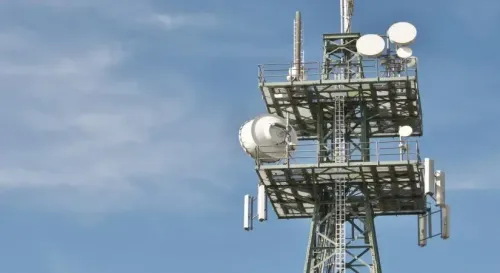
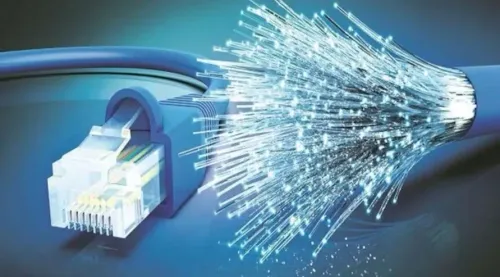
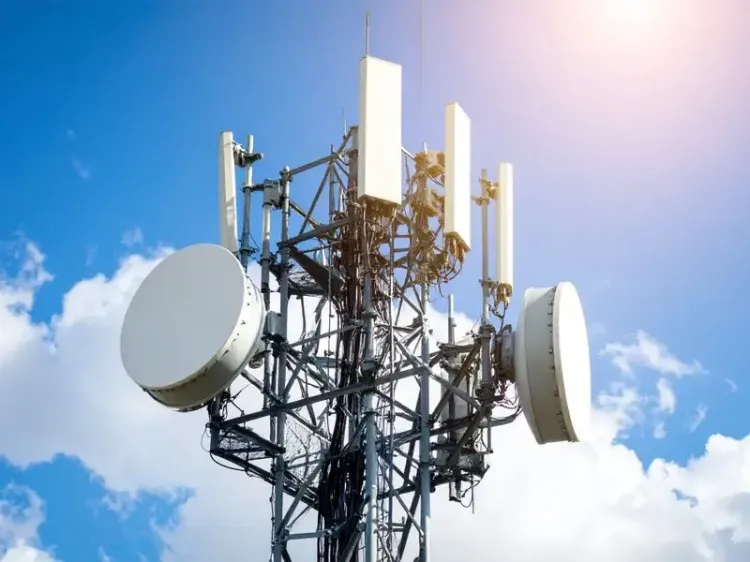
The deployment of optical fiber across the nation has surged from 19.35 lakh route kilometres in 2019 to 42.36 lakh route kilometres by 2025. Furthermore, 5G connectivity now reaches an impressive 99.9 per cent of districts, supported by more than 5.18 lakh base transceiver stations as of December 2025, as stated in an official report.
The Prime Minister Wi-Fi Access Network Interface (PM-WANI) has established 4,09,111 Wi-Fi hotspots with the assistance of 207 PDO Aggregators and 113 App Providers by February 2026, aiming to deliver affordable, high-speed internet access, especially in rural and remote regions.
“By combining last-mile connectivity, literacy initiatives, and affordable internet with platforms linking markets and social schemes, we can enhance rural livelihoods, guarantee timely benefit distribution, and promote inclusive participation in India’s digital economy,” the statement noted.
The expansion of cloud and data center capabilities is accelerating to bolster digital governance and prepare for AI infrastructure. Currently, total data center capacity stands at approximately 1,280 megawatts, with projections indicating it could grow four to five times by 2030.
Through the MeghRaj (GI Cloud), over 2,170 ministries and departments are utilizing secure, scalable government cloud platforms for application hosting.
The government emphasized that data costs have dramatically decreased from Rs 269 per GB in 2014 to around Rs 8–10 per GB by 2025–2026, positioning India as one of the most affordable data markets globally. Broadband subscriptions surpassed the 100 crore mark in November 2025, reflecting a sixfold increase from 13.15 crore a decade ago.
The National Supercomputing Mission (NSM) has deployed 38 supercomputers with a total capacity of 44 Petaflops across various institutions nationwide. This initiative aims to distribute advanced computing resources beyond major metropolitan areas, ensuring equitable access for universities, startups, researchers, and industries, supporting fields such as AI, climate modeling, biotechnology, and advanced manufacturing.
Key pillars of Digital Public Infrastructure (DPI) such as Aadhaar, Unified Payments Interface (UPI), and DigiLocker are transforming basic internet access into substantial social and economic benefits, ensuring seamless service delivery, enhancing financial inclusion, and fostering trusted digital interactions, thereby systematically closing access gaps and integrating all Indians into the digital economy.
Point of View
It's evident that India's commitment to expanding its digital infrastructure is a revolutionary step toward bridging the rural-urban divide. This initiative not only provides essential internet access but also empowers citizens through improved services and financial inclusion.
NationPress
19 Sept 2026
Frequently Asked Questions
How many Gram Panchayats are connected by BharatNet?
As of now, BharatNet has connected over 2.15 lakh Gram Panchayats.
What role does PM-WANI play in this initiative?
PM-WANI facilitates the deployment of Wi-Fi hotspots to provide affordable and high-speed internet connectivity, especially in rural regions.
What are the benefits of the National Supercomputing Mission?
The National Supercomputing Mission aims to enhance access to advanced computing resources for research and development in various fields, fostering innovation and growth.
How have data costs in India changed?
Data costs in India have decreased significantly from Rs 269 per GB in 2014 to approximately Rs 8–10 per GB in 2025-2026.