How Does BSE Celebrate 40 Years of Sensex Reflecting India’s Economic Transformation?
Synopsis
On January 2, BSE Limited commemorated the 40th anniversary of Sensex, a pivotal index in India's economic journey. This celebration highlights the evolution of the capital market and its significance for everyday investors. Discover how Sensex has mirrored India's growth story over the past four decades.
Key Takeaways
BSE celebrates 40 years of the Sensex .
The Sensex represents 40% of India's market capitalization.
It has changed to a free-float methodology since 2003.
Over 20 ETFs manage assets worth ₹2.5 lakh crore based on the Sensex.
The Sensex has delivered a CAGR of 13.4% .
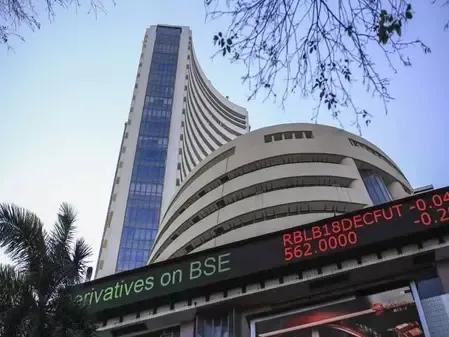
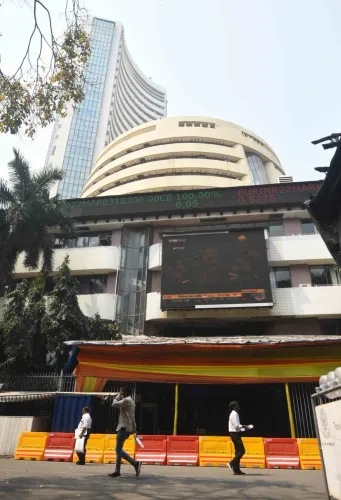
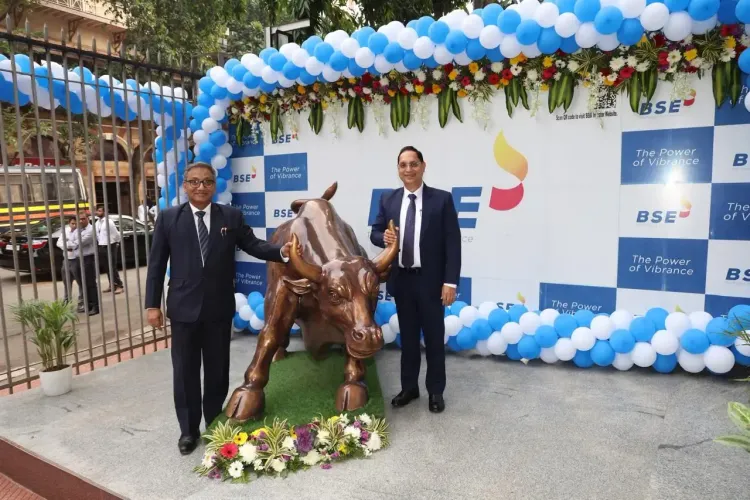
Mumbai, Jan 2 (NationPress) BSE Limited (BSE), the oldest stock exchange in Asia, celebrated a remarkable 40-year journey of the Sensex on Friday, honoring four decades of India’s premier equity index which has become a reflection of the nation’s capital market evolution accessible to the general public.
Introduced in 1986, the Sensex is India's inaugural stock market index, designed to represent the broader Indian equity landscape, comprising 30 high-profile constituents from various sectors such as financial services, technology, energy, FMCG, commodities, healthcare, and industrials.
This index accounts for nearly 40 percent of the total market capitalization in the country, serving as a critical benchmark for assessing India’s economic vigor and stock market performance.
Marking the importance of this milestone, Sundararaman Ramamurthy, the Managing Director and CEO of BSE, emphasized that this event signifies more than just an index; it is a celebration of India’s entire capital market journey.
“Transitioning from a closed market to becoming one of the most technology-driven and investor-focused ecosystems globally, the SENSEX has consistently recorded India’s growth narrative with reliability. As India advances towards Viksit Bharat, BSE remains dedicated to adapting to evolving market demands and reflecting the shifting economic landscape,” remarked Ramamurthy during the event.
Tuhin Kanta Pandey, Chairman of SEBI, noted that over the past four decades, “the Sensex has proven itself as a robust market indicator, reflecting India’s economic changes and the increasing sophistication of our capital markets.”
Since its launch in 1986, it has utilized a market-cap-weighted methodology featuring 30 component stocks, representing well-established and financially sound companies across essential sectors.
As of September 1, 2003, the Sensex has shifted to a free-float (float-adjusted) market-cap methodology, a widely accepted framework for index construction that most global equity indices adopt.
The Sensex stands as one of the most monitored benchmarks in India, boasting over 20 Exchange Traded Funds (ETFs) and index funds managing assets worth ₹2.5 lakh crore. It also ranks among the world’s most active index options contracts and has been recognized as the fastest-growing index derivatives contract for the last two years.
Since its inception, the Sensex has achieved a compounded annualized growth rate (CAGR) of 13.4 percent, closely aligning with India’s nominal gross domestic product (GDP) growth of approximately 13 percent during the same period.
Point of View
The celebration of the Sensex's 40 years reflects the resilience and growth of India's capital markets. It showcases the journey of the Indian economy and its adaptation to global financial trends, emphasizing the importance of investor engagement and technological advancements.
NationPress
24 Sept 2026
Frequently Asked Questions
How has the Sensex changed over the years?
Initially calculated using a market-cap-weighted methodology, the Sensex has evolved to a free-float market-cap methodology since 2003, enhancing its relevance in the global market.
What sectors does the Sensex cover?
The Sensex includes major sectors such as financial services, technology, healthcare, FMCG, and industrials, representing a diverse cross-section of the Indian economy.
Why is the Sensex important?
The Sensex serves as a benchmark for the Indian stock market, reflecting the country’s economic health and helping investors make informed decisions.
What has been the growth rate of the Sensex?
Since its inception, the Sensex has delivered a compounded annualized growth rate (CAGR) of 13.4%, closely mirroring India’s GDP growth during the same period.