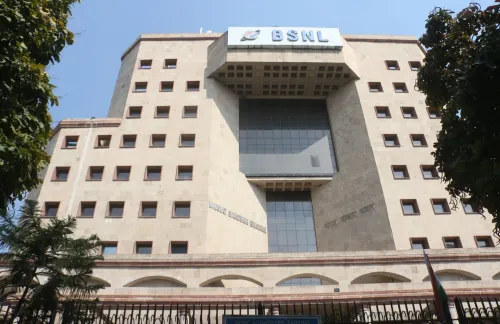
BSNL ARPU Jumps 42% to Rs 101 in FY26: Scindia

Synopsis
BSNL's Average Revenue Per User surged 42% to Rs 101 in FY2025-26, as India joins just five nations with end-to-end indigenous telecom capabilities. Minister Scindia called the turnaround 'transformative' — but with Jio and Airtel at Rs 180-220 ARPU, the real test for BSNL's revival is just beginning.
Key Takeaways
BSNL's ARPU rose 42 per cent year-on-year to Rs 101 in FY 2025-26 , up from Rs 71 in FY 2024-25.
Union Communications Minister Jyotiraditya M.
Scindia chaired the annual review at Vigyan Bhawan, New Delhi on April 23, 2025 .
India has joined an exclusive group of five countries globally with end-to-end indigenous telecom capabilities , enabled through BSNL's 4G rollout.
The Odisha Circle recorded 68 per cent year-on-year growth in the Enterprise Business segment, while the Enterprise Business vertical nationally posted 15 per cent revenue growth .
Karnataka led in EBITDA growth; Assam, Jharkhand, UP (East) were recognised for multi-segment performance and FTTH ARPU improvements.
Ravi and senior DoT officials attended the review, with the government emphasising accountability, circle-level monitoring, and alignment with domestic telecom equipment manufacturers.
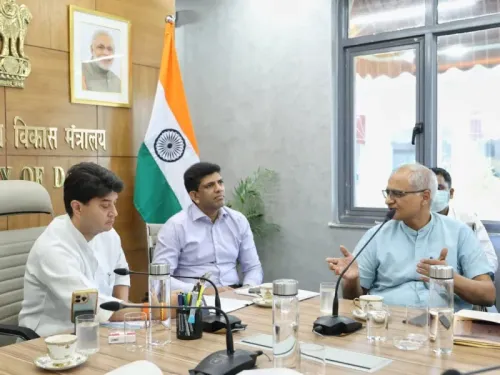
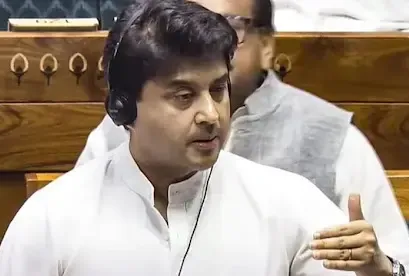
New Delhi, April 23: Bharat Sanchar Nigam Limited (BSNL) has recorded a 42 per cent year-on-year jump in its Average Revenue Per User (ARPU), rising from Rs 71 in FY 2024-25 to Rs 101 in FY 2025-26, marking one of the most significant financial turnarounds in the state-owned telecom company's recent history. Union Communications Minister Jyotiraditya M. Scindia announced the milestone on Thursday, April 23, at a strategic review and planning meet held at Vigyan Bhawan, New Delhi, calling BSNL's overall performance "transformative."
BSNL's Financial Turnaround: Key Numbers
The annual results review for FY 2025-26 painted a markedly improved picture for BSNL, a telecom operator that had been struggling with mounting losses and subscriber attrition for over a decade. The 42 per cent ARPU growth is a critical indicator that the company is not just adding users but extracting greater value from its existing subscriber base — a sign of maturing monetisation strategy.
The meeting served as a comprehensive evaluation of BSNL's operational metrics, covering Quality of Service (QoS), subscriber base expansion, ARPU enhancement, and revenue milestone attainment. The government's Rs 1.64 lakh crore revival package approved in 2022, which included spectrum allocation and financial restructuring, appears to be yielding measurable results.
From 3G Laggard to Indigenous 4G Leader
Minister Scindia described BSNL's transition from a 3G provider to a competitive 4G player as historically significant. He underscored that India has now joined an elite group of just five countries globally that have developed end-to-end indigenous telecom capabilities — a feat achieved through BSNL's partnership with domestic technology firms, most notably Tata Consultancy Services (TCS) and the Centre for Development of Telematics (C-DoT).
This indigenisation drive is not merely a business story — it is a national security and strategic autonomy story. Reducing dependence on foreign telecom equipment from vendors like Huawei, Ericsson, or Nokia directly strengthens India's digital sovereignty, a priority that has gained urgency in the post-pandemic geopolitical landscape.
Circle-Wise Standouts and Enterprise Growth
The review meeting also honoured top-performing telecom circles. The Odisha Circle was recognised for balanced excellence, posting approximately 21 per cent growth in revenue from services and a remarkable 68 per cent year-on-year growth in the Enterprise Business (EB) segment. Nationally, the Enterprise Business vertical was named the best performing business vertical with a 15 per cent increase in revenue from services.
The Karnataka Circle was recognised for significant EBITDA growth, while Assam and Jharkhand were praised for achieving positive growth across all three business segments. Uttar Pradesh (East) and Jharkhand were also commended for notable improvements in FTTH (Fibre-to-the-Home) ARPU, signalling that BSNL's broadband push in smaller cities and semi-urban areas is gaining traction.
Government's Strategic Direction and Accountability Push
Minister Scindia emphasised the need for focused execution, accountability, and rigorous monitoring at the circle level. He urged all Chief General Managers (CGMs) to replicate best practices from high-performing circles to ensure sustained momentum, improved customer experience, and continued financial excellence.
He also stressed the necessity of deeper alignment with telecom equipment manufacturers to strengthen the domestic ecosystem and consolidate India's position as a global leader in indigenous telecom technology. This signals that the government intends to use BSNL not just as a commercial entity but as a vehicle for Atmanirbhar Bharat in the critical telecom sector.
The meeting was attended by Minister of State for Communications Chandra Sekhar Pemmasani, Secretary, Telecommunications, Amit Agarwal, senior officials from the Department of Telecommunications (DoT), CMD BSNL A. Robert J. Ravi, and members of the BSNL Board and CGMs from across the country.
What This Means for BSNL's Future and Indian Telecom
The 42 per cent ARPU jump is significant context: private players like Reliance Jio and Airtel report ARPUs in the range of Rs 180–220, meaning BSNL still has considerable ground to cover. However, the trajectory — not the absolute number — is what matters at this stage of the revival. An ARPU of Rs 101 signals that BSNL's 4G rollout is beginning to convert low-value users into revenue-generating subscribers.
Notably, BSNL's revival comes at a time when India's telecom market is essentially a three-player duopoly dominated by Jio and Airtel, following Vodafone Idea's prolonged financial distress. A financially healthier BSNL could serve as a competitive counterweight, potentially moderating tariff hikes that have squeezed consumers since mid-2024. With 5G rollout on the horizon for BSNL — reportedly targeting FY 2026-27 — the next 12–18 months will be decisive in determining whether this turnaround is sustainable or a temporary uptick driven by one-time government support.
Point of View
But the government must resist the temptation to declare victory prematurely. The revival package of Rs 1.64 lakh crore was one of the largest state interventions in Indian telecom history — and the returns, while positive, are still modest when benchmarked against private competitors. The more strategically significant story here is India's entry into the exclusive club of nations with indigenous telecom stacks: this has direct implications for national security, export potential, and digital sovereignty that go far beyond BSNL's quarterly metrics. The real accountability test will come when government support tapers — and BSNL must compete on merit alone.
NationPress
22 Sept 2026
Frequently Asked Questions
What is BSNL's ARPU in FY 2025-26?
BSNL's Average Revenue Per User (ARPU) in FY 2025-26 is Rs 101 , up from Rs 71 in the previous year. This represents a 42 per cent year-on-year growth , one of the strongest ARPU improvements in BSNL's recent history.
Why is BSNL's ARPU growth significant?
ARPU growth indicates that BSNL is generating more revenue per subscriber, a sign of improved monetisation and service quality. It suggests that the government's Rs 1.64 lakh crore revival package and the 4G rollout are beginning to deliver commercial results.
Which BSNL circles performed best in FY 2025-26?
The Odisha Circle was honoured for balanced excellence, posting 21 per cent service revenue growth and 68 per cent enterprise segment growth . Karnataka led in EBITDA growth, while Assam and Jharkhand achieved positive growth across all three business segments.
Has BSNL completed its 4G rollout in India?
BSNL has transitioned from a 3G provider to a competitive 4G player using end-to-end indigenous technology. India has joined a group of just five countries globally with domestic telecom capabilities, though full nationwide 4G coverage is still being expanded.
How does BSNL's ARPU compare to Jio and Airtel?
Despite the 42 per cent jump, BSNL's ARPU of Rs 101 is significantly lower than private competitors like Reliance Jio and Airtel , which report ARPUs in the range of Rs 180–220 . Closing this gap remains BSNL's key commercial challenge going forward.