PM-ABHIM: Centre asks states to fast-track 19,983 health units
Synopsis
PM-ABHIM has approved 19,983 health units under a ₹64,180 crore outlay. Now the Centre wants states to get them running. At a Bengaluru workshop, Health Secretary Punya Salila Srivastava pressed for faster operationalisation, more capital investment and public-private partnerships, a sign that the focus is moving from approvals to delivery.
Key Takeaways
Union Health Secretary Punya Salila Srivastava urged states and UTs to accelerate PM-ABHIM implementation at a workshop in Bengaluru .
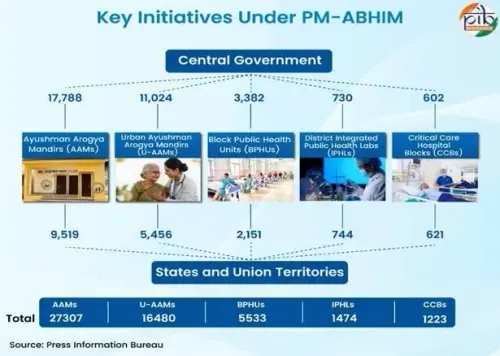
PM-ABHIM, launched on 25 October 2021 with a ₹64,180 crore outlay, has approved 19,983 infrastructure units .
The mission supports 11,001 Ayushman Arogya Mandir–Sub Health Centres and 5,456 Urban Ayushman Arogya Mandirs.
Support has gone to 2,151 Block Public Health Units, 744 Integrated Public Health Laboratories, 631 Critical Care Blocks and 48 Virus Research and Diagnostic Laboratories.
Srivastava stressed public-private partnerships, a mission-mode approach to the SDGs, and stronger links with ABDM and Aarogya Setu .
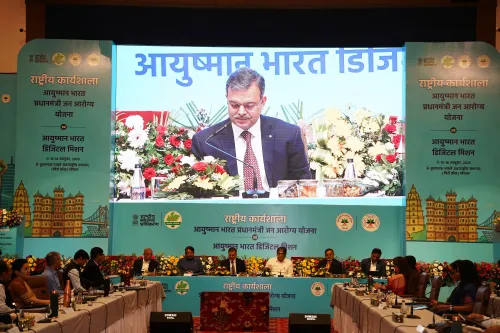
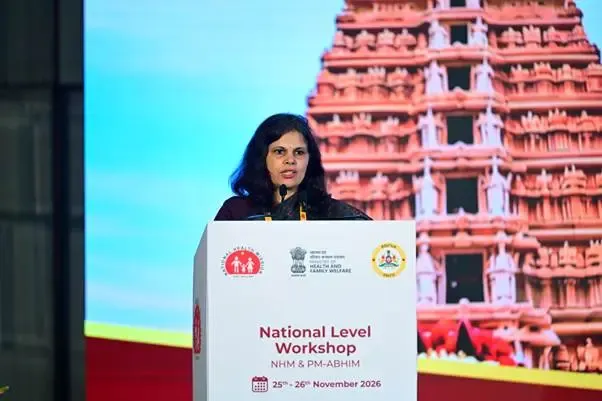
Union Health Secretary Punya Salila Srivastava has urged states and Union Territories to speed up implementation of the Pradhan Mantri Ayushman Bharat Health Infrastructure Mission (PM-ABHIM) and to bring approved healthcare facilities into operation on time, according to an official statement issued on Thursday, 26 November 2026. She was addressing a national orientation workshop on the National Health Mission (NHM) and PM-ABHIM in Bengaluru. She also stressed greater capital investment in health and wider use of public-private partnerships.
Key Developments at the Bengaluru Workshop
According to the statement, Srivastava said the government has prioritised higher capital investment in the health sector. She also pointed to public-private partnerships as a way to strengthen both healthcare infrastructure and service delivery.
The two-day workshop brought together representatives from states and Union Territories and senior officials of the Ministry of Health and Family Welfare. Participants reviewed progress under the two national missions, discussed implementation priorities and worked on better coordination to improve public health outcomes.
Srivastava called for a mission-mode approach to speed up progress towards the Sustainable Development Goals (SDGs). She said this effort should rest on strong situational awareness and effective coordination between departments.
Where PM-ABHIM Stands
PM-ABHIM was launched on 25 October 2021 with a financial outlay of ₹64,180 crore. So far, it has approved 19,983 infrastructure units across the country, which officials described as significant progress in healthcare facilities, diagnostic capacity and critical care infrastructure.
The mission has four stated goals:
- strengthen public health infrastructure
- improve disease surveillance and outbreak response
- promote pandemic-related research
- improve emergency preparedness and biosecurity
Strengthening Primary and Urban Healthcare
At the grassroots level, the mission is supporting 11,001 Ayushman Arogya Mandir–Sub Health Centres in locations that previously had no building. It is also supporting 5,456 Urban Ayushman Arogya Mandirs.
The Free Drugs and Diagnostics Initiative supports the availability of essential medicines and diagnostic services at these centres. The statement said this has improved access to primary healthcare.
Surveillance, Diagnostics and Critical Care
The disease surveillance and diagnostic network has been expanded through 2,151 Block Public Health Units and 744 district-level Integrated Public Health Laboratories.
In addition, 631 Critical Care Blocks and 48 Virus Research and Diagnostic Laboratories have received support. These are meant to improve capacity for timely diagnosis, disease management, critical care and research.
Role of Digital Health
Srivastava said digital health initiatives should play a larger role. She called for stronger links with the Ayushman Bharat Digital Mission (ABDM) and Aarogya Setu to make healthcare delivery more integrated, coordinated and efficient.
Notably, the message from the Centre focused on operationalisation. Building and approving facilities is only the first step; the challenge now is getting them staffed, equipped and working. How quickly states can do this is likely to decide what PM-ABHIM finally delivers for patients.
Point of View
PM-ABHIM's headline figure is still counted in approvals, not in working facilities that are treating patients. The Centre's emphasis on 'timely operationalisation' suggests a gap between sanctioned infrastructure and services on the ground, and that gap usually comes down to staffing, equipment and state-level execution. The push for public-private partnerships also deserves scrutiny: it can bring in capital, but in primary and public health it needs strong safeguards so access is not compromised. The real measure of the mission will be how many of these units are fully staffed and functional, and that figure is missing from official communication.
NationPress
26 Nov 2026
Frequently Asked Questions
How many infrastructure units have been approved under PM-ABHIM?
PM-ABHIM has approved 19,983 infrastructure units across the country. These include health centres, public health laboratories, critical care blocks and virus research facilities.
What did Health Secretary Punya Salila Srivastava ask states to do?
She asked states and Union Territories to accelerate PM-ABHIM implementation and to make approved healthcare facilities operational on time. She also stressed capital investment, public-private partnerships and stronger links with digital health platforms such as ABDM and Aarogya Setu.
What facilities are being built under PM-ABHIM?
The mission supports 11,001 Ayushman Arogya Mandir–Sub Health Centres and 5,456 Urban Ayushman Arogya Mandirs. It also supports 2,151 Block Public Health Units, 744 Integrated Public Health Laboratories, 631 Critical Care Blocks and 48 Virus Research and Diagnostic Laboratories.
Where was the NHM and PM-ABHIM workshop held?
The two-day national orientation workshop on NHM and PM-ABHIM was held in Bengaluru. It brought together representatives from states and UTs and senior Health Ministry officials to review progress and coordinate implementation.