Maritime MoU: Delhi University Partners CMEC to Build India's Seafaring Future
Synopsis
India's seafaring workforce has tripled in 12 years and now holds 12% of the global maritime share — but the government wants 20% by 2030. A landmark MoU between Delhi University and CMEC, signed in the presence of Minister Sonowal, could be the academic engine that gets India there.
Key Takeaways
Delhi University and CMEC at RIS signed an MoU on April 25, 2025 to advance maritime education, research and skill development in India.
India's seafaring workforce has nearly tripled in 12 years and currently represents approximately 12% of the global maritime workforce .
The government has set a target to raise India's global maritime workforce share to 20% by 2030 .
India has a coastline of over 11,000 kilometres and 111 national waterways , underscoring its strategic maritime potential.
A second MoU was signed between RIS and the Delhi School of Economics for joint public policy research and training programmes.
New career pathways in maritime logistics, green shipping, supply chain management and maritime policy are expected to open for students under this collaboration.
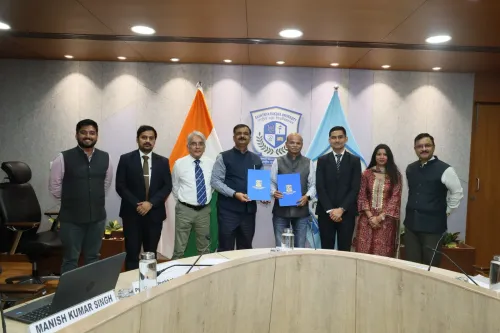
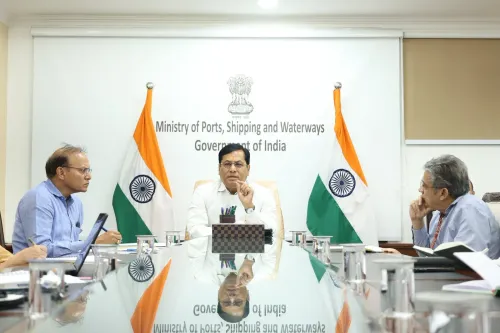
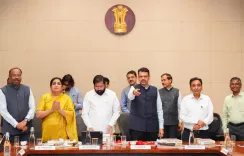
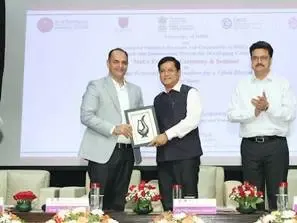
New Delhi, April 25 (NationPress) — In a significant push to strengthen India's maritime education ecosystem, Union Minister of Ports, Shipping and Waterways Sarbananda Sonowal presided over the signing of two landmark Memoranda of Understanding (MoUs) at the Delhi School of Economics on Friday, April 25, underscoring the government's ambition to position India as a global maritime leader under Prime Minister Narendra Modi's Viksit Bharat vision.
What the MoUs Entail
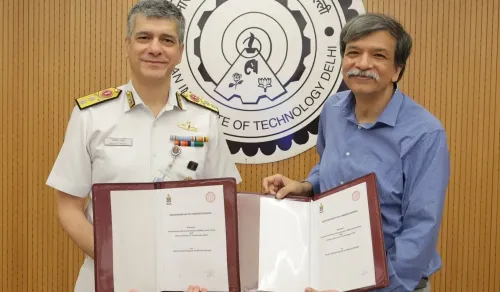
The first and most consequential agreement was signed between the University of Delhi (DU) and the Centre for Maritime Economy and Connectivity (CMEC) at the Research and Information System for Developing Countries (RIS). The MoU is designed to institutionalise collaboration across maritime education, research, skill development and capacity building — areas that India's rapidly expanding Blue Economy demands at scale.
Key areas of cooperation under the agreement include development of structured academic frameworks for maritime courses, joint research projects, training programmes, knowledge dissemination, and professional counselling for students exploring careers in the maritime sector. A second MoU was also exchanged between RIS and the Delhi School of Economics (DSE) to advance joint programmes in public policy research and training.
Sonowal's Vision: Bridging Academia and Industry
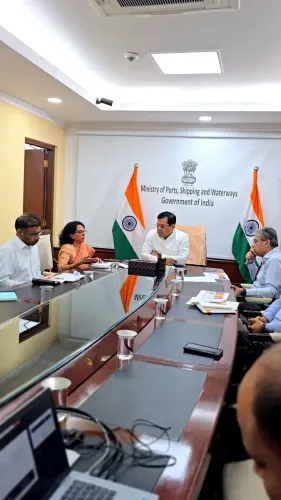
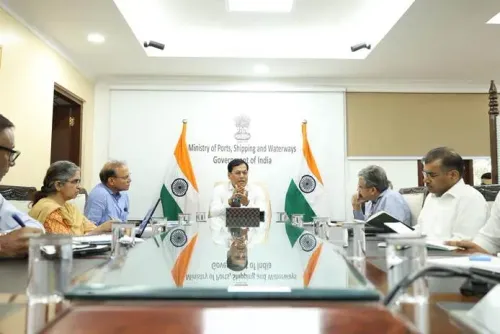
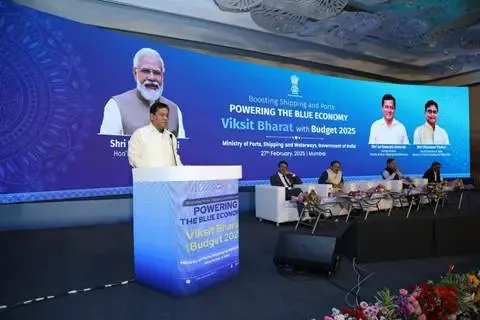
Addressing a seminar titled Blue Economy: Its Imperatives for a Viksit Bharat, Minister Sonowal described the DU-CMEC partnership as a forward-looking step that creates a critical bridge between academia and industry. He stressed that human capital will be the cornerstone of India's maritime ambitions.
Sonowal noted that India's seafaring workforce has nearly tripled over the past 12 years, now accounting for approximately 12% of the global maritime workforce. The government has set an ambitious target to raise this share to 20% by 2030 — a goal that makes structured maritime education partnerships like this one strategically essential.
As we move towards Viksit Bharat, the maritime sector will play an even more transformative role in driving India's economic growth, trade competitiveness and sustainable development. By strengthening the maritime talent pipeline — the core objective of this MoU — we are building a robust ecosystem to meet the growing demand for world-class maritime professionals, both in quality and scale, Sonowal said.
India's Strategic Maritime Advantages
Minister Sonowal highlighted that India's geographic position offers unmatched strategic leverage — with a coastline exceeding 11,000 kilometres and 111 national waterways (NWs), the country is inherently positioned to be a dominant maritime power. Yet, translating geographic advantage into economic muscle requires a trained, world-class workforce — a gap these MoUs directly address.
The government's maritime roadmap is anchored in the SAGAR (Security and Growth for All in the Region) and MAHASAGAR doctrines, which emphasise regional cooperation, maritime security and shared prosperity across the Indo-Pacific. This MoU is a domestic implementation step within that larger geopolitical framework.
Emerging Domains and New Career Pathways
The DU-CMEC collaboration is expected to unlock new academic and career pathways in maritime logistics, green shipping, supply chain management and maritime policy. These are precisely the sectors where global demand is surging as international shipping undergoes a green transition driven by IMO decarbonisation targets for 2050.
India's maritime transformation, as outlined by Sonowal, is being driven by an integrated strategy encompassing port modernisation, multi-modal connectivity, sustainability initiatives and digitalisation — all of which require a new generation of trained professionals that universities like Delhi University can now formally help produce.
Broader Implications for India's Blue Economy
This comes amid India's accelerating push under the Maritime India Vision 2030 and the Sagarmala Programme, which has already greenlit hundreds of port-led development projects worth lakhs of crores. The inclusion of a premier institution like Delhi University signals a deliberate effort to mainstream maritime studies beyond coastal engineering colleges and maritime academies.
Notably, India's maritime sector currently contributes significantly to the national economy through trade, with over 95% of India's trade by volume moving through its ports. Developing domestic expertise in maritime policy and logistics could reduce dependence on foreign expertise and improve India's negotiating position in global shipping forums.
The event was attended by senior government officials, academic leaders, faculty members and students, marking what experts are calling a pivotal institutional step toward integrating education, research and policy in India's maritime future. With the 2030 workforce target firmly in view, the coming months are expected to see the first joint curricula and research programmes take shape under this partnership.
Point of View
Signalling that maritime expertise must permeate mainstream higher education, not remain siloed in niche academies. However, the real test will be in execution: India has a long history of well-intentioned MoUs that gather dust. With a hard 2030 deadline on the 20% global workforce target, the government must ensure this partnership produces measurable outcomes — curricula launched, researchers funded, students placed — not just photo-op paperwork.
NationPress
15 Sept 2026
Frequently Asked Questions
What is the MoU between Delhi University and CMEC about?
The MoU between the University of Delhi and the Centre for Maritime Economy and Connectivity (CMEC) at RIS aims to strengthen maritime education, research, and skill development in India. Key areas include developing maritime academic courses, joint research, training programmes, and professional counselling for students.
What is India's maritime workforce target by 2030?
India aims to increase its share of the global maritime workforce from the current 12% to 20% by 2030. The country's seafaring workforce has already nearly tripled over the past 12 years, according to Minister Sarbananda Sonowal.
What is the Blue Economy seminar where the MoU was signed?
The MoU was signed during a seminar titled Blue Economy: Its Imperatives for a Viksit Bharat held at the Delhi School of Economics on April 25, 2025. The event was attended by senior officials, academic leaders, and students.
What are India's SAGAR and MAHASAGAR maritime doctrines?
SAGAR stands for Security and Growth for All in the Region — India's maritime doctrine focused on regional cooperation, maritime security and shared prosperity in the Indo-Pacific. MAHASAGAR is a broader extension of this vision, guiding India's maritime diplomacy and Blue Economy strategy.
How does this MoU benefit students in India?
The partnership will open new academic and career pathways in maritime logistics, green shipping, supply chain management, and maritime policy for students at Delhi University. Joint research projects, training programmes, and professional counselling are among the direct benefits planned under the agreement.