FMCG distributors urge uniform food safety norms for quick-commerce dark stores
Synopsis
Maharashtra's food regulator suspended 14 licences across Blinkit, Zepto and Swiggy Instamart facilities after inspecting 86 dark stores — and now India's largest FMCG distributors' body is demanding that the same food-safety rules governing kirana stores apply to every 10-minute delivery warehouse in the country.
Key Takeaways
The Maharashtra FDA inspected 86 online food storage and delivery establishments and suspended 14 food-business licences linked to Blinkit , Zepto , and Swiggy Instamart .
Violations included lapses in food storage, temperature control, cleanliness, pest management, and worker hygiene.
A viral video allegedly showed a live rat in an ice-cream storage crate at a Blinkit outlet in Kalyan ; expired products were reportedly found at a Zepto outlet in Pune .
The AICPDF has formally approached FSSAI and the Union Health Ministry seeking mandatory, scientifically determined storage and hygiene norms for dark stores.
A proposed SKU-to-space framework would link minimum storage area to the number of stock-keeping units handled by a facility.
AICPDF National President Dhairyashil H.
Patil stated: 'Food safety cannot operate on a 10-minute business model.'
The All India Consumer Products Distributors Federation (AICPDF) has called on FSSAI and the Union Health Ministry to establish a uniform regulatory framework for quick-commerce dark stores, citing food-safety and hygiene violations uncovered during a recent inspection drive across Maharashtra. The federation's demand follows a sweep by the Maharashtra Food and Drug Administration (FDA) that flagged systemic lapses at facilities operated by Blinkit, Zepto, and Swiggy Instamart.
What the Maharashtra FDA Inspections Found
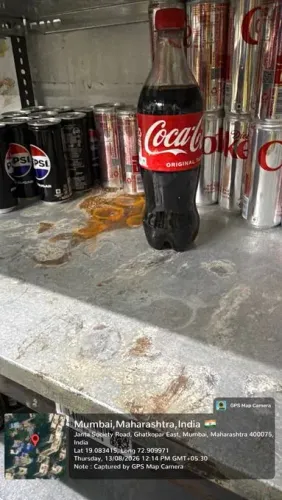
Authorities inspected 86 establishments involved in online food storage and delivery across the state. The regulator suspended 14 food-business licences linked to Blinkit, Zepto, and Swiggy Instamart after inspectors found deficiencies in food storage, temperature control, cleanliness, pest management, worker hygiene, and food handling practices.
The scale of suspensions — 14 out of 86 inspected facilities — points to what the federation describes as a sector-wide compliance gap rather than isolated incidents.
Incidents That Triggered the Push
The AICPDF cited two specific incidents to illustrate the risks. A video that went viral allegedly showed a live rat inside an ice-cream storage crate at a Blinkit outlet in Kalyan's Godrej Hill area. The federation said the footage raises questions about pest control, sanitation, stock inspection, and preventive food-safety systems at dark stores.
Separately, reports emerged of expired food products being found at a Zepto outlet in Pune. Both incidents, according to the federation, reflect the consequences of rapid scaling without commensurate safety infrastructure.
What the Federation Has Proposed
AICPDF National President Dhairyashil H. Patil said the burden of food safety should not fall on consumers. 'Consumers should not have to become food inspectors checking dates, packaging and storage conditions,' he said.
Among the federation's proposals is a scientific SKU-to-space framework — a model under which minimum storage area would be directly linked to the number of stock-keeping units a facility handles. The body has urged FSSAI to evaluate and standardise such norms across the sector.
The broader proposed framework covers adequate storage space, segregation of food categories, dedicated areas for damaged and expired products, cold-chain compliance, pest control protocols, and mandatory periodic audits alongside surprise inspections.
The Regulatory Gap in Quick Commerce
Quick-commerce platforms have expanded rapidly across Indian cities, promising deliveries within 10 minutes. Critics argue that the regulatory architecture governing these dark stores has not kept pace with the sector's growth. Traditional retail channels operate under well-established FSSAI standards; the federation contends that the same rules must apply uniformly to digital-first operators.
'Quick commerce may promise delivery in 10 minutes, but food safety cannot operate on a 10-minute business model,' Patil said.
The AICPDF clarified that it supports the growth of quick commerce but insists on a level regulatory playing field. With FSSAI and the Union Health Ministry now formally approached, the sector awaits a response that could reshape how dark stores are licensed and monitored across India.
Point of View
Not for warehouses turning over thousands of SKUs at sprint speed. The AICPDF's intervention is as much about competitive equity — traditional distributors chafing at asymmetric compliance costs — as it is about consumer welfare. Both concerns are legitimate. The real question is whether FSSAI moves toward enforceable, science-based dark-store norms or settles for another advisory circular that platforms can absorb without changing behaviour. Fourteen suspended licences in one state should be a data point, not a ceiling.
NationPress
3 Oct 2026
Frequently Asked Questions
Why did the Maharashtra FDA suspend 14 food-business licences?
The Maharashtra Food and Drug Administration suspended 14 licences linked to Blinkit, Zepto, and Swiggy Instamart after inspecting 86 establishments and finding violations related to food storage, temperature control, cleanliness, pest management, worker hygiene, and food handling. The suspensions followed a targeted inspection drive focused on online food storage and delivery facilities across the state.
What is the AICPDF and why is it involved?
The All India Consumer Products Distributors Federation (AICPDF) is a national body representing FMCG distributors across India. It has raised food-safety concerns about quick-commerce dark stores and formally approached FSSAI and the Union Health Ministry seeking uniform regulatory norms, arguing that the same standards applied to traditional retail must cover digital-first operators.
What is the SKU-to-space framework proposed by AICPDF?
It is a scientific model under which the minimum storage area of a dark store would be determined by the number of stock-keeping units (SKUs) the facility handles. The federation has urged FSSAI to evaluate and standardise this framework to prevent overcrowding of products in undersized warehouses.
What incidents prompted the federation's demand?
Two incidents were cited: a viral video allegedly showing a live rat inside an ice-cream storage crate at a Blinkit outlet in Kalyan's Godrej Hill area, and reports of expired food products found at a Zepto outlet in Pune. Both raised concerns about pest control, stock inspection, and preventive food-safety systems at quick-commerce facilities.
What happens next after AICPDF's approach to FSSAI?
The federation has submitted its proposals to FSSAI and the Union Health Ministry and is awaiting a formal response. If adopted, the framework would mandate minimum storage space standards, food-category segregation, cold-chain compliance, pest control protocols, and surprise inspections at all quick-commerce dark stores across India.