Rs 7,981 Crore Disbursed to 75 Lakh SC Beneficiaries in FY26

Synopsis
India's government disbursed Rs 7,981.47 crore to over 75 lakh Scheduled Caste beneficiaries in FY26, with scholarship spending rising up to 21%. NSKFDC also extended Rs 223.47 crore in concessional loans — 97% to women — highlighting both the scale and gender dimension of India's SC welfare outreach.
Key Takeaways
Rs 7,981.47 crore was disbursed to over 75 lakh Scheduled Caste beneficiaries in FY2025–26 by the Indian government.
The Pre Matric Scholarship Scheme recorded the highest year-on-year increase at 21% , followed by the SHRESHTA Scheme at 16% .
NSKFDC disbursed Rs 223.47 crore in concessional loans to 29,448 beneficiaries , with 97% being women .
The average NSKFDC loan size rose to Rs 77,000 — a 16.67% increase over the previous year.
Since October 1997 , NSKFDC has cumulatively disbursed Rs 3,340.67 crore , reaching over 6.08 lakh individuals .
The Department of Social Justice and Empowerment also oversees welfare for OBCs, DNTs, transgender persons, EWS, and senior citizens .
The Indian government has disbursed a record Rs 7,981.47 crore to more than 75 lakh Scheduled Caste (SC) beneficiaries in Financial Year 2025–26 (FY26), marking a significant scale-up in welfare outreach for one of the country's most marginalised communities. The funds were channelled through multiple education-focused schemes administered by the Department of Social Justice and Empowerment (DoSJE), the government confirmed on Friday, April 25, 2025.
Key Scholarship Schemes See Double-Digit Growth
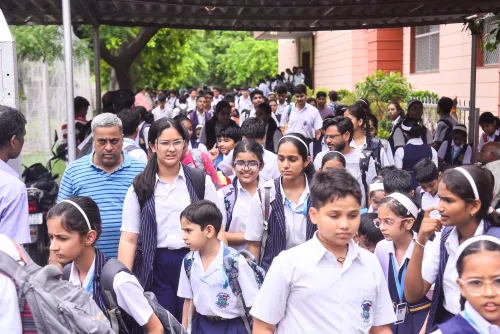
Year-on-year expenditure data reveals consistent increases across all major scholarship programmes targeting SC students. The Pre Matric Scholarship Scheme for SCs and Others recorded the sharpest jump — a 21 per cent rise compared to FY25 — signalling renewed government focus on early-stage educational intervention.
The Post Matric Scholarship Scheme for SCs saw an 11.23 per cent increase, while the Central Sector Scholarship of Top Class Education for SC Students grew by 13.5 per cent. These schemes together form the backbone of India's constitutionally mandated affirmative action framework in education.
The SHRESHTA Scheme — Scheme for Residential Education for Students in High Schools in Targeted Areas — registered a 16 per cent expenditure increase over FY25, reflecting growing enrolment of SC students in quality residential schooling programmes.
NSKFDC Extends Concessional Finance, Women Dominate Beneficiaries
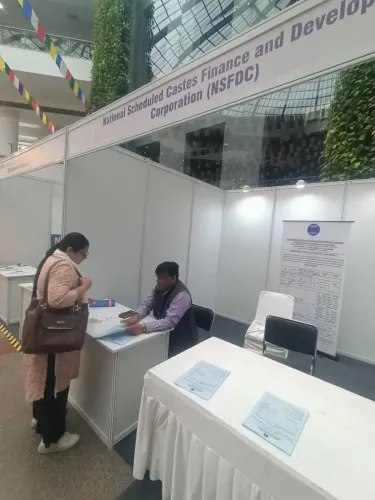
The National Safai Karamcharis Finance and Development Corporation (NSKFDC) disbursed Rs 223.47 crore in concessional loans to 29,448 beneficiaries during FY2025–26. Strikingly, nearly 97 per cent of these beneficiaries were women — a figure that underscores the feminisation of sanitation labour in India and the targeted outreach by the Corporation.
The average loan size climbed to Rs 77,000, a 16.67 per cent increase over the previous year, reflecting both inflation adjustment and expanded credit access. Since its inception in October 1997, NSKFDC has cumulatively disbursed Rs 3,340.67 crore, benefiting over 6.08 lakh individuals including Safai Karamcharis, waste pickers, manual scavengers, and their dependents. The Corporation holds an authorised share capital of Rs 785 crore and paid-up capital of Rs 720 crore.
Broader Mandate of the Department of Social Justice and Empowerment
The Department of Social Justice and Empowerment operates a wide umbrella of welfare programmes extending beyond SC communities. Its mandate covers Other Backward Classes (OBCs), senior citizens, victims of alcoholism and substance abuse, transgender persons, individuals engaged in begging, Denotified and Nomadic Tribes (DNTs), and Economically Weaker Sections (EWS).
This multi-pronged approach reflects India's constitutional obligation under Articles 15, 16, and 46 to promote educational and economic interests of weaker sections and protect them from social injustice.
Why This Matters: The Larger Picture
India's Scheduled Caste population — estimated at over 20 crore individuals as per Census 2011 — remains disproportionately represented among the country's poor, with limited access to quality education and formal credit. The year-on-year increases in scholarship expenditure are critical, as dropout rates among SC students remain significantly higher than the national average, particularly at the secondary and higher secondary levels.
Notably, this disbursement comes amid the government's broader push under the Panch Pran framework to reduce systemic inequality by 2047. Critics, however, have long argued that actual fund utilisation — not just disbursement — must be scrutinised, as a portion of allocated scholarship funds has historically gone unclaimed due to documentation barriers and digital access gaps in rural areas.
With FY26 still ongoing, the government is expected to release updated utilisation data and expand beneficiary outreach through the Direct Benefit Transfer (DBT) architecture, which aims to eliminate leakages and ensure last-mile delivery to genuine SC students and workers.
Point of View
981 crore disbursement to SC beneficiaries in FY26 is a headline-worthy number — but the real story lies in what comes after the transfer. India's SC scholarship ecosystem has historically struggled with low claim rates, documentation bottlenecks, and state-level implementation failures that dilute central intent. The 97% women representation in NSKFDC loans is a remarkable data point that deserves deeper scrutiny — it reflects the ground reality that sanitation work in India remains overwhelmingly female, underpaid, and underprotected. Until disbursement data is matched with outcome metrics — school retention rates, graduation numbers, income mobility — these figures risk becoming political optics rather than transformative policy.
NationPress
25 Sept 2026
Frequently Asked Questions
How much money has the government disbursed to SC beneficiaries in FY26?
The Indian government disbursed Rs 7,981.47 crore to over 75 lakh Scheduled Caste beneficiaries in FY2025–26. The funds were distributed through education-focused schemes managed by the Department of Social Justice and Empowerment .
Which scholarship schemes saw increased spending for SC students in FY26?
The Pre Matric Scholarship Scheme saw a 21% increase , the Post Matric Scholarship Scheme rose by 11.23% , the Top Class Education Scholarship grew by 13.5% , and the SHRESHTA Scheme increased by 16% compared to FY25.
What is NSKFDC and how much did it disburse in FY26?
NSKFDC (National Safai Karamcharis Finance and Development Corporation) is a government body focused on the socio-economic upliftment of sanitation workers and manual scavengers. It disbursed Rs 223.47 crore in concessional loans to 29,448 beneficiaries in FY2025–26, with nearly 97% being women .
Who are the beneficiaries of the Department of Social Justice and Empowerment schemes?
The Department's schemes cover Scheduled Castes, OBCs, senior citizens, transgender persons, DNTs, EWS individuals , and victims of substance abuse. Its mandate is rooted in India's constitutional provisions for the protection and upliftment of marginalised communities.
What is the SHRESHTA Scheme for SC students?
The SHRESHTA Scheme stands for Scheme for Residential Education for Students in High Schools in Targeted Areas. It provides quality residential schooling to SC students and saw a 16 per cent increase in expenditure in FY26 compared to the previous year.