Is PM Modi's Vision Focused on Urban Development and a Self-Reliant India?
Synopsis
Gujarat's Chief Minister Bhupendra Patel highlights the importance of urban development in achieving a self-reliant India. This article delves into the initiatives and future vision for Gujarat, showcasing how comprehensive urban strategies can pave the way for national progress.
Key Takeaways
Urban development is integral to India's self-reliance.
Gujarat's Swarnim Jayanti Mukhyamantri Urban Development Scheme focuses on improving quality of life.
Successful models like BRTS demonstrate Gujarat's commitment to innovation.
The state aims for 75% urbanization by 2047.
Collaboration among leaders is vital for sustainable growth.
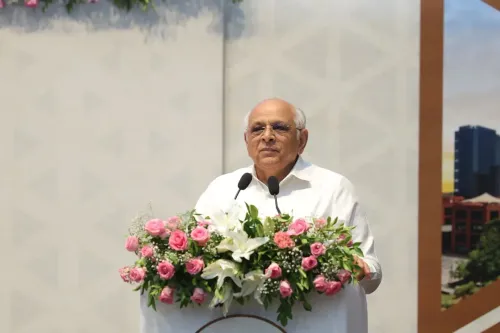
Surat, Dec 13 (NationPress) The Chief Minister of Gujarat, Bhupendra Patel, emphasized that the all-encompassing economic and social growth of urban areas, along with smart and sustainable city planning, forms the bedrock of Prime Minister Modi's ambition for a self-sufficient India.
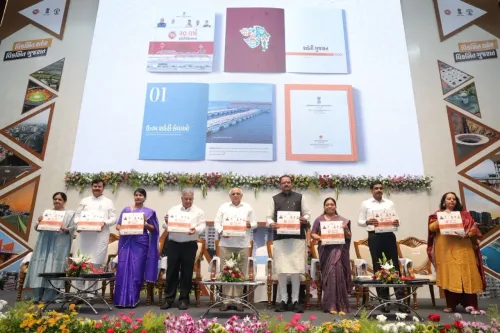
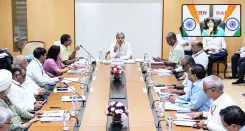
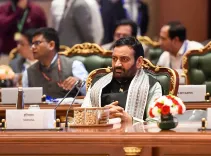
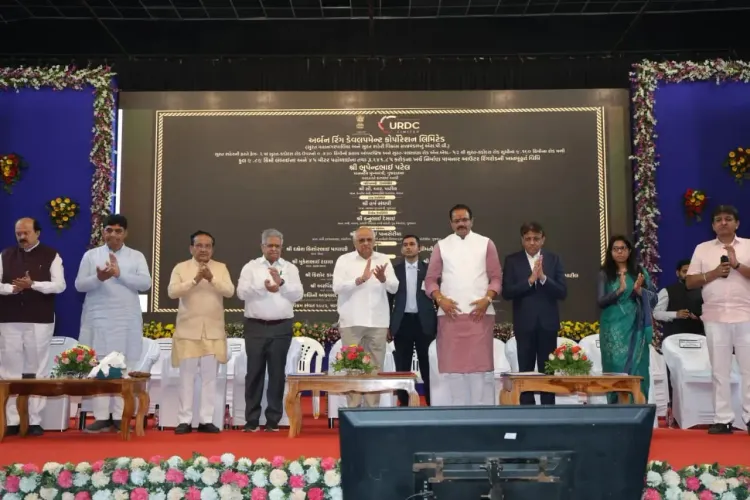
The Chief Minister articulated these insights during the inauguration of the 116th National Executive Meeting of the All India Mayors’ Council in Surat, attended by mayors from 16 states and Urban Development and Finance Minister Kanubhai Desai.
He reminisced that in 2005, under Prime Minister Modi's leadership, Gujarat proclaimed the Urban Development Year, initiating a contemporary urban development paradigm.
Following two decades of achievements, the state is commemorating 2025 as yet another Urban Development Year, energizing cleanliness initiatives and progressive city planning.
Patel detailed that Gujarat has introduced the Swarnim Jayanti Mukhyamantri Urban Development Scheme, which focuses on enhancing physical infrastructure, social amenities, eco-friendly urban transport, and roadway improvements to elevate living standards.
He also highlighted that Gujarat has been at the forefront with successful models like BRTS Janmarg and E-City bus services, with landmark projects such as the Surat Diamond Bourse and Riverfront symbolizing urban advancement.
The Chief Minister pointed out that nine new municipal corporations have been created to accelerate growth in smaller towns, bolstered by larger city corporations.
He outlined Gujarat’s vision for a Developed Gujarat by 2047, under the guiding principle of “Good Income, Good Life,” aligning with the national goal of a developed India by 2047.
Minister Kanubhai Desai urged mayors to perceive urbanization as a chance, underscoring the critical aspects of water management, sanitation, housing, education, sewage, and renewable energy.
He noted that Gujarat has already attained 48 percent urbanization and is striving towards a 75 percent target by 2047. The President of the All India Mayors’ Council, Renubala Gupta, commended Gujarat’s model as a roadmap for other states in constructing clean, smart, and citizen-centric cities.
General Secretary Ashutosh Bhai elaborated on the Council’s role in bolstering urban development across the nation.
Surat Mayor Daksheshbhai Mavani spotlighted the city’s accomplishments in cleanliness, water management, and air quality assessments, indicating that Surat has garnered multiple national awards and continues to inspire other cities.
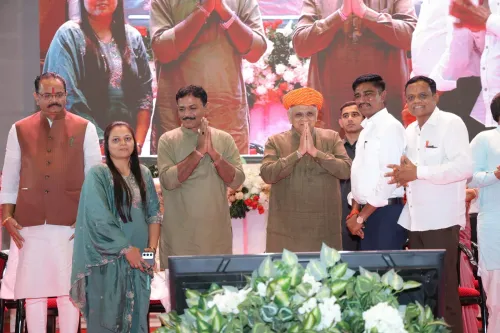
The event was graced by MPs, MLAs, former ministers, municipal commissioners, district officials, deputy mayors, and senior leaders including Mukeshbhai Dalal, Praveenbhai Ghoghari, Purneshbhai Modi, Sangeetaben Patil, Darshanaben Jardosh, Shalini Agarwal, Saurabh Pardhi, Narendra Patel, Rajan Desai, Paresh Patel, Shashiben Tripathi, and Dharmesh Vaniyawala, along with other officials from the Surat Municipal Corporation.
Point of View
The initiatives in Gujarat under Chief Minister Bhupendra Patel reflect a significant commitment to urban development as a key driver for national progress. The focus on sustainable practices and infrastructure development aligns well with the broader vision of a self-reliant India, showcasing the potential for cities to lead the way in economic and social growth.
NationPress
19 Sept 2026
Frequently Asked Questions
What is the Swarnim Jayanti Mukhyamantri Urban Development Scheme?
The Swarnim Jayanti Mukhyamantri Urban Development Scheme is a Gujarat initiative aimed at enhancing physical infrastructure, social amenities, and green transport to improve urban living standards.
How has Gujarat achieved urbanization?
Gujarat has achieved 48% urbanization through various initiatives and aims for 75% by 2047, focusing on sustainable urban development and infrastructure.
What notable urban projects are in Gujarat?
Gujarat boasts significant urban projects like the BRTS Janmarg, E-City bus services, the Surat Diamond Bourse, and the Riverfront.
What is the vision for Gujarat by 2047?
The vision for Gujarat by 2047 is to develop a self-reliant state under the motto 'Good Income, Good Life,' in line with the national goal for a developed India.
Who attended the National Executive Meeting?
The meeting was attended by mayors from 16 states, ministers, MPs, MLAs, and various senior officials, highlighting the collaborative approach to urban development.