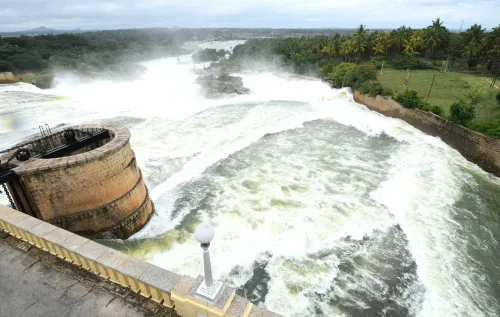
Himachal Pradesh High Court Protects Trout: Orders ₹12 Lakh for Revival Efforts

Synopsis
In a significant ruling, the Himachal Pradesh High Court prioritizes environmental rights by restricting de-silting activities at the Barot site, crucial for trout breeding, and mandates a ₹12 lakh payment for restoration efforts.
Key Takeaways
High Court Ruling: Environmental rights are prioritized over economic gains.
De-silting Restrictions: Prohibited before March 1 to protect trout breeding.
Compensation Ordered: ₹12 lakh for trout restoration efforts.
Monitoring Measures: Sensors to track sediment levels during de-silting.
River Monitoring Committee: To oversee future activities and safeguard aquatic life.
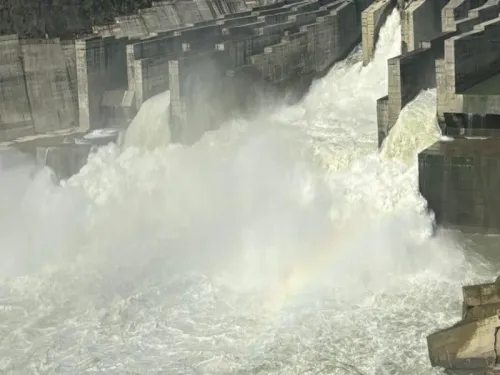
Chandigarh, April 16 (NationPress) In a landmark ruling, the Himachal Pradesh High Court has emphasized that economic benefits cannot take precedence over environmental rights. The court has prohibited the Punjab-operated Shanan Hydroelectric Project from performing any de-silting activities at the Barot site prior to March 1 each year, thus safeguarding the trout breeding season.
The court has mandated scientific monitoring of sediment discharge and has ordered a compensation payment of Rs 12 lakh aimed at restoring trout populations.
“We found that despite prior recommendations for de-silting during off-peak periods, such activities were still being conducted,” stated Chief Justice G.S. Sandhawalia and Justice Bipin Chander Negi. “The Shanan Hydroelectric Project has engaged in de-silting primarily for its own economic benefit.”
The court took action after receiving reports that silt discharge from the Barot dam in Mandi district was harming water quality and affecting aquatic life.
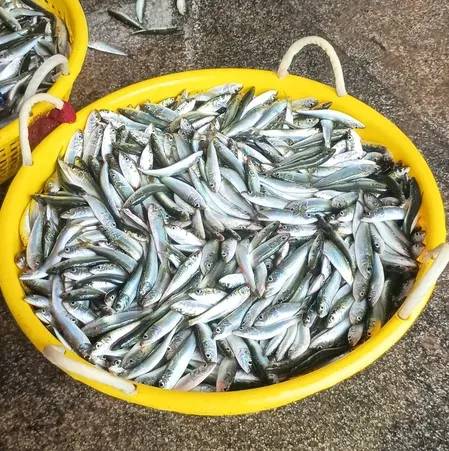
“This matter pertains to the rainbow trout and brown trout being suffocated by silt and unable to thrive,” the Bench noted while issuing a series of mandatory directives.
To make the restrictions clear, the court ruled that de-silting shall not occur before March 1 of each year, aligning with the designated closed season for trout breeding from November to February as per the Himachal Pradesh Fisheries Act.
To manage future activities, the court has instructed the installation of sensors downstream to measure Total Suspended Solids (TSS) levels for real-time monitoring during de-silting.
The Fisheries Department is tasked with ensuring a minimum discharge of 15% as mandated by the National Green Tribunal during periods of low flow, while also verifying that the project does not stockpile water.
The state is required to establish a River Monitoring Committee, led by the Deputy Commissioner, comprising officials from both the Fisheries and Electricity Departments and a representative from the project.
This committee will advise on the timing and methods of de-silting, including whether such activities should be limited to daylight hours, and will propose protective measures for other trout habitats.
Recognizing the ecological damage already inflicted, the court has directed the project proponent to deposit Rs 12 lakh with the Fisheries Department for the phased stocking of Brown Trout and Rainbow Trout, allowing flexibility for broader aquatic restoration pending proper usage documentation.
Reviewing the records, the court observed that de-silting had taken place during critical lean and breeding months from November to February without sufficient monitoring, leading to excessive turbidity and ecological damage.
This occurred despite earlier court orders, local complaints, and media coverage. “The commitment made by the respondent to conduct operations scientifically in the Uhl river has evidently been violated,” the court remarked.
Referring to expert testimony, the Bench compared the effects of silt to a “continuous sandstorm” in aquatic environments, highlighting that “fish extract oxygen by filtering water through their gills, a process complicated in murky waters.”
Emphasizing the necessity to protect trout in the Barot dam as well as in the Uhl and Lambhadagh rivers, the court stated that power generation must be balanced with ecological preservation.
“The energy generation interests must be aligned with marine life, and the project cannot justify its actions at the expense of de-silting,” the Bench noted.
The court criticized the authorities for permitting silt build-up over the years, leading to large-scale de-silting in a short timeframe.
“The hasty effort to de-silt within a month adversely affected marine life downstream and resulted in TSS levels exceeding permissible limits,” the court stated.
Invoking the “polluter pays” principle and the constitutional obligation under Article 51-A(g), the Bench asserted that river protection and aquatic life preservation are fundamental duties, thus justifying the imposition of environmental compensation in this case.
The matter is set for further review on July 31, with directions for a compliance affidavit, indicating the court's ongoing oversight of its directives.
Frequently Asked Questions
What is the significance of the High Court's ruling?
The ruling emphasizes the importance of protecting environmental rights, particularly during trout breeding seasons, by limiting de-silting activities.
How much compensation has been ordered for trout revival?
The Himachal Pradesh High Court has mandated a payment of ₹12 lakh for the restoration of trout populations.
What measures are being implemented to monitor sediment discharge?
The court has directed the installation of sensors to monitor Total Suspended Solids (TSS) levels for real-time tracking during de-silting.
What is the closed season for trout breeding?
The closed season for trout breeding in Himachal Pradesh runs from November to February, during which de-silting activities are prohibited.
Who is responsible for overseeing future de-silting activities?
A River Monitoring Committee will be established, comprising representatives from various departments to advise on de-silting timing and methods.