ICAR signs MoU with Seychelles to boost agri-research and tech transfer
Synopsis
India and Seychelles have moved beyond diplomatic pleasantries — the ICAR-Seychelles MoU, backed by a five-year Work Plan and a ₹1,250 crore line of credit, signals India's sharpening push to anchor agricultural and economic partnerships across small island nations of the Global South.
Key Takeaways
ICAR and Seychelles' Agriculture Department signed an MoU on 1 July 2025 during PM Modi 's official visit.
A five-year Work Plan (2026–2031) was also signed, covering climate-smart agriculture, horticulture, post-harvest management, livestock, and food security.
India and Seychelles signed an umbrella line of credit worth ₹1,250 crore between the Export-Import Bank of India and Seychelles' finance ministry.
ICAR now has more than 100 MoUs with partner institutions globally.
The agreement is part of India's broader engagement with the Global South on sustainable agriculture and food security.
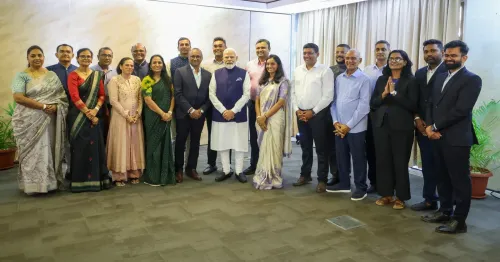
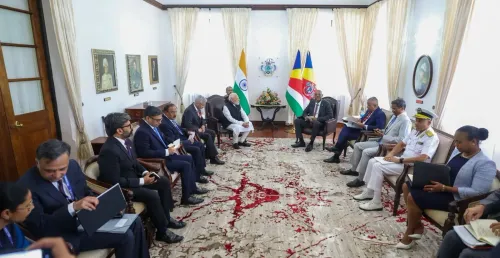
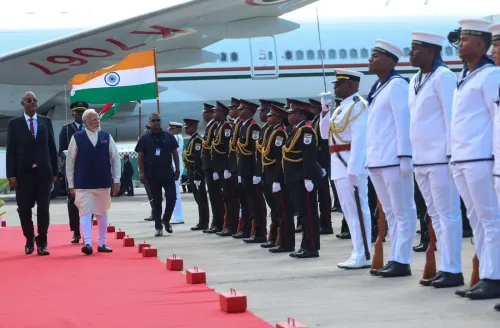
The Indian Council of Agricultural Research (ICAR) and the Agriculture Department, Ministry of Fisheries, Agriculture and Blue Economy, Republic of Seychelles, signed a Memorandum of Understanding (MoU) on 1 July 2025 to deepen bilateral cooperation in agricultural research, education, capacity building, and technology transfer, according to an official statement. The agreement was formalised during Prime Minister Narendra Modi's official visit to the Republic of Seychelles.
What the MoU Covers
The agreement establishes a framework for joint research programmes, exchange of scientists, researchers, and students, and the sharing of advanced agricultural technologies and best practices. Alongside the MoU, both sides signed a five-year Work Plan (2026–2031) to operationalise the partnership.
The Work Plan focuses on key priority areas including climate-smart agriculture, horticulture, post-harvest management, livestock development, and sustainable food and nutritional security.
Broader Bilateral Agreements
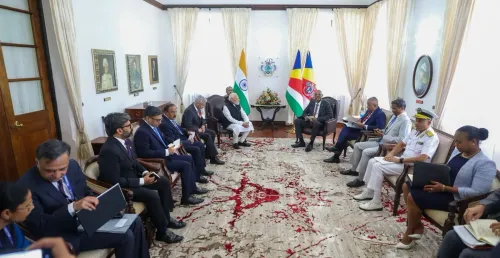
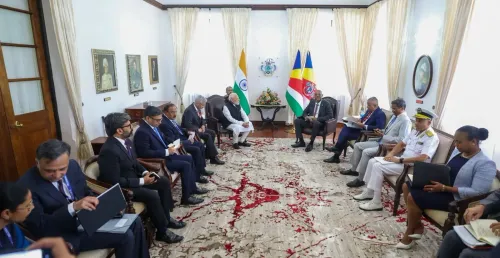
The ICAR-Seychelles MoU is part of a wider set of agreements concluded between India and Seychelles following talks between PM Modi and Seychelles President Patrick Herminie. The two countries also signed an umbrella line of credit agreement worth ₹1,250 crore between the Export-Import Bank of India and the Ministry of Finance, Economic Planning, Trade and Investment of Seychelles, according to the Ministry of External Affairs (MEA). Additional agreements span trade and digital technology.
ICAR's Global Footprint
With more than 100 MoUs signed with partner institutions worldwide, ICAR continues to expand India's international agricultural partnerships. The Ministry of Agriculture and Farmers Welfare noted that the Seychelles agreement reinforces India's engagement with the Global South and its commitment to advancing sustainable agriculture, innovation, and global food security through international cooperation.
Why It Matters
The collaboration aims to strengthen institutional linkages, improve agricultural productivity, and build technical capacity while addressing shared challenges such as climate change and food security. Notably, this agreement positions India as a key agricultural knowledge partner for small island developing states — a segment of the Global South where climate vulnerability is acute and food import dependence is high. The five-year Work Plan ensures the partnership moves beyond intent to structured, time-bound deliverables.
Point of View
But the five-year Work Plan with defined thematic pillars is a meaningful structural step. What sets this apart from India's many bilateral agri-agreements is the explicit focus on climate-smart agriculture for a small island state acutely exposed to sea-level rise and food import dependence. The ₹1,250 crore line of credit running alongside signals that India is pairing knowledge transfer with financial leverage — a more complete partnership model than most South-South frameworks offer. The real test will be whether the Work Plan produces measurable outcomes or joins the long queue of well-intentioned MoUs that stall at implementation.
NationPress
1 Jul 2026
Frequently Asked Questions
What is the ICAR-Seychelles MoU signed on 1 July 2025?
It is a Memorandum of Understanding between the Indian Council of Agricultural Research and Seychelles' Agriculture Department to strengthen cooperation in agricultural research, education, capacity building, and technology transfer. A five-year Work Plan (2026–2031) was also signed to put the agreement into action.
What does the five-year Work Plan cover?
The Work Plan focuses on climate-smart agriculture, horticulture, post-harvest management, livestock development, and sustainable food and nutritional security. It provides a structured, time-bound framework for the bilateral agricultural partnership.
How does this MoU fit into India's broader agreements with Seychelles?
The ICAR MoU is one of several agreements signed during PM Modi's visit to Seychelles. India and Seychelles also concluded an umbrella line of credit worth ₹1,250 crore and agreements on trade and digital technology following talks between Modi and President Patrick Herminie.
How many international MoUs does ICAR currently have?
ICAR has signed more than 100 MoUs with partner institutions across the world, making it one of India's most active institutions in global agricultural diplomacy.
Why is this agreement significant for the Global South?
The MoU reinforces India's engagement with small island developing states that face acute climate vulnerability and high food import dependence. It positions India as an agricultural knowledge and financing partner for the Global South, combining technology transfer with a ₹1,250 crore line of credit.