India rising as 'major pole' in multipolar world, Bloomberg Economics report finds
Synopsis
A Bloomberg Economics report released on 12 October positions India as an emerging 'major pole' in a fracturing global order — with free-trade deals potentially adding up to $170 billion to GDP by 2035 and AI offering an annual growth boost of 0.9%. The catch: infrastructure gaps, political capital flows, and the AI disruption of IT's labour-cost edge could all limit those gains.
Key Takeaways
A Bloomberg Economics report released on 12 October 2026 identifies India as a rising 'major pole' in a multipolar global economy.
India's expanding free-trade network could add $140–170 billion to GDP by 2035 , with domestic reforms set to amplify gains.
Global capital flows between rival nations are estimated to be 40 per cent lower than between allied countries, complicating India's investment competitiveness.
AI could add up to 0.9 per cent to India's annual GDP growth, supporting Prime Minister Narendra Modi's 2047 developed-economy target.
820 million Indians now live in urban areas; better governance and infrastructure could unlock significant productivity gains.
India's IT-services sector faces both opportunity and disruption as AI challenges its traditional labour-cost advantage.
India is emerging as a major pole in a rapidly reshaping multipolar world, driven by redirecting capital flows, fracturing trade networks, and the sweeping influence of artificial intelligence across industries, according to a Bloomberg Economics report released on Monday, 12 October 2026. The report frames India as a nation actively pushing back structural barriers to growth even as global economic fault lines deepen.
Key Findings of the Bloomberg Economics Report
Tom Orlik, Chief Economist for Bloomberg Economics, said that India is 'pushing back barriers to growth and rising as a major pole in a multipolar world' as capital flows redirect, trade fractures along geopolitical lines, and AI reshapes industries worldwide. The report positions India not merely as a passive beneficiary of global shifts, but as an active participant in redefining economic alignments.
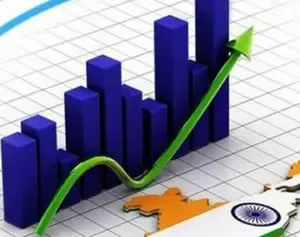
Among the headline projections, India's expanding free-trade network could add $140–170 billion to GDP by 2035. Domestic reforms targeting lower factory costs and agricultural labour reallocation could further amplify these trade gains, according to the report.
Capital Flows and Geopolitical Pressures
The report highlights a significant structural shift in global capital: flows are becoming simultaneously more concentrated and more political. Capital flows between rival nations are estimated to be 40 per cent lower than those between allied countries, with investment increasingly zeroing in on AI and semiconductor supply chains.
For India, maintaining its growth momentum will require competing against the powerful pull of US technology demand and tariff incentives that are drawing global capital toward American shores. This represents one of the more complex external challenges the country faces in the medium term.
AI as a Growth Multiplier — and a Disruptor
Artificial intelligence could boost India's GDP growth by up to 0.9 per cent annually, providing crucial momentum toward Prime Minister Narendra Modi's stated goal of achieving developed-economy status by 2047, the report noted. However, it cautioned that infrastructure constraints may limit actual gains.
India's IT-services sector faces a dual reality: AI can propel firms up the value chain, but automation also threatens the labour-cost advantages that have historically underpinned the sector's global competitiveness. The net effect will depend heavily on how quickly Indian firms adapt and invest in higher-value capabilities.
Urbanisation as an Untapped Productivity Engine
The report found that 820 million Indians now live in urban environments. It argued that strengthened municipal governance, targeted infrastructure investment, and improved land-use planning could convert that urban density into a powerful source of productivity growth — a transformation that remains largely unrealised at present.
This comes amid broader global recognition that India's demographic and geographic scale gives it structural advantages that few other emerging economies can replicate. Whether those advantages translate into sustained high growth will depend on the pace of domestic reform and the country's ability to attract investment in a more competitive global environment.
Point of View
Agricultural labour reallocation — that have been on India's policy agenda for years with uneven delivery. The 0.9 per cent AI growth boost is similarly contingent on infrastructure that, as the report itself acknowledges, remains a constraint. Most significantly, the 40 per cent discount on capital flows between geopolitical rivals means India must keep performing a difficult balancing act — positioning itself as a trusted destination for Western and allied capital without closing the door on strategic partnerships elsewhere. The urbanisation finding is perhaps the most underleveraged insight: 820 million urban Indians represent an enormous productivity base, but its conversion into growth requires municipal governance reforms that rarely command the political attention that headline trade or AI narratives attract.
NationPress
12 Oct 2026
Frequently Asked Questions
What does the Bloomberg Economics report say about India?
The Bloomberg Economics report, released on 12 October 2026, describes India as emerging as a 'major pole' in a multipolar world, driven by redirecting capital flows, fractured global trade, and the rapid spread of AI. It projects that India's free-trade network expansion could add $140–170 billion to GDP by 2035.
How much could AI boost India's GDP growth?
According to the Bloomberg Economics report, AI could boost India's annual GDP growth by up to 0.9 per cent, which would provide critical momentum toward Prime Minister Narendra Modi's goal of India achieving developed-economy status by 2047. However, the report also flags infrastructure constraints that may limit actual gains.
How are global capital flows affecting India?
Global capital flows are becoming more concentrated and politically driven, with flows between rival nations estimated to be 40 per cent lower than between allies. For India, this means competing against the pull of US technology demand and tariff incentives that attract global capital, particularly in AI and semiconductors.
What is the significance of India's free-trade agreements?
India's expanding free-trade network could add $140–170 billion to its GDP by 2035, according to the Bloomberg Economics report. Domestic reforms targeting lower factory costs and reallocation of agricultural labour could amplify these trade gains further.
What does the report say about India's IT sector and urbanisation?
The report presents a dual picture for India's IT-services sector: AI can help firms move up the value chain, but it also threatens the labour-cost advantages that have historically driven the sector's growth. On urbanisation, 820 million Indians now live in urban environments, and improved municipal governance and infrastructure could convert that density into a significant source of productivity growth.