India commercial real estate investment up 15% in Jan-Sep 2026, cross-border inflows hit $5.5 bn
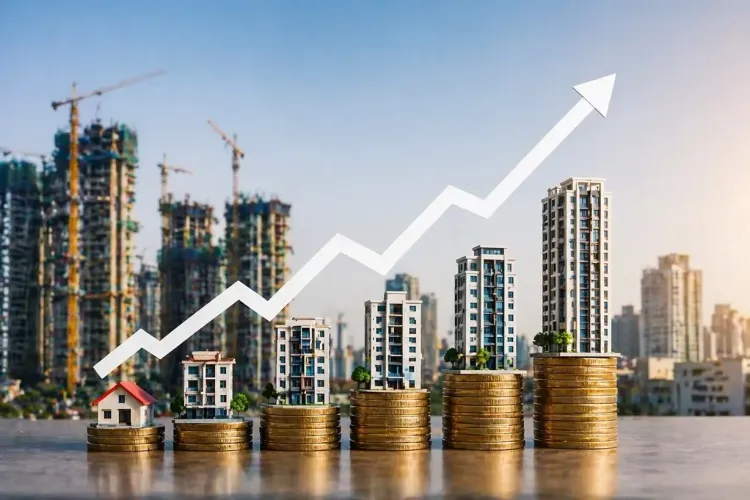
Synopsis
India's commercial real estate pulled in $5.5 billion in cross-border flows in just nine months — with Grade A offices yielding up to 8% annually and rents rising at the same pace. In an Asia-Pacific market now dominated by its 25 biggest institutional buyers, India is punching above its weight as one of the region's last high-yield, high-growth combinations.
Key Takeaways
India's commercial real estate investment grew 15% year-on-year in January–September 2026 , per Savills .
Cross-border inflows reached $5.5 billion during the period.
Grade A office assets yield 7.75–8% with rents rising up to 8% annually .
Asia-Pacific commercial real estate investment rose 27% to nearly $200 billion in the same period.
Data centres led Asia-Pacific growth with a 79% surge in investment volumes year-on-year.
India's urban population grows by roughly 12 million people per year, underpinning long-term occupier demand.
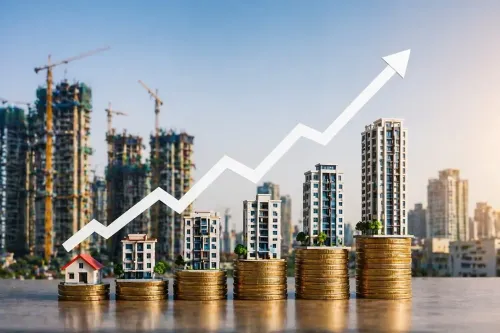
Investment in India's commercial real estate sector rose 15 per cent year-on-year in the first nine months of 2026, with cross-border inflows reaching $5.5 billion, according to a report by global property consultancy Savills released on 12 November 2026. The growth underscores India's rising appeal among institutional investors seeking yield in a competitive Asia-Pacific landscape.
India's Position in Asia-Pacific
Commercial real estate investment across the Asia-Pacific region climbed 27 per cent from a year earlier to nearly $200 billion during the January–September 2026 period, according to the Savills report. India stood out as one of the few markets in the region offering both relatively high rental yields and consistent income growth — a combination that is increasingly rare as capital chases returns in a tightening global rate environment.
Grade A Office Yields and Rental Growth
Grade A office assets in India are generating yields of 7.75–8 per cent, while rents are rising by as much as 8 per cent annually. These metrics are attracting both domestic and overseas buyers drawn to what analysts describe as a rare alignment of current income and long-term capital appreciation potential.
Anurag Mathur, Chief Executive of Savills India, said: 'India continues to strengthen its position as an attractive destination for global real estate investors.' He added that strong occupier demand, healthy rental growth and competitive yields were supporting investor confidence, while growing overseas interest reflected both current returns and long-term growth prospects.
Urbanisation as a Structural Driver
The report highlighted India's accelerating urbanisation as a structural demand driver. Around 36 per cent of India's population currently lives in cities, with approximately 12 million people being added to urban areas every year. This sustained demographic shift is expected to keep occupier demand robust for well-located commercial stock over the medium term. Notably, this places India among the fastest-urbanising large economies globally, adding depth to its long-term real estate investment thesis.
Asia-Pacific Trends: Data Centres Lead, Apartments Lag
Across Asia-Pacific, institutional concentration intensified — the 25 biggest buyers accounted for 47 per cent of regional deal volumes in the first half of 2026, up sharply from 34 per cent two years earlier. Among property segments, data centres recorded the strongest growth, with investment volumes surging 79 per cent year-on-year, followed by retail assets at 36 per cent. Offices, industrial properties and hotels each grew by approximately 22 per cent, while the apartment sector was the lone decliner, posting a 12 per cent fall in investment.
The divergence between data centres and apartments reflects a broader global reallocation toward digital infrastructure, a trend that India — with its expanding cloud and AI ecosystem — is well-positioned to capture in the quarters ahead.
Point of View
Yet still underperforming the regional average, which suggests the opportunity is real but the gap to close is larger than the headline implies. The data-centre surge is the story within the story: at 79% growth, it is reshaping where institutional capital flows in the region, and India's cloud buildout could make it a primary beneficiary if land acquisition and power infrastructure keep pace. The concentration risk — 25 buyers controlling 47% of regional volumes — also warrants attention; a pullback by even a few of these mega-funds could expose how thin the investor base still is.
NationPress
12 Nov 2026
Frequently Asked Questions
How much did India's commercial real estate investment grow in 2026?
India's commercial real estate investment rose 15% year-on-year in the first nine months of 2026, with cross-border inflows reaching $5.5 billion, according to a Savills report released on 12 November 2026.
What yields do Grade A office assets offer in India?
Grade A office assets in India are currently generating rental yields of 7.75–8%, with rents growing by as much as 8% annually, making the country one of the more attractive yield markets in the Asia-Pacific region.
How did India compare to the broader Asia-Pacific real estate market?
The Asia-Pacific region as a whole saw commercial real estate investment climb 27% year-on-year to nearly $200 billion in January–September 2026. India's 15% growth, while strong, trailed the regional average, though it remained notable for offering both high yields and income growth simultaneously.
Which property segment saw the highest investment growth in Asia-Pacific?
Data centres posted the strongest growth across Asia-Pacific, with investment volumes rising 79% year-on-year, followed by retail assets at 36%. Offices, industrial properties and hotels each grew about 22%, while the apartment sector declined 12%.
What is driving long-term demand for commercial real estate in India?
India's rapid urbanisation is a key structural driver — around 36% of the population lives in cities, with roughly 12 million people added to urban areas every year. This sustained demographic shift supports robust occupier demand for quality commercial space over the medium to long term.