India-EFTA trade pact TEPA to boost bilateral investments, says Swiss official

Synopsis
One year after India’s landmark Trade and Economic Partnership Agreement with the EFTA bloc entered into force, over 200 companies gathered in New Delhi to assess progress. A senior Swiss official says the pact’s unprecedented investment pledge is the real game-changer — and that trade and capital flows will follow as preferential access takes hold.
Key Takeaways
The India-EFTA TEPA completed one year in force, marked by the second Prosperity Summit in New Delhi on 7 October 2026 .
More than 200 companies from EFTA member states (Switzerland, Norway, Iceland, Liechtenstein) participated in the summit.
Markus Schlagenhof , Deputy Secretary General, Switzerland Trade Relations Division, said preferential access under TEPA will drive both trade and investment growth.
TEPA is described as the first-ever agreement of its kind with an unprecedented investment pledge .
The summit served as a review of investment promotion commitments made by both sides since TEPA came into force.
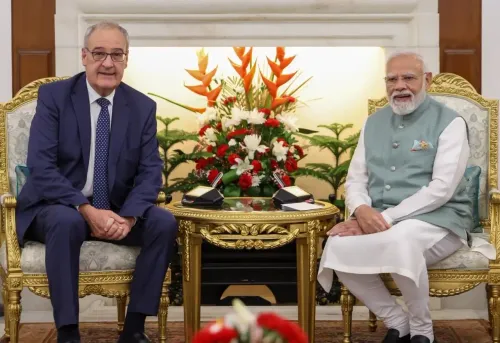
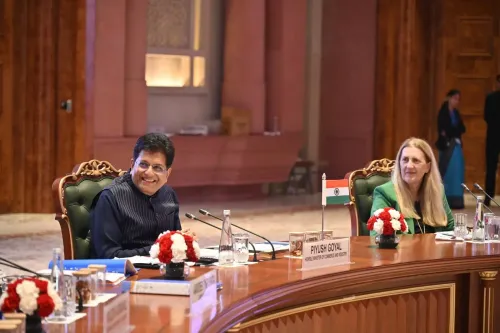
The India-EFTA Trade and Economic Partnership Agreement (TEPA) is poised to significantly expand bilateral trade and investment flows between India and the four-nation European Free Trade Association bloc, a senior Swiss trade official said on Wednesday, 7 October 2026. The remarks came on the sidelines of the India-EFTA Prosperity Summit in New Delhi, which marked one year since the agreement entered into force.
What the Swiss Official Said
Markus Schlagenhof, Deputy Secretary General and Director of the Trade Relations Division, Switzerland, argued that preferential market access — a core feature of TEPA — typically catalyses deeper commercial engagement. “We know that once preferential arrangements have been made between two countries, trade is going to boost because there’s preferential access to each other’s markets, and based on that, I’m convinced that investments will follow as well,” Schlagenhof said.
He described the India-EFTA agreement as a landmark arrangement, noting it carries an investment pledge that is unprecedented in the history of such trade pacts. “This agreement is the first-ever agreement of this kind, with a never-seen investment pledge before. It provides the basis for further deepening relations between the EFTA states, and in particular Switzerland, and India,” he added.
The Prosperity Summit: Marking One Year of TEPA
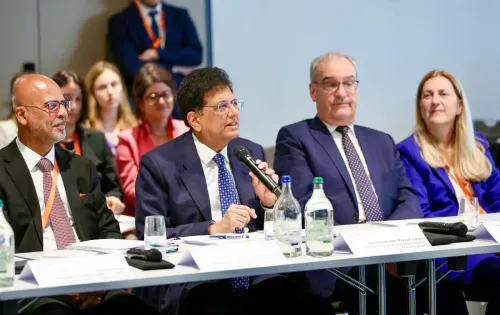
The second India-EFTA Prosperity Summit brought together more than 200 companies from EFTA member states — Switzerland, Norway, Iceland, and Liechtenstein — to assess progress on investment promotion commitments made since TEPA came into force. Schlagenhof described the summit as a review checkpoint: “It’s time to review the promises both sides have made to promote investments and facilitate investments wherever possible, because investment happens when the right framework conditions are provided.”
Notably, this is only the second such summit, suggesting that both sides are still in the early institutional phase of operationalising the agreement’s ambitions.
About TEPA and Its Significance
The European Free Trade Association (EFTA) comprises Switzerland, Norway, Iceland, and Liechtenstein — four high-income economies with strong expertise in pharmaceuticals, financial services, precision engineering, and maritime industries. TEPA is aimed at enhancing trade, investment, and broader economic cooperation between India and this bloc.
The agreement’s investment commitment component has drawn particular attention from trade analysts, as most free trade agreements (FTAs) focus primarily on goods and services tariffs. A binding investment pledge within a trade pact framework is considered relatively rare in India’s FTA portfolio. This comes amid India’s broader push to deepen economic ties with European partners, having recently concluded or advanced negotiations with several blocs.
What Comes Next
With the framework now a year old, the focus shifts to on-the-ground implementation — translating preferential access into actual trade volumes and investment inflows. Industry bodies and businesses from both sides are expected to identify specific cooperation areas emerging from the summit’s deliberations. The pace at which companies from EFTA member states scale up India operations will be a key indicator of TEPA’s real-world impact over the next 12 to 24 months.
Point of View
But one year in, the more pressing question is whether that pledge has translated into measurable capital flows — something the summit conspicuously did not quantify. India has a mixed record with FTA-linked investment materialisation; the EU FTA negotiations dragged for over a decade before resuming. With EFTA’s four economies collectively smaller than Germany’s alone, the strategic value here is less about volume and more about quality — Swiss pharmaceuticals, Norwegian maritime, Icelandic geothermal expertise. Whether India’s regulatory environment can absorb that kind of specialised investment at scale remains the real test of TEPA’s ambitions.
NationPress
7 Oct 2026
Frequently Asked Questions
What is the India-EFTA TEPA?
The India-EFTA Trade and Economic Partnership Agreement (TEPA) is a trade and investment pact between India and the four-nation European Free Trade Association — Switzerland, Norway, Iceland, and Liechtenstein. It provides preferential market access and includes an investment commitment pledge described as unprecedented for this type of agreement.
What is the India-EFTA Prosperity Summit?
The India-EFTA Prosperity Summit is a bilateral forum where government officials and businesses from EFTA member states and India review progress on investment and trade commitments under TEPA. The second such summit was held in New Delhi on 7 October 2026, marking one year since the agreement entered into force.
What did Swiss official Markus Schlagenhof say about TEPA?
Markus Schlagenhof, Deputy Secretary General and Director of the Trade Relations Division of Switzerland, said TEPA’s preferential market access provisions will boost trade and attract investment flows. He described the agreement as the first of its kind globally, featuring a never-before-seen investment pledge.
Which countries are part of EFTA?
The European Free Trade Association (EFTA) comprises four countries: Switzerland, Norway, Iceland, and Liechtenstein. These are distinct from the European Union and collectively represent high-income economies with strengths in financial services, pharmaceuticals, precision engineering, and maritime industries.
How many companies attended the India-EFTA Prosperity Summit?
More than 200 companies from EFTA member states participated in the second India-EFTA Prosperity Summit in New Delhi on 7 October 2026, to assess developments since TEPA’s implementation and identify areas for further cooperation.