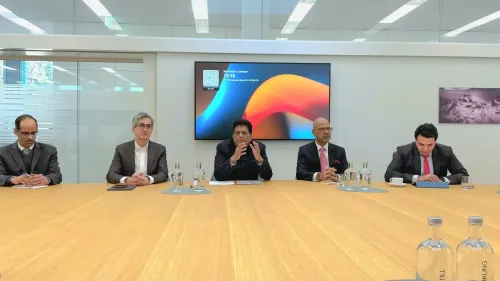
Piyush Goyal heads to Switzerland to advance India-EFTA TEPA implementation
Synopsis
Commerce Minister Piyush Goyal's two-day Berne visit is the first senior-level push to operationalise TEPA — the landmark India-EFTA deal that came into force in October 2025 and carries a $100 billion investment pledge tied to one million direct jobs. With pharma, watches, and professional services all in play, the talks signal India is now focused on delivery, not just signatures.
Key Takeaways
Piyush Goyal visits Berne, Switzerland on 12-13 June to advance TEPA implementation with Swiss government officials and pharma industry leaders.
India and the EFTA states signed TEPA in March 2024 ; it came into force in October 2025 .
EFTA has committed $100 billion in investment over 15 years , targeting one million direct jobs in India.
EFTA offers 92.2% of tariff lines covering 99.6% of India's exports; India offers 82.7% covering 95.3% of EFTA exports.
Sensitive sectors including dairy , soya , coal , and key agricultural products are excluded from India's offer.
The pact enables mutual recognition of services, allowing professionals in nursing , chartered accountancy , and architecture to work across EFTA countries.
Union Minister of Commerce and Industry Piyush Goyal is set to travel to Berne, Switzerland on 12-13 June for high-level discussions with senior Swiss government officials and leaders of the country's pharmaceutical industry, according to an official statement. The visit is centred on advancing the implementation of the Trade and Economic Partnership Agreement (TEPA) signed between India and the European Free Trade Association (EFTA) states.
Key Meetings on the Agenda
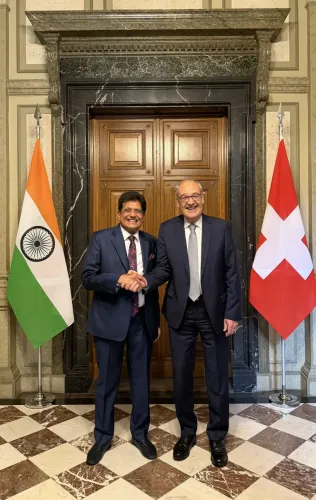
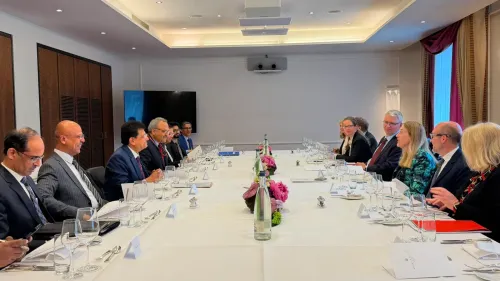
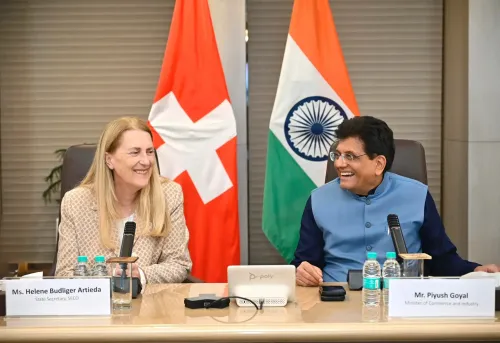
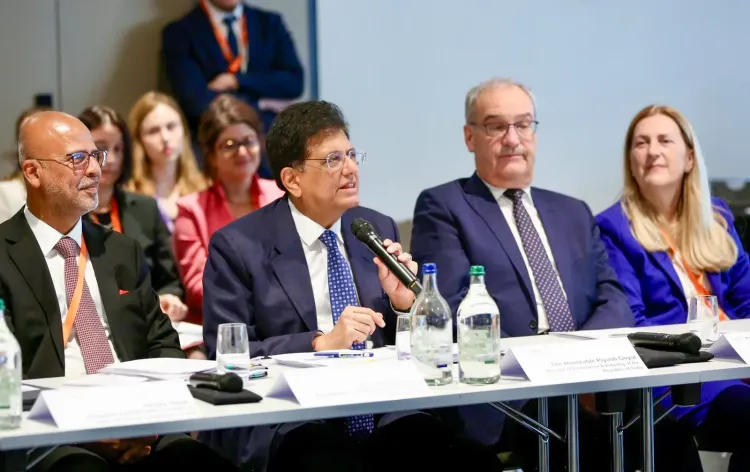
Goyal is scheduled to meet Helene Budliger Artieda, State Secretary for Economic Affairs, and Guy Parmelin, Federal President of Switzerland. He will also engage with leading representatives of the Swiss pharmaceutical industry, the statement noted.
On the sidelines of the official visit, the minister will travel to Zurich to meet Swiss companies and investors, exploring avenues for deeper bilateral trade and investment collaboration.
What TEPA Covers
India and the EFTA states — Switzerland, Norway, Liechtenstein, and Iceland — signed the TEPA in March 2024, with the agreement coming into force in October 2025. Under the pact, the EFTA bloc has committed an investment of $100 billion over 15 years, projected to facilitate the creation of one million direct jobs in India.
The EFTA is offering 92.2% of its tariff lines, covering 99.6% of India's exports to the region. This includes 100% market access on non-agricultural products and concessions on select processed agricultural goods. India, in turn, is offering 82.7% of its tariff lines, covering 95.3% of EFTA exports — though the effective duty on gold remains unchanged.
Sensitive Sectors and Exclusions
India's offer has been calibrated with care around Production-Linked Incentive (PLI) sensitivities in sectors such as pharmaceuticals, medical devices, and processed food. Sectors including dairy, soya, coal, and sensitive agricultural products have been kept in the exclusion list, reflecting domestic industry concerns.
For Indian consumers, the pact will reduce tariffs on specific EFTA goods such as Swiss watches, whisky, and chocolates. The agreement also includes provisions for mutual recognition of services, allowing professionals in fields like nursing, chartered accountancy, and architecture to work in EFTA countries.
Delegation and Broader Significance
Goyal will be accompanied by senior officials from the Department for Promotion of Industry and Internal Trade (DPIIT) and the Ministry of Health and Family Welfare. The visit underscores the importance India attaches to its economic engagement with Switzerland and the wider EFTA bloc, with the deliberations expected to address operational issues arising from the agreement and strengthen institutional cooperation.
With TEPA now operational, the Berne visit marks one of the first senior-level bilateral engagements focused squarely on execution — signalling that the agreement is moving from signature to ground-level implementation.
Point of View
Yet the figure is a pledge spread over 15 years — not a guaranteed disbursement. The real measure of success will be whether the investment materialises in trackable, job-creating projects, or remains a headline number. India's careful carve-outs — gold duty untouched, dairy excluded, PLI sectors ring-fenced — reveal how politically constrained even a 'comprehensive' agreement remains. The pharma dimension is particularly worth watching: Swiss pharmaceutical majors and India's generic industry have long had a fraught relationship over intellectual property, and how TEPA navigates that tension will determine whether the deal's promise translates into durable industrial cooperation.
NationPress
19 Sept 2026
Frequently Asked Questions
What is the India-EFTA Trade and Economic Partnership Agreement (TEPA)?
TEPA is a comprehensive trade and investment agreement signed between India and the four EFTA states — Switzerland, Norway, Liechtenstein, and Iceland — in March 2024, which came into force in October 2025. It covers goods, services, investment, and professional mobility, with EFTA committing $100 billion in investment over 15 years to support one million direct jobs in India.
Why is Piyush Goyal visiting Switzerland in June 2025?
Goyal is visiting Berne on 12-13 June to meet Swiss government officials, including Federal President Guy Parmelin, and pharmaceutical industry leaders to advance the implementation of TEPA and resolve operational issues arising from the agreement. He will also engage investors in Zurich to explore bilateral trade and investment opportunities.
Which sectors are excluded from India's offer under TEPA?
India has kept dairy, soya, coal, and sensitive agricultural products in the exclusion list. PLI-linked sectors such as pharmaceuticals, medical devices, and processed food have also been offered with sensitivity-based calibration. The effective duty on gold remains unchanged.
How does TEPA benefit Indian consumers and professionals?
Indian consumers stand to benefit from reduced tariffs on EFTA goods such as Swiss watches, whisky, and chocolates. Indian professionals in fields like nursing, chartered accountancy, and architecture will gain the ability to work in EFTA countries through mutual recognition of services provisions.
What is the market access India is offering under TEPA?
India is offering 82.7% of its tariff lines, covering 95.3% of EFTA exports, while EFTA is offering 92.2% of its tariff lines covering 99.6% of India's exports. EFTA's offer includes 100% market access on non-agricultural products and concessions on select processed agricultural goods.