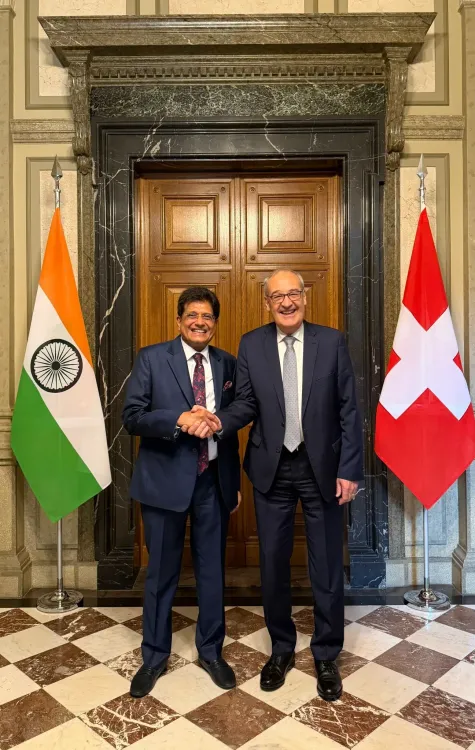
Goyal meets Swiss President Parmelin, reaffirms TEPA ties
Synopsis
Commerce Minister Piyush Goyal met Swiss President Guy Parmelin on 12 June 2026, reaffirming India-Switzerland ties and commitment to the India-EFTA TEPA, which pledges $100 billion in investment over 15 years in exchange for improved market access.
Key Takeaways
Piyush Goyal met Swiss President Guy Parmelin on 12 June 2026 , describing the meeting as 'excellent.' Both sides reaffirmed commitment to the India-EFTA Trade and Economic Partnership Agreement (TEPA) signed on 10 March 2024 .
The TEPA commits EFTA nations to facilitating $100 billion in investment in India over 15 years .
Switzerland is a key EFTA member with strengths in pharmaceuticals, precision engineering, and financial services — priority sectors for India.
The meeting signals continued high-level political momentum for TEPA implementation, including phased tariff reductions expected from 2025-26 .
India's broader FTA strategy also includes agreements with Australia , the UAE , and the United Kingdom .
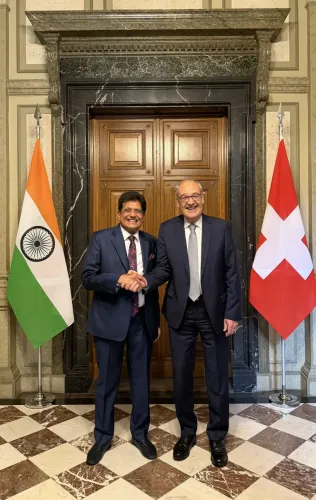
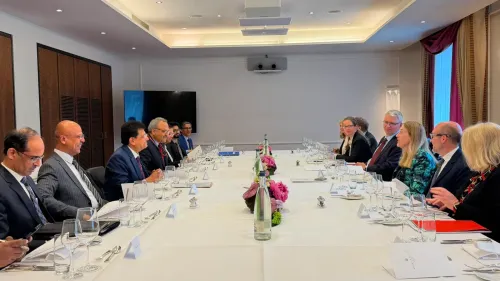
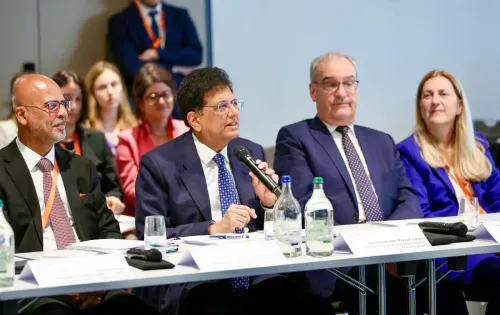
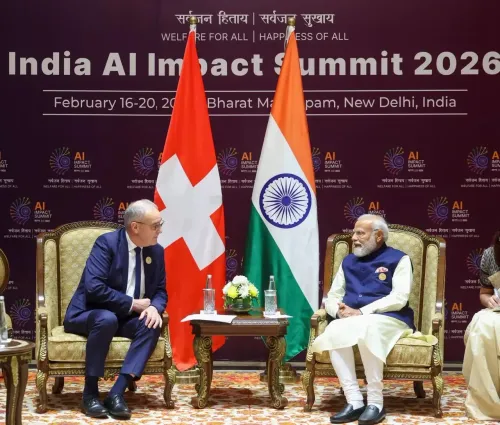
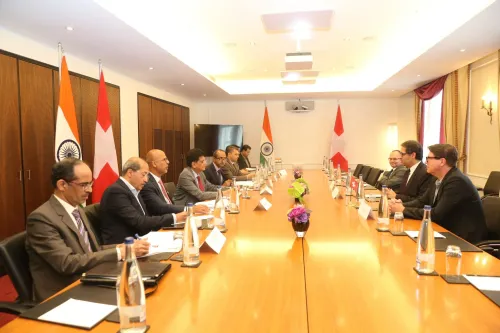
Union Commerce and Industry Minister Piyush Goyal met Guy Parmelin, President of the Swiss Confederation, on Friday, 12 June 2026, with both sides reaffirming the bilateral partnership and pledging to deepen economic engagement under the landmark India-EFTA Trade and Economic Partnership Agreement (TEPA).
Context
Goyal described the meeting as 'excellent', noting that discussions had 'reaffirmed the strong and enduring partnership between India and Switzerland.' The two leaders expressed a shared commitment to strengthening 'economic engagement, investment flows, and strategic cooperation' under the India-EFTA TEPA.
Parmelin serves simultaneously as President of the Swiss Confederation and head of the Federal Department of Economic Affairs, Education and Research, making him a direct counterpart for trade and investment discussions with India's commerce minister.
Policy Backdrop
The India-EFTA TEPA was signed on 10 March 2024 in New Delhi, marking a significant milestone in India's push to forge modern free-trade arrangements with developed economies. Under the agreement, the four EFTA member states — Switzerland, Norway, Iceland, and Liechtenstein — committed to facilitating $100 billion in investment into India over 15 years in exchange for improved market access for their goods and services.
The TEPA is part of a broader Indian trade strategy pursued since 2022, which has also yielded agreements with Australia, the UAE, and the United Kingdom, targeting high-value sectors where partner nations hold technological strengths. Switzerland brings particular depth in pharmaceuticals, precision engineering, and financial services — sectors central to India's manufacturing and export ambitions.
Stakeholders and Impact
Indian exporters stand to benefit from improved access to EFTA markets in sectors such as textiles, chemicals, and engineering goods, while Swiss investors are among the most prominent targets for the $100 billion investment commitment embedded in the TEPA framework. Switzerland has longstanding economic links with India across banking, life sciences, and precision manufacturing.
The meeting signals continued high-level political will to move the agreement from signature to implementation. Phased tariff reductions and investment facilitation measures under TEPA were expected to begin taking effect in the 2025-26 period, and ministerial-level engagement of this kind is typically a prerequisite for resolving early implementation bottlenecks.
What's Next
Follow-up mechanisms such as joint working group meetings on services trade and intellectual property are likely outcomes of sustained bilateral engagement at this level. Observers will watch for concrete announcements on investment facilitation timelines or sector-specific cooperation frameworks that may emerge from the discussions between Goyal and Parmelin.
With India's trade diplomacy calendar remaining active across multiple geographies, the India-EFTA TEPA is increasingly viewed as a template for structuring investment-linked market-access deals with technologically advanced partners — giving this bilateral meeting significance beyond the immediate bilateral context.
Point of View
The $100 billion investment pledge embedded in the TEPA is a flagship proof-of-concept for its newer model of investment-linked trade agreements, and ministerial-level contact helps hold partner governments accountable to that commitment. Switzerland's dual role as an EFTA member and a global hub for pharmaceutical and precision-engineering capital makes it the single most consequential bilateral relationship within the EFTA bloc for India's manufacturing ambitions. Sustained engagement at this level suggests both sides are working to pre-empt the friction — on intellectual property, services, and rules of origin — that typically slows post-signature implementation.
NationPress
14 Sept 2026
Frequently Asked Questions
What is the India-EFTA TEPA agreement?
The India-EFTA Trade and Economic Partnership Agreement (TEPA) is a landmark trade deal signed on 10 March 2024 in New Delhi between India and the four EFTA member states — Switzerland, Norway, Iceland, and Liechtenstein. It commits EFTA countries to facilitating $100 billion in investment in India over 15 years in exchange for improved market access for their goods and services.
Why did Piyush Goyal meet Swiss President Guy Parmelin?
Commerce and Industry Minister Piyush Goyal met Swiss President Guy Parmelin on 12 June 2026 to reaffirm the bilateral partnership between India and Switzerland and to discuss strengthening economic engagement, investment flows, and strategic cooperation under the India-EFTA TEPA.
What is EFTA and which countries are members?
EFTA, the European Free Trade Association, is a bloc of four non-EU European nations: Switzerland, Norway, Iceland, and Liechtenstein. Unlike the European Union, EFTA members independently negotiate their own trade agreements, which is how the India-EFTA TEPA came about.
What does the $100 billion EFTA investment commitment mean for India?
Under the India-EFTA TEPA, the four EFTA member states committed to facilitating $100 billion in investment into India over 15 years. This is linked to improved market access granted to EFTA exports and is intended to boost manufacturing, create jobs, and attract technology in high-value sectors such as pharmaceuticals and precision engineering.
What sectors does India target through the India-Switzerland partnership?
India's economic engagement with Switzerland focuses on pharmaceuticals, precision engineering, and financial services — areas where Swiss companies hold global technological leadership. These align with India's broader goals of upgrading its manufacturing base and diversifying export capabilities under its modern FTA strategy.