India Extends Airspace Ban for Pakistan Till May 24
Synopsis
India has extended its airspace ban on Pakistani aircraft until May 24, 2026 — over a year after the Pahalgam terror attack killed 26 tourists. Pakistan has reciprocated. Airlines like Air India face soaring costs, longer routes, and pilot duty limit waivers as the aerial standoff shows no signs of ending.
Key Takeaways
India has extended its airspace ban on Pakistani aircraft until 5:30 a.m.
IST on May 24, 2026 , via a formal NOTAM issued on Wednesday.
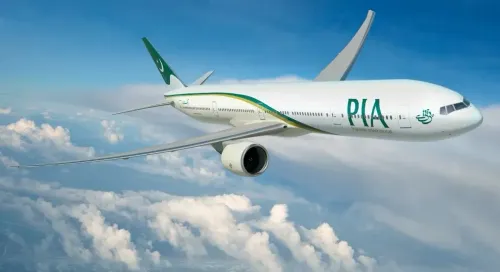
The ban covers all Pakistan-registered aircraft , including those owned or operated by Pakistani airlines and military flights .
Pakistan has reciprocally extended its airspace closure for Indian flights until May 24 , according to Dawn News .
The restriction has been in place for over one year , triggered by the Pahalgam terror attack of April 2025 that killed 26 tourists .
Fuel costs represent up to 40 per cent of airline operating expenses, making longer rerouted flights a major financial burden for carriers.
The DGCA has granted Air India temporary relaxations in pilot flight duty time limits for long-haul routes to Europe , the US , and Canada due to the airspace crisis.
New Delhi — India has extended its airspace ban on Pakistani aircraft until May 24, 2026, marking over a year of continuous aerial restrictions triggered by the Pahalgam terror attack of April 2025, in which 26 tourists were killed in one of the deadliest cross-border terror strikes on Indian soil in recent memory. The move signals that diplomatic and military tensions between the two nuclear-armed neighbours remain far from resolution.
What the NOTAM Says
A Notice to Airmen (NOTAM) issued on Wednesday confirmed that Indian airspace will remain closed to Pakistan-registered aircraft, as well as any aircraft owned or operated by Pakistani airlines or operators — including military flights — until 5:30 a.m. IST on May 24, 2026 (2359 hours UTC on May 23). The NOTAM is the formal aviation instrument through which governments communicate airspace restrictions to flight operators worldwide.
This marks the latest in a series of monthly extensions that both countries have been implementing since the ban was first imposed following the Pahalgam massacre. The cyclical, month-to-month renewal has effectively institutionalised the restriction, with no diplomatic signal suggesting an imminent reversal.
Pakistan's Reciprocal Closure
In a mirrored move, Pakistan has also extended its airspace ban on Indian flights until May 24, according to Dawn News. This reciprocal closure means neither country's commercial or military aircraft can use the other's airspace, a situation unprecedented in duration in the modern history of India-Pakistan relations.
Notably, both nations have maintained this mutual exclusion without any formal bilateral dialogue on the aviation front — a reflection of the broader diplomatic freeze that has set in since the April 2025 attack.
Financial and Operational Impact on Airlines
The prolonged airspace ban has imposed severe financial strain on carriers on both sides. Fuel costs account for up to 40 per cent of airline operating expenses, and the longer rerouted flights significantly inflate this figure. Airlines are being forced to fly over the Arabian Sea, Central Asia, and parts of Africa — dramatically increasing block time and fuel burn.
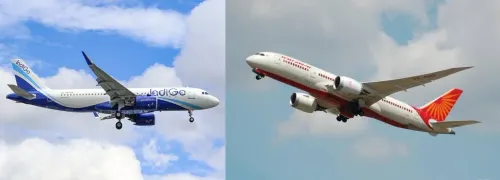
For Air India, the situation has been compounded by simultaneous airspace restrictions arising from the Middle East conflict, which has closed the skies over Iran and Iraq to several carriers. The airline has been forced to cancel multiple long-haul flights due to these cascading operational constraints.
The Directorate General of Civil Aviation (DGCA) has responded by granting Air India temporary relaxations in flight duty time limitations (FDTL) for pilots operating long-haul routes to Europe, the United States, and Canada — an unusual regulatory concession that underscores just how deeply the airspace closures are disrupting normal aviation operations.
Strategic and Geopolitical Context
The airspace ban is one of several retaliatory measures India initiated following the Pahalgam attack, which also included suspension of the Indus Waters Treaty, downgrading of diplomatic ties, and trade restrictions. The aviation restriction, while less visible than military posturing, carries significant economic weight — both for airlines and for the broader trade and travel ecosystem between the two countries.
Historically, India had previously imposed a shorter airspace ban on Pakistan in 2019 following the Balakot airstrikes, which lasted approximately five months. The current ban has already surpassed that duration by several months, signalling a far deeper and more entrenched rupture in bilateral relations.
Critics and aviation analysts argue that while the ban serves as a strong diplomatic signal, the financial burden ultimately falls on passengers and airlines — not governments. The longer the restriction persists, the greater the structural damage to South Asian aviation connectivity.
What to Expect Next
With both nations locked into a pattern of monthly extensions and no formal peace talks on the horizon, the May 24 deadline is widely expected to be renewed again. Aviation industry stakeholders are urging governments to consider humanitarian and commercial aviation corridors, but no such proposal has been formally tabled. Until a broader diplomatic breakthrough occurs, Indian and Pakistani airlines — and their passengers — will continue to bear the cost of this aerial standoff.
Point of View
The real cost is being borne by airlines, passengers, and pilots navigating absurd detours across three continents. The DGCA's decision to waive pilot duty limits for Air India is a telling admission that the system is under stress. More troubling is the silence: over a year in, there is no diplomatic channel, no aviation dialogue, no off-ramp — just monthly renewals that normalise a crisis neither side seems in a hurry to resolve.
NationPress
19 Sept 2026
Frequently Asked Questions
Why has India extended the airspace ban on Pakistani aircraft?
India extended the airspace ban on Pakistani aircraft until May 24, 2026, as part of ongoing retaliatory measures following the April 2025 Pahalgam terror attack that killed 26 tourists. The ban has been renewed monthly since it was first imposed and now exceeds one year in duration.
Has Pakistan also banned Indian flights from its airspace?
Yes, Pakistan has reciprocally extended its airspace closure for Indian flights until May 24, according to Dawn News. Both countries have been mirroring each other's extensions on a monthly basis since the ban began.
How does the airspace ban affect Indian airlines like Air India?
Air India and other Indian carriers are forced to take longer routes over the Arabian Sea, Central Asia, and Africa, significantly increasing fuel costs and flight times. The DGCA has granted temporary relaxations in pilot flight duty limits to manage these extended long-haul operations.
When was the India-Pakistan airspace ban first imposed?
The current airspace ban was first imposed in April 2025 following the Pahalgam terror attack. It has now been in place for over a year, making it significantly longer than the 2019 airspace closure that followed the Balakot airstrikes.
What is a NOTAM and how does it relate to the airspace ban?
A NOTAM, or Notice to Airmen, is an official aviation communication used by governments to inform pilots and airlines of airspace restrictions or changes. India issued a NOTAM confirming its airspace remains closed to Pakistani aircraft until 5:30 a.m. IST on May 24, 2026.