India's FY26 exports hit record $863.1 bn as FTAs unlock wider global access
Synopsis
India's exports crossed $863.1 billion in FY26 — a national record — and the data tabled in Parliament reveals that FTAs are not just symbolic: the UAE deal added 507 new tariff lines, Oman's brand-new CEPA delivered 189.6% year-on-year export growth in its very first month, and the EFTA pact is already showing 7,885 Certificate of Origin issuances. The numbers suggest India's trade architecture is finally translating into measurable market penetration.
Key Takeaways
India's total exports hit a record $863.1 billion in FY2025-26 — merchandise at $441.8 billion , services at $421.3 billion .
The India-UAE CEPA (since May 2022) has generated 4.45 lakh Certificates of Origin and added 507 new export tariff lines , with exports valued at $37.3 billion .
The India-Oman CEPA (since June 2026) delivered 189.6% year-on-year export growth in its first month, with exports rising to $622.8 million in June 2026.
The EFTA-TEPA (since October 2025) covers 99.6% of India's exports and has already seen 7,885 Certificates of Origin issued.
Labour-intensive sectors have been prioritised across FTAs with the UAE , Australia , UK , Oman , New Zealand , and EFTA , with safeguards for sensitive domestic industries.
India's total exports reached a historic $863.1 billion in FY2025-26, with free trade agreements (FTAs) playing a measurable role in deepening global market access, expanding export diversification, and strengthening labour-intensive sectors, Parliament was informed on Tuesday, 28 July 2026. The milestone, disclosed in a written reply in the Lok Sabha, underscores the combined momentum of India's merchandise and services export engines.
Record Numbers Across Merchandise and Services
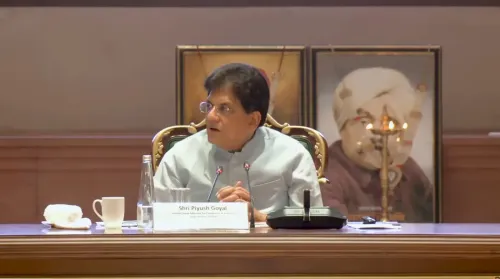
Merchandise exports stood at $441.8 billion while services exports expanded to $421.3 billion in FY2025-26, together crossing the $863.1 billion mark for the first time. Minister of State for Commerce and Industry Jitin Prasada told the Lok Sabha that the government tracks utilisation of preferential tariff benefits under newly operationalised trade agreements — those signed post-2021 — through Certificates of Origin and partner-country trade data.
UAE and Australia: Deepening Diversification
Since the India-UAE Comprehensive Economic Partnership Agreement (CEPA) entered into force on 1 May 2022, 4.45 lakh Certificates of Origin have been issued, reflecting strong utilisation of tariff concessions. The number of tariff lines at the HS 8-digit level exported to the UAE rose from 7,546 in FY2021-22 (pre-CEPA) to 8,053 in FY2025-26 — an increase of 507 tariff lines (6.7%) — with exports across these lines valued at $37.3 billion.
Under the India-Australia Economic Cooperation and Trade Agreement (ECTA), operationalised in December 2022, 2.73 lakh Certificates of Origin have been issued. Before ECTA, only 1,482 Certificates of Origin were issued in FY2020-21; post-implementation, the annual average has climbed to approximately 45,527. Tariff lines exported to Australia expanded from 5,396 to 5,668 at the HS 8-digit level, with exports valued at $7.2 billion in FY2025-26 — an addition of 272 tariff lines.
Mauritius, Oman, and EFTA: New Frontiers
Under the India-Mauritius Comprehensive Economic Cooperation and Partnership Agreement (CECPA), 1,956 Certificates of Origin have been issued. Tariff lines exported to Mauritius grew from 3,593 (pre-CECPA, FY2021-22) to 4,345 in FY2025-26 — an increase of 752 tariff lines (20.9%) — with exports valued at approximately $473 million.
The India-Oman CEPA, which entered into force on 1 June 2026, grants duty-free access to 99.38% of India's exports to Oman by value, covering 98.08% of Oman's tariff lines. Since its launch, 783 Certificates of Origin have been issued. Exports across relevant tariff lines surged to $622.8 million in June 2026, up from $402.7 million in May 2026 — a month-on-month jump of 54.7% — and more than double the $215.1 million recorded in June 2025, marking a year-on-year rise of 189.6%.
The EFTA-Trade and Economic Partnership Agreement (TEPA), in force since October 2025, covers 92.2% of tariff lines encompassing 99.6% of India's exports. As many as 7,885 Certificates of Origin have already been issued, signalling strong early uptake.
Labour-Intensive Sectors and Calibrated Safeguards
'The labour-intensive sectors have remained a key priority in India's recent FTA negotiations. Agreements concluded with the UAE, Australia, the United Kingdom, Oman, New Zealand, and EFTA have secured improved market access while adopting a calibrated approach to safeguard sensitive domestic sectors,' Minister Prasada stated. Notably, this approach reflects a deliberate policy of balancing export ambition with domestic industry protection — a tension that has shaped India's FTA posture since the underwhelming experience with the ASEAN agreement a decade ago.
What This Signals for India's Trade Trajectory
The FY26 export record arrives at a moment when global trade flows are being reshaped by geopolitical realignments and supply-chain diversification away from China. India's expanding FTA network — now covering Gulf, Oceanian, European, and island-economy markets — positions it to capture a larger share of that reallocation. With negotiations with the European Union and the United States still in progress, the full arc of India's trade pivot is yet to play out.
Point of View
But the more telling story is in the granular Certificate of Origin data — it shows that India's newer FTAs are actually being used, not just signed. The Oman CEPA's 189.6% year-on-year jump in its first operational month is striking, though one month is too short a window to confirm a structural shift. The real accountability question is whether labour-intensive sector gains — the stated priority — are being tracked with the same rigour as aggregate tariff-line counts. India's ASEAN FTA experience showed that market access on paper can diverge sharply from export outcomes on the ground; the government's Certificate of Origin monitoring is a step in the right direction, but independent sector-level employment data would make the case far more convincing.
NationPress
27 Oct 2026
Frequently Asked Questions
What is India's total export figure for FY2025-26?
India's total exports reached a record $863.1 billion in FY2025-26, comprising $441.8 billion in merchandise exports and $421.3 billion in services exports. This is the highest export figure India has ever recorded, as disclosed in a written reply in the Lok Sabha on 28 July 2026.
How have FTAs helped Indian exporters diversify their markets?
Free trade agreements with the UAE, Australia, Mauritius, Oman, and EFTA have collectively added hundreds of new tariff lines to India's export basket in each partner market. For example, the India-UAE CEPA added 507 new HS 8-digit tariff lines, while the India-Mauritius CECPA added 752 lines — a 20.9% expansion in product diversity.
What is the India-Oman CEPA and what has it achieved so far?
The India-Oman Comprehensive Economic Partnership Agreement entered into force on 1 June 2026 and grants duty-free access to 99.38% of India's exports to Oman by value. In its first month of operation, exports across relevant tariff lines grew 189.6% year-on-year to $622.8 million, and 783 Certificates of Origin have already been issued.
How does the government track FTA utilisation by Indian exporters?
The government monitors utilisation of preferential tariff benefits through Certificates of Origin issued under each agreement and through partner-country trade data, according to Minister of State Jitin Prasada's written reply in the Lok Sabha. This approach applies specifically to agreements signed and operationalised after 2021.
Which sectors have benefited most from India's recent FTA negotiations?
Labour-intensive sectors have been a stated priority in India's FTA negotiations with the UAE, Australia, the United Kingdom, Oman, New Zealand, and EFTA. These agreements have secured improved market access for such sectors while maintaining a calibrated approach to protect sensitive domestic industries, according to the minister.