How Did India’s Exports Overcome Tariffs to Achieve Record Trade Growth in 2025?
Synopsis
In a remarkable turn of events, Indian exports have not only withstood global tariffs but also achieved record growth in 2025. With strategic trade agreements and digital innovations, India is reshaping its trade landscape for a resilient future. Discover how India is navigating the challenges of trade in a dynamic global economy.
Key Takeaways
Record trade growth of $825.25 billion in 2024-25.
Non-petroleum exports increased by 6.07 percent .
Key sectors include electronics and pharmaceuticals .
Strong regional partnerships with ASEAN nations.
Digital tools are enhancing trade facilitation .
New Delhi, Jan 2 (NationPress) A recent report indicates that Indian exports have overcome global tariffs in 2025, aided by policy support, trade agreements, and digital innovations.
According to the report from Times Kuwait, India has recorded unprecedented trade growth in 2025, despite tariffs imposed by the US aimed at influencing nations striving for economic independence.
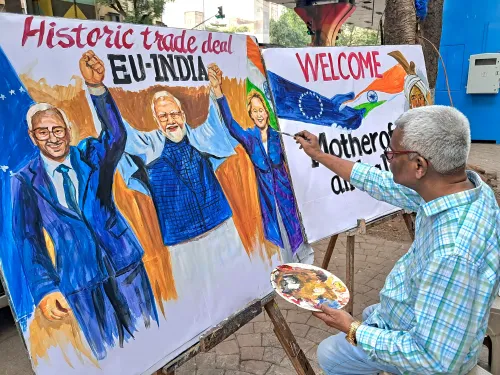
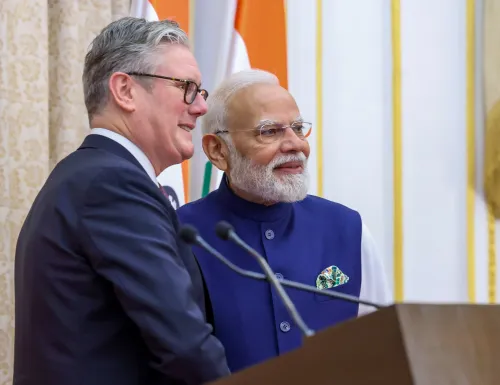
Significant agreements such as the India–UK CETA (Comprehensive Economic and Trade Agreement), India–Oman CEPA, and India–EFTA TEPA (Trade and Economic Partnership Agreement) have expanded market access and lowered customs duties.
This has also fostered collaboration in various sectors, including renewable energy, artificial intelligence, Information and Communications Technology (ICT), and electric vehicles (EVs), the report highlighted.
Moreover, the diversification of markets and enhanced institutional support have mitigated India’s reliance on any single trading partner.
The report emphasized, “India’s trade resilience diminishes the strategic necessity for a dedicated US-India trade deal, as the country has diversified its markets, upgraded its export portfolio with manufacturing and technology-driven goods, and strengthened high-value global connections.”
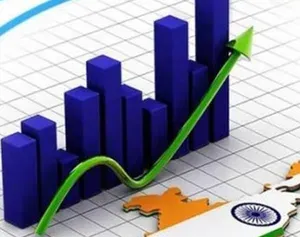
Total exports of goods and services reached $825.25 billion in 2024–25, reflecting a 6.05 percent increase year-on-year. Additionally, exports for the first half of FY26 (April–September 2025) soared to $418.91 billion, representing a 5.86 percent growth, marking a record high for any half-year timeframe. Non-petroleum exports surged to $374.32 billion, up 6.07 percent.
Key sectors propelling this growth include electronics, engineering products, pharmaceuticals, marine goods, and rice, with principal export destinations including the UAE, China, Spain, and Hong Kong.
Collaborations with ASEAN countries like the Philippines and Thailand have further deepened regional ties and opened up new export avenues.
Domestic initiatives such as the Export Promotion Mission (EPM) have provided both financial and non-financial assistance, including credit guarantees, trade financing, compliance support, and international branding.
Digital transformation initiatives like Trade eConnect and the Trade Intelligence & Analytics (TIA) portal have significantly improved trade facilitation and provided data-driven insights.
aar/na
Point of View
India’s ability to navigate global trade challenges showcases its resilience and strategic foresight. The government's proactive stance on trade agreements and digital transformation initiatives not only bolster economic growth but also position India as a formidable player in the global market. This approach aligns with the nation's long-term vision of achieving self-reliance while fostering international partnerships.
NationPress
1 Oct 2026
Frequently Asked Questions
What are the factors contributing to India's export growth in 2025?
Key factors include strategic policy support, favorable trade agreements, digital tools for trade facilitation, and diversification of markets.
Which sectors are driving India's export growth?
Sectors such as electronics, engineering goods, pharmaceuticals, marine products, and rice are significantly contributing to export growth.
How have trade agreements impacted India's exports?
Trade agreements like the India-UK CETA and India-Oman CEPA have expanded market access and reduced tariffs, enhancing India's export potential.
What initiatives are supporting Indian exporters?
Initiatives like the Export Promotion Mission (EPM) provide financial support, trade finance, and compliance assistance to exporters.
How has digital transformation influenced India's trade?
Digital tools such as Trade eConnect and Trade Intelligence & Analytics have improved trade facilitation and provided valuable data insights.