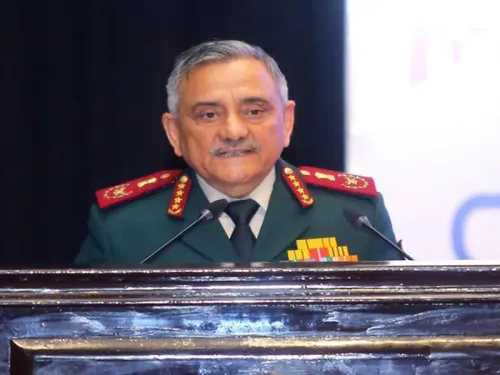
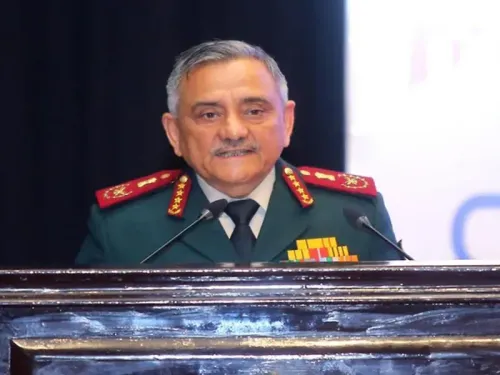
CDS General Anil Chauhan calls for BCI tech collaboration for national security
Synopsis
General Anil Chauhan's push for Brain-Computer Interface adoption signals India's strategic pivot toward neural technologies in defence. With DRDO, IIT Delhi, and 10 start-ups already engaged, the military is betting that BCI can augment cognitive capabilities and strengthen command systems — but ethical guardrails and neuro-security protocols remain unresolved.
Key Takeaways
CDS General Anil Chauhan inaugurated a BCI conference on 5 May in New Delhi , calling for inter-institutional collaboration.
Maj Gen Ashok Kumar defined BCI as technology translating neural signals into actionable outcomes, with expanding military and civilian applications.
Vice Admiral Arti Sarin noted the blurring boundary between human cognition and computational systems.
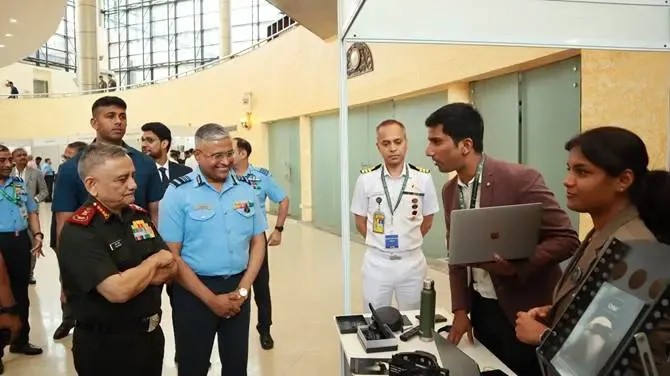
10 start-ups demonstrated innovative BCI devices, signalling private-sector engagement in neural technology development.
Deliberations covered ethical frameworks, human-machine integration, neuro-security challenges, and operational decision-making enhancement.
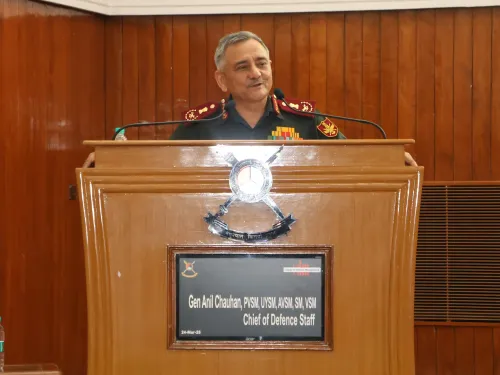
Chief of Defence Staff General Anil Chauhan on Tuesday, 5 May, inaugurated a conference on Brain-Computer Interface (BCI): Expanding Neural Frontiers & Its Strategic Implications in New Delhi, urging sustained collaboration among the Armed Forces, academia, industry, and research organisations to unlock the strategic potential of neural technologies. The conference, jointly organised by Headquarters Integrated Defence Staff (HQ IDS) and the Centre for Joint Warfare Studies (CENJOWS), brought together senior military officials, policymakers, neuroscientists, medical experts, industry leaders, and start-ups to examine BCI applications in defence and civilian domains.
What is Brain-Computer Interface and why it matters
Maj Gen (Dr) Ashok Kumar (Rtd), Director General of CENJOWS, outlined the transformative scope of BCI, describing it as a technology that translates neural signals from the human mind into actionable outcomes. Vice Admiral Arti Sarin, Director General Armed Forces Medical Services, noted that the traditional boundary between human cognition and computational systems is increasingly blurring, a convergence once considered speculative. Dr T.K. Gandhi, Professor and Head of the Department of Electrical and Biomedical Engineering at IIT Delhi, highlighted that BCI applications are expanding rapidly across both civilian welfare and military warfare domains.
Strategic applications in defence
A panel discussion involving senior defence officials, scientists, and industry representatives explored military applications of BCI, with emphasis on augmenting cognitive capabilities, enhancing human performance, and strengthening command-and-control systems in complex operational environments. Air Marshal S Shankar, Deputy Chief of IDS (Medical), presented a comprehensive overview of current and future BCI technologies, while technical sessions examined medical dimensions, technological advances, and defence integration pathways.
Indigenous research and innovation ecosystem
Experts from IIT Delhi, Defence Research and Development Organisation (DRDO), National Institute of Mental Health and Neurosciences (NIMHANS), and Centre for Development of Advanced Computing (C-DAC) shared insights on ongoing research and indigenous innovation. The conference featured 10 start-ups that demonstrated innovative BCI devices, products, and systems, signalling a growing private-sector engagement in neural technology development.
Ethical and security considerations
Deliberations addressed critical challenges including ethical frameworks for human-machine integration, neuro-security threats, and safeguards for operational decision-making. These discussions underscored the need for a comprehensive governance approach as BCI technologies transition from laboratory prototypes to operational deployment in military and medical settings.
What comes next
General Chauhan's call for inter-institutional collaboration sets the stage for coordinated policy development and research acceleration across defence, academia, and industry. The convergence of military interest, scientific progress, and start-up innovation suggests that India's BCI roadmap will likely prioritise both defence applications and civilian rehabilitation use cases in the coming months.
Point of View
Academia, and start-ups is encouraging, but the conference sidestepped hard questions: Who owns the neural data generated in military BCI systems? What prevents neuro-surveillance abuse? India's defence establishment is moving faster than its ethical frameworks, a pattern familiar from AI adoption. Without binding neuro-security protocols, this enthusiasm risks replicating earlier tech-first-governance-later mistakes.
NationPress
19 Sept 2026
Frequently Asked Questions
What is Brain-Computer Interface (BCI) technology?
BCI is a technology that translates neural signals from the human mind into actionable outcomes. It represents the convergence of human cognition and computational systems, with applications expanding across civilian welfare and military defence domains.
Why is CDS General Anil Chauhan advocating for BCI adoption in defence?
General Chauhan believes BCI can augment cognitive capabilities, enhance human performance, and strengthen command-and-control systems in complex operational environments. He is calling for sustained collaboration among the Armed Forces, academia, industry, and research organisations to unlock its strategic potential.
Which institutions are engaged in India's BCI research?
Key players include IIT Delhi, Defence Research and Development Organisation (DRDO), National Institute of Mental Health and Neurosciences (NIMHANS), Centre for Development of Advanced Computing (C-DAC), and 10 private start-ups demonstrating innovative BCI devices.
What ethical and security concerns does BCI raise?
The conference deliberations addressed human-machine integration ethics, neuro-security challenges, and safeguards for operational decision-making. Key unresolved questions include neural data ownership, neuro-surveillance prevention, and protocols for military BCI deployment.
When was the BCI conference held and who organised it?
The conference was held on 5 May in New Delhi, jointly organised by Headquarters Integrated Defence Staff (HQ IDS) and the Centre for Joint Warfare Studies (CENJOWS), and inaugurated by Chief of Defence Staff General Anil Chauhan.