India FY27 farm outlook: 92% monsoon forecast, 35% deficit risk weigh on crops

Synopsis
India's farm sector in FY27 is not a recovery story — it's a story of divergence. A below-normal monsoon probability, pulses and oilseeds trading below MSP, and a 2.2% YoY drop in total foodgrain output sit alongside record PM-KISAN transfers and reservoir levels at 127% of the 10-year average. The headline numbers flatter; the ground reality is far more conditional.
Key Takeaways
IMD has projected the 2026 southwest monsoon at 92% of the Long Period Average (LPA) , with possible El Niño conditions.
There is a 35% probability of deficient rainfall , raising concerns over kharif sowing of pulses and oilseeds .
Total foodgrain output has declined 2.2% year-on-year despite higher wheat and rice production.
PM-KISAN disbursements have exceeded ₹4.09 lakh crore ; agri credit growth stands at ₹28.69 lakh crore .
Reservoir levels are at 127% of the 10-year average , providing irrigation support.
Mandi prices for pulses and oilseeds are reportedly trading below MSP in several regions, signalling rural income stress.
India's agricultural outlook for FY27 is likely to remain uneven despite underlying stability, as a 92 per cent monsoon forecast and a 35 per cent probability of deficient rainfall emerge as key risks, according to a report by investment platform smallcase released on Wednesday, 29 April 2025. While government support mechanisms are expected to provide a cushion, stress points in pulses, oilseeds, and rising input costs continue to cloud the broader farm sector picture.
Monsoon Outlook and Kharif Concerns
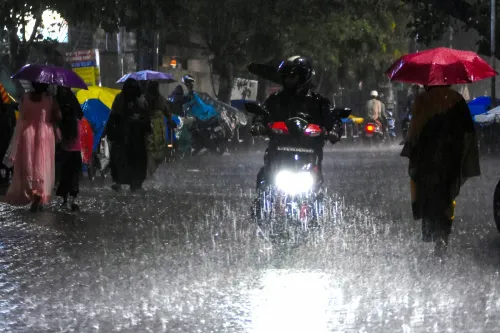
The India Meteorological Department (IMD) has projected the 2026 southwest monsoon at 92 per cent of the Long Period Average (LPA), with possible El Niño conditions raising concerns over kharif sowing — particularly for pulses and oilseeds. A 35 per cent probability of deficient rainfall adds a layer of uncertainty that analysts say could significantly affect crop output in rain-dependent regions. This is not an isolated worry; India's agricultural sector has historically seen sharp income shocks in years when the monsoon falls below 95 per cent of the LPA.
Where the Stress Points Lie
While wheat and rice production are higher year-on-year — ensuring food security and limiting inflation risks — total foodgrain output has declined 2.2 per cent year-on-year due to lower pulses and oilseeds production. Mandi prices in several regions for pulses and oilseeds are reportedly trading below the Minimum Support Price (MSP), signalling income stress and weighing on rural consumption. Mustard arrivals have also declined sharply, indicating that farmers are holding back supply in anticipation of better prices — a sign of distress rather than confidence.
In contrast, sugarcane output has risen around 10 per cent year-on-year, supporting the sugar and ethanol ecosystem, though gains are uneven and largely limited to mills with integrated ethanol capacity.
Government Support Providing a Floor
The report notes that government-backed welfare schemes are expected to partially offset sectoral stress. PM-KISAN disbursements have crossed ₹4.09 lakh crore, while agri credit growth has reached ₹28.69 lakh crore. Reservoir levels stand at 127 per cent of the 10-year average, offering a meaningful buffer for rabi and early kharif irrigation needs. Buffer stocks also remain above policy norms, giving authorities flexibility on price management.
What Analysts and Industry Are Saying
Robin Arya, smallcase manager and Founder at GoalFi, cautioned against reading this as a broad recovery.
Point of View
Not a comfort signal. The government's ₹4.09 lakh crore PM-KISAN outlay and elevated reservoir levels provide a floor, but they cannot substitute for crop income in pulse- and oilseed-growing belts where distress is most acute. The 2.2% YoY decline in total foodgrain output, masked by wheat and rice surpluses, risks being misread as a minor blip. For rural FMCG demand, tractor sales, and agrochemical volumes — the downstream indicators that matter to markets — the real signal is in the selective, uneven nature of this cycle, not the aggregate.
NationPress
18 Sept 2026
Frequently Asked Questions
What is India's monsoon forecast for the 2026 kharif season?
The India Meteorological Department (IMD) has projected the 2026 southwest monsoon at 92% of the Long Period Average (LPA), with possible El Niño conditions. There is also a 35% probability of deficient rainfall, which raises concerns particularly for pulses and oilseeds.
Why has India's total foodgrain output declined in FY27?
Total foodgrain output has declined 2.2% year-on-year due to lower production of pulses and oilseeds, even as wheat and rice output rose. The decline in these two crops has offset gains in staple cereals, according to the smallcase report.
How is the government supporting the farm sector in FY27?
The government has disbursed over ₹4.09 lakh crore under PM-KISAN and facilitated agri credit growth of ₹28.69 lakh crore. Reservoir levels are also at 127% of the 10-year average, providing irrigation support for both rabi and kharif seasons.
Which agricultural sectors face the most stress in FY27?
Pulses and oilseeds face the most pressure, with mandi prices in several regions trading below the Minimum Support Price (MSP), signalling income stress for farmers. Mustard arrivals have also declined sharply as farmers hold back supply anticipating better prices.
What does the FY27 agricultural outlook mean for investors and industry?
According to Robin Arya of GoalFi, FY27 demands precision rather than reliance on aggregate data. Agrochemicals remain monsoon-dependent, tractor sales are likely to normalise, and rural FMCG demand is expected to remain uneven, making regional and segment-level analysis critical.