Will India Embrace the US-Led Pax Silica While Preserving Its Strategic Autonomy?
Click to start listening
Synopsis
As India navigates the complex landscape of international alliances, it considers joining the US-led Pax Silica initiative to enhance its technological prowess without compromising its strategic independence. This move could reshape India's role in the global AI race and semiconductor supply chains. Will this decision solidify India's position among advanced economies?
Key Takeaways
- India is considering joining the US-led Pax Silica initiative.
- The initiative aims to strengthen supply chains for critical minerals.
- India seeks to maintain its strategic autonomy while engaging with advanced economies.
- New Delhi aims to develop resilient semiconductor supply chains.
- Sergio Gor's announcement marks India's full membership in Pax Silica.
New Delhi, Jan 21 (NationPress) Amidst the ongoing competition between China and the West for securing essential mineral supply chains crucial for advancing AI initiatives, India is poised to align with Pax Silica, a US-led initiative, while firmly maintaining its strategic autonomy, as per recent reports.
Joining Pax Silica would enable India to enhance collaborations with developed economies, draw in investments, and fortify supply-chain resilience, the report indicated. Nevertheless, India is determined to ensure that its strategic autonomy remains intact as it engages in the Pax Silica initiative.
The Pax Silica initiative unites an initial cohort of nations closely associated with semiconductor manufacturing and advanced technology supply chains, which includes Singapore, Israel, Japan, South Korea, Australia, and the United Kingdom. It aims to mitigate vulnerabilities highlighted by overly concentrated supply chains that support everything from consumer electronics and vehicles to high-tech AI systems.
For a developing nation like India, New Delhi is likely to pursue policy flexibility for subsidies, preferential procurement options, and tailored import regulations that may not be in alignment with some Pax Silica participants. India has been actively working to establish resilient semiconductor supply chains alongside other Pax Silica nations such as Japan and Singapore.
On his inaugural day in New Delhi, Sergio Gor, the newly appointed American Ambassador to India, declared India's acceptance as a full participant in Pax Silica – a US-led partnership in advanced technology supply chains.
India’s prior exclusion had been perceived as a deliberate oversight, particularly given its substantial role in the global AI competition. Gor’s announcement was welcomed in New Delhi as a symbolic rectification and a gesture of goodwill.
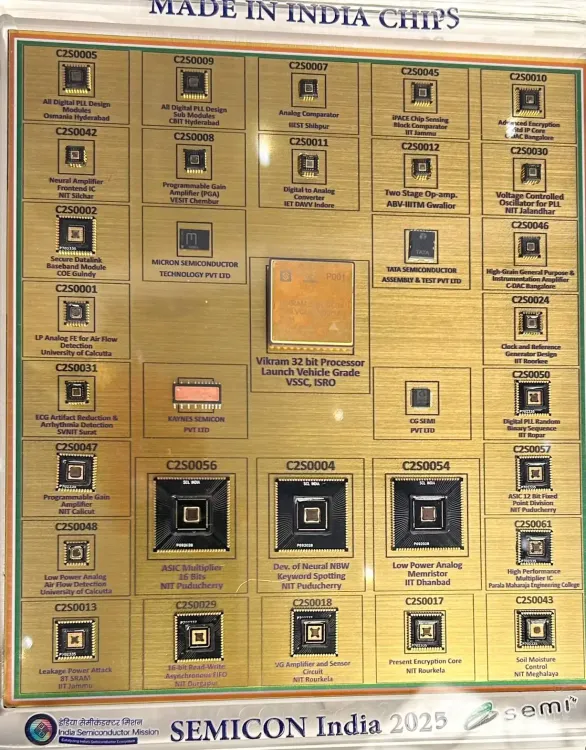
Electronics and IT Minister Ashwini Vaishnaw remarked earlier this month that ‘Bharat’ is on the verge of becoming a significant player in the complete electronics ecosystem - encompassing design, manufacturing, operating systems, applications, materials, and equipment. He also noted that four semiconductor plants are set to commence commercial production this year.
Point of View
It is crucial to recognize that India's potential alignment with Pax Silica represents a strategic maneuver to enhance its technological capabilities while safeguarding its autonomy. This delicate balance reflects India's broader aspirations to position itself as a formidable player in the global AI landscape, ensuring that its interests remain at the forefront.
NationPress
21/01/2026
Frequently Asked Questions
What is Pax Silica?
Pax Silica is a US-led initiative aimed at strengthening supply chains for crucial minerals and semiconductor manufacturing, involving countries like Japan, South Korea, and the UK.
How will India's participation in Pax Silica benefit the country?
India's involvement in Pax Silica is expected to enhance collaborations with developed nations, attract investments, and increase supply-chain resilience.
What concerns does India have regarding its participation in Pax Silica?
India is keen to ensure that its strategic autonomy is not compromised through its engagement with Pax Silica, seeking flexibility in policies such as subsidies and import regulations.
What role does India play in the global AI race?
India is a key player in the global AI race, focusing on developing advanced technologies and semiconductor supply chains to strengthen its position.
Who is the new American Ambassador to India?
Sergio Gor is the newly appointed American Ambassador to India, who recently announced India's inclusion in the Pax Silica initiative.