India-NZ FTA in 9 months: Todd McClay credits Modi's leadership
Synopsis
New Zealand's Trade Minister Todd McClay says the India-NZ FTA was sealed in a record nine months — and credits the personal chemistry between Modi and Luxon as the real accelerant. With governments stepping back, the pressure now falls on business communities on both sides to make the deal count.
Key Takeaways
New Zealand Trade Minister Todd McClay credited Prime Ministers Narendra Modi and Chris Luxon for fast-tracking the India-NZ FTA in a record nine months .
PM Luxon visited India last year with the largest-ever New Zealand trade delegation to any country.
2025 marks 70 years of sporting cooperation between India and New Zealand.
McClay plans to bring more trade missions from New Zealand to India and encouraged Indian businesses to visit New Zealand.
McClay extended a formal invitation to PM Modi to visit New Zealand, even inviting the Indian cricket team for a match.
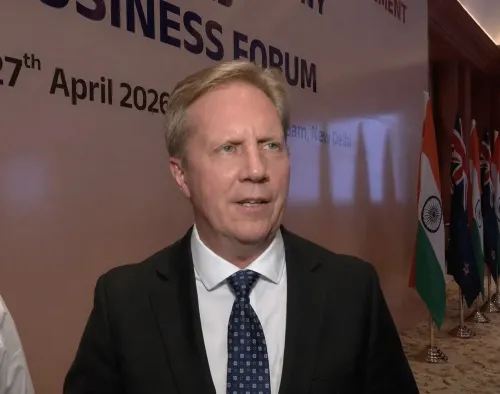
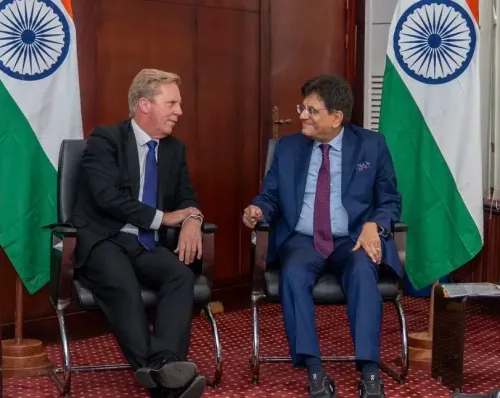
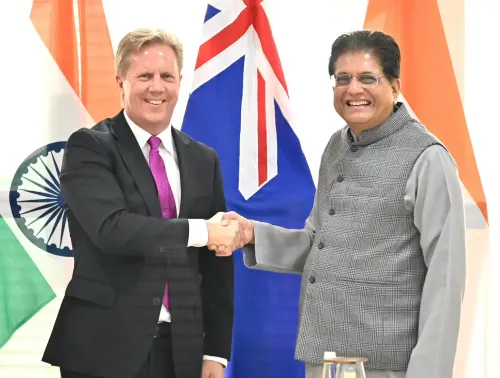
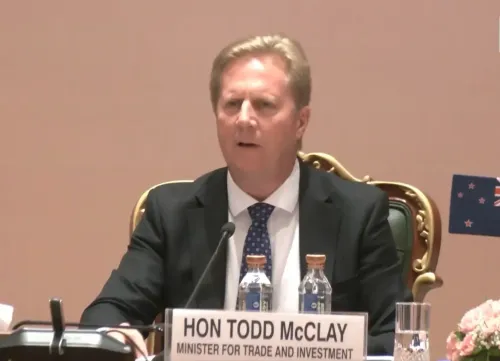
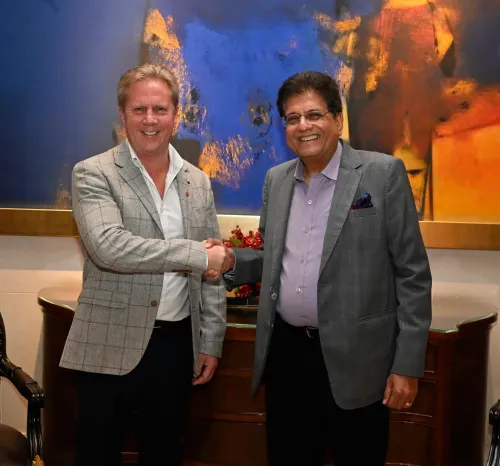
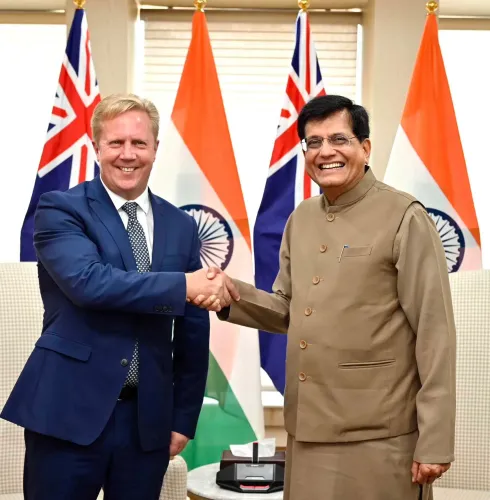
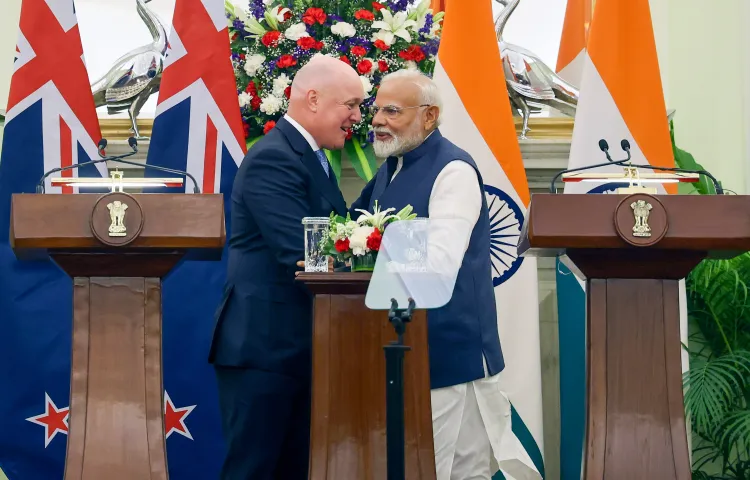
New Zealand Trade and Investment Minister Todd McClay has credited the leadership of Prime Ministers Narendra Modi and Chris Luxon as the decisive factor behind the India-New Zealand Free Trade Agreement (FTA) being concluded in a record nine months. Speaking exclusively to IANS on Monday, 27 April, McClay said there was "no question" that the personal rapport between the two leaders accelerated the deal to an unprecedented pace.
Leadership at the Core
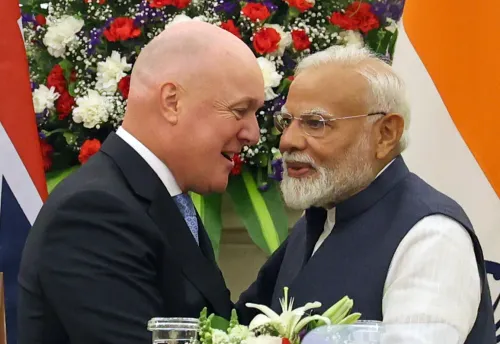
McClay described the relationship between the two prime ministers as genuinely warm, forged through multiple meetings on the global stage. "I have great respect for everything Prime Minister Modi has achieved and for his significant leadership. It was an honour to meet him and speak with him when we concluded the agreement," the minister said.
He recalled that last year, Prime Minister Luxon visited India with the largest trade delegation ever brought by a New Zealand Prime Minister to any country — a signal, McClay suggested, of how seriously Wellington views the bilateral relationship.
Now It's Business Communities' Turn
With governments having completed the bulk of the negotiation work, McClay made clear that the onus now shifts to the private sector. "The governments have done most of the negotiation work, though we will continue to support and facilitate," he said, urging business communities on both sides to actively identify and pursue opportunities.
McClay announced that he intends to bring more trade missions from New Zealand to India and encouraged Indian businesses to reciprocate by visiting New Zealand. "Trade missions can be organised on both sides. Ultimately, businesses must take this agreement and actively look for opportunities. I believe those opportunities will be significant," he observed.
A Broader Democratic Partnership
Beyond trade, McClay underlined a shared values framework between the two nations, describing India and New Zealand as "two of the world's true democracies" — India being the largest and New Zealand among the earliest. This framing positions the FTA not merely as a commercial arrangement but as a partnership between like-minded democratic states.
Cricket, Culture, and a Modi Invitation
McClay also highlighted that 2025 marks 70 years of sporting cooperation between India and New Zealand, calling it a milestone that "deserves recognition." He pointed to the recent T20 final between the two countries — which India won — as a symbol of the enduring people-to-people connection.
In a lighter moment, McClay extended a personal invitation to Prime Minister Modi: "He is very welcome. It would be a great honour to host him. To Prime Minister Modi: you are welcome in New Zealand. Bring your cricket team, we would love another match!"
As the FTA moves from negotiation to implementation, the real measure of its success will be how swiftly businesses on both sides translate the agreement into tangible trade flows and investment partnerships.
Point of View
If not decades. But McClay's framing, while diplomatically warm, also places the execution burden squarely on business communities, which is where most FTAs quietly stall. The Modi-Luxon personal rapport is a political asset, but it cannot substitute for tariff-level specifics, rules of origin clarity, and services-sector access — details that will determine whether this agreement creates real trade or remains a headline. India has a mixed record of activating FTAs; its deal with ASEAN, for instance, has long been criticised for underperformance. The India-NZ FTA will need a credible implementation roadmap, not just cricket diplomacy, to deliver on its promise.
NationPress
16 Sept 2026
Frequently Asked Questions
What is the India-New Zealand Free Trade Agreement?
The India-New Zealand Free Trade Agreement (FTA) is a bilateral trade deal concluded between the two countries in a record nine months, according to New Zealand Trade and Investment Minister Todd McClay. The agreement is aimed at expanding trade and investment ties between India and New Zealand.
Why was the India-NZ FTA concluded so quickly?
New Zealand Trade Minister Todd McClay attributed the rapid nine-month conclusion to the strong personal leadership and friendly relationship between Prime Ministers Narendra Modi and Chris Luxon. Their direct engagement and high-level political will, including Luxon's visit to India with the largest-ever New Zealand trade delegation, reportedly accelerated negotiations.
What happens next after the India-NZ FTA is signed?
With the negotiation phase largely complete, McClay has urged business communities on both sides to actively identify and pursue trade opportunities. He also announced plans to bring more New Zealand trade missions to India, and encouraged Indian businesses to visit New Zealand in return.
What is the significance of India and New Zealand's relationship beyond trade?
McClay described both nations as 'true democracies' — India as the world's largest and New Zealand among the earliest — framing the FTA as part of a broader values-based partnership. He also noted that 2025 marks 70 years of sporting cooperation between the two countries.
Has PM Modi been invited to visit New Zealand?
Yes, Todd McClay extended a formal invitation to Prime Minister Narendra Modi to visit New Zealand, calling it 'a great honour' to host him. In a lighter moment, he also invited the Indian cricket team for a match, referencing India's recent T20 final victory over New Zealand.