India OMCs Tap Crude Reserves as Hormuz Closure Hits Supplies

Synopsis
India's oil marketing companies are burning through commercial crude stocks as the Strait of Hormuz closure slashes imports to nearly half — from 6.38 mbpd to 3 mbpd — while India's crude basket skyrockets to $113.49/barrel. With only 60 days of inventory left and strategic reserves untouched, India's energy security faces its most serious test in years.
Key Takeaways
Indian OMCs are drawing on commercial crude inventories as the Strait of Hormuz closure disrupts Gulf supplies amid the US-Iran-Israel conflict .
Monthly crude imports have nearly halved to an estimated 3 mbpd , down from 6.38 mbpd a year ago.
India's crude basket surged to $113.49 per barrel in March 2025 , up from $69.01 in February , marking a sharp price escalation.
India's import bill fell 36% year-on-year to $12.18 billion in March , driven by lower volumes, not lower prices.
Diesel consumption hit a record 2.14 mbpd and petrol demand reached a 10-month high of 1.08 mbpd in March, per PPAC data.
India's current inventories cover approximately 60 days of consumption ; strategic reserves of nine days remain untouched by the government.
New Delhi, April 23, 2025: Indian oil marketing companies (OMCs) have started drawing down their commercial crude inventories as supply chains face severe stress following the closure of the Strait of Hormuz, triggered by escalating geopolitical tensions in West Asia. The disruption, rooted in the ongoing US-Iran-Israel conflict, has sharply curtailed Gulf crude supplies to India while simultaneously inflating freight costs, insurance premiums, and transit timelines.
Hormuz Closure Squeezes India's Crude Supply Chain
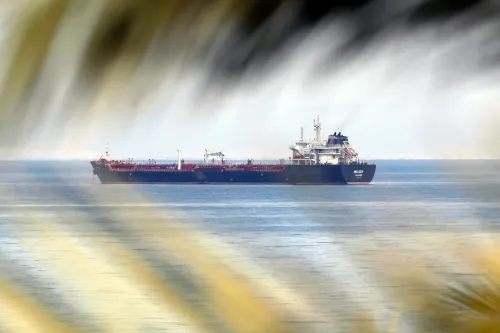
The Strait of Hormuz — which facilitates nearly one-fifth of global oil trade — has remained shut despite a temporary ceasefire between the US and Iran announced earlier this month and subsequently extended. Iran's Islamic Revolutionary Guard Corps (IRGC) halted tanker movement in response to US naval measures, disrupting an estimated 600 million barrels of oil supplies to global markets, according to industry estimates.
With Gulf supplies constrained, OMCs have turned to non-Gulf sources. However, procuring crude from alternative origins has also proven costly, as global buyers compete aggressively for limited available supplies, further straining India's import economics.
Crude Imports Plunge, Prices Surge to Record Highs
India's crude and petroleum product import bill fell 36 per cent year-on-year to $12.18 billion in March 2025, compared to $19 billion in the same period last year. However, this decline was driven by a steep drop in import volumes, not softer prices.
Monthly crude imports are estimated to have fallen to as low as 3 million barrels per day (mbpd), nearly halving from 6.38 mbpd recorded a year ago. This contraction comes at a particularly difficult time — when imports typically rise to meet elevated summer demand and the kharif agricultural season.
Meanwhile, India's crude basket averaged $113.49 per barrel in March, a dramatic jump from $69.01 in February and $72.47 in March last year. Brent crude averaged $103.89 per barrel during the same month, reflecting the global supply shock.
Domestic Fuel Demand Hits Record Levels
Despite supply-side pressure, domestic consumption of petroleum products remains robust. Petrol demand reached a 10-month high of 1.08 mbpd in March, while diesel consumption scaled a record 2.14 mbpd, according to data from the Petroleum Planning and Analysis Cell (PPAC).
The surge in domestic demand, combined with elevated crude prices, has severely limited the ability of OMCs to fully pass on rising input costs to end consumers, squeezing refining and marketing margins.
Strategic Reserves Untouched, Inventories Cover 60 Days
India's total crude and petroleum storage capacity is estimated to cover approximately 74 days of consumption, which includes strategic reserves of about nine days and commercial stocks held by OMCs. As of late March, available inventories were sufficient for roughly 60 days.
While refineries continue to operate at high utilisation levels, the Indian government has not yet activated its strategic petroleum reserves, leaving OMCs to rely primarily on their own commercial stocks to bridge the supply gap.
What Lies Ahead for India's Energy Security
The situation remains fluid. If the Strait of Hormuz remains closed beyond the extended ceasefire period, India's commercial inventories — currently providing a 60-day buffer — could deplete rapidly, potentially forcing the government to release strategic reserves for the first time in a major supply crisis. Policymakers, energy analysts, and industry stakeholders will be closely watching diplomatic developments between Washington and Tehran in the coming weeks for any resolution that could reopen one of the world's most critical oil chokepoints.
Point of View
The government's reluctance to tap strategic reserves suggests confidence in a diplomatic resolution; however, policymakers must urgently accelerate supply diversification and fast-track domestic refinery resilience to reduce exposure to West Asian geopolitical shocks.
NationPress
24 Sept 2026
Frequently Asked Questions
Why are Indian OMCs using their crude inventories?
Indian oil marketing companies are drawing down commercial crude inventories because the closure of the Strait of Hormuz has severely restricted Gulf crude supplies to India. The disruption has also raised freight costs and insurance premiums, making alternative sourcing expensive.
How long can India sustain oil supply without Hormuz?
As of late March 2025, India's available crude and petroleum inventories were sufficient for approximately 60 days of consumption. India's total storage capacity covers around 74 days, including nine days of strategic reserves that have not yet been activated.
How much has India's crude import bill changed in March 2025?
India's crude and petroleum product import bill fell 36 per cent year-on-year to $12.18 billion in March 2025, down from $19 billion in March 2024. The decline was due to a sharp drop in import volumes, not lower prices.
What is the current crude oil price for India?
India's crude basket averaged $113.49 per barrel in March 2025, sharply up from $69.01 in February 2025 and $72.47 in March 2024. Brent crude averaged $103.89 per barrel during the same period.
Has India released strategic petroleum reserves due to the Hormuz crisis?
No, the Indian government has not yet released its strategic petroleum reserves despite the Hormuz closure. Refineries continue to operate at high utilisation levels, with OMCs relying on their own commercial stocks to manage the supply shortfall.