Wheat MSP Procurement Jumps 15% to 34.5MT After Unseasonal Rain Damage
Synopsis
India has raised its wheat MSP procurement target by 15% to 34.5 million tonnes after unseasonal rains damaged crops across key growing states. Quality norms have been relaxed in Punjab, Haryana, MP and Rajasthan. Total wheat availability could touch 56.5 million tonnes — a critical buffer as production estimates fall sharply below earlier forecasts.
Key Takeaways
India's wheat MSP procurement target has been raised by 15% to 34.5 million tonnes for the 2025 rabi marketing season , up from 30 million tonnes .
Uttar Pradesh 's procurement quota jumped from 1 million tonnes to 2.5 million tonnes ; Madhya Pradesh 's rose from 7.8 to 10 million tonnes .
Wheat quality procurement norms have been relaxed in Punjab, Haryana, MP, and Rajasthan to allow purchase of weather-damaged grain at MSP.
Total wheat availability for 2026-27 is expected to approach 56.5 million tonnes , combining new procurement with 22 million tonnes in opening stocks.
Wheat production for 2025-26 is now estimated at 110–120 million tonnes , significantly below the official pre-damage forecast of 120.21 million tonnes .
The Agriwatch Annual Wheat Survey projects output at 110.65 million tonnes — only marginally above the 109.63 million tonnes produced in 2024-25 .
The Union Government has significantly increased its wheat procurement target under the Minimum Support Price (MSP) framework by 15 per cent to 34.5 million tonnes for the current rabi marketing season, up from the originally planned 30 million tonnes, in a direct response to widespread crop damage caused by unseasonal rains and hailstorms across major wheat-growing states. Food Secretary Sanjeev Chopra announced this decision on Friday, April 25, 2025, at an event in New Delhi to release the annual wheat survey of the Roller Flour Millers' Federation of India (RFMFI).
State-Wise Revised Procurement Targets
The revised procurement numbers reflect a sharp upward revision across multiple states. Madhya Pradesh now has a procurement target of 10 million tonnes, up from the earlier estimate of 7.8 million tonnes. Uttar Pradesh sees the most dramatic jump — from 1 million tonnes to 2.5 million tonnes.
Rajasthan's target has been raised from 2 million tonnes to 2.35 million tonnes, while Uttarakhand's allocation has quintupled from 1,000 tonnes to 5,000 tonnes. Notably, Delhi will also see wheat procurement this season — a new addition to the procurement map.
The states of Punjab and Haryana, which traditionally dominate MSP procurement, continue to anchor the national effort, with quality norms eased across all major growing states to ensure farmers are not left without a buyer despite damaged produce.
Quality Norms Relaxed to Protect Farmers
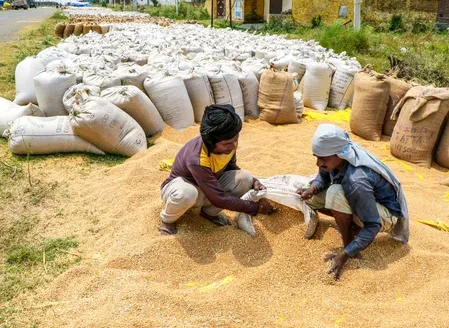
Food Secretary Chopra confirmed that wheat procurement quality norms have been eased in nearly all major growing states — including Punjab, Haryana, Madhya Pradesh, and Rajasthan — to enable higher purchases from distressed farmers. Unseasonal rains and hailstorms in March and April 2025 caused shrivelling, discolouration, and moisture damage to harvested and standing crops alike.
This relaxation is critical: under normal quality benchmarks, damaged grain would be rejected at procurement centres, leaving farmers with no institutional buyer and forcing distress sales to private traders at below-MSP prices. By easing these norms, the government is effectively acting as a buyer of last resort — a move that directly protects farm incomes during an acute weather shock.
Impact on National Wheat Stocks and Food Security
The expanded procurement is expected to substantially bolster India's central wheat buffer stocks. According to Chopra, the increased purchases will be added to opening wheat stocks of approximately 22 million tonnes for the 2026-27 crop year, taking the total estimated availability close to 56.5 million tonnes. This buffer is critical for price stability, public distribution system (PDS) obligations, and export policy decisions.
This comes amid growing concerns about domestic wheat supply. The agriculture ministry had earlier projected 2025-26 wheat production at 120.21 million tonnes, a record that would have surpassed the previous year's output of 117.94 million tonnes. However, Chopra now estimates production will fall in the 110–120 million tonne range — a potential shortfall of up to 10 million tonnes from the official forecast.
Agriwatch Survey Flags Lower Output
The Agriwatch Annual Wheat Survey for 2025-26, released at the same event, projects all-India wheat production at 110.65 million tonnes — only marginally above the 109.63 million tonnes produced in 2024-25, after accounting for recent weather damage. This figure is significantly below the government's pre-damage estimate, suggesting that the optimistic official projections have been overtaken by ground realities.
Notably, India has been grappling with wheat supply pressures since 2022, when a sudden heat wave slashed output and prompted a surprise export ban. The government has since been cautious about wheat exports and has intervened repeatedly — including through import duty reductions and open market sales — to keep domestic prices in check. The current weather shock reignites those supply-side vulnerabilities.
What This Means for Farmers, Consumers, and Policy
For farmers, the expanded MSP procurement and relaxed quality norms offer a financial lifeline at a time when crop losses could have wiped out an entire season's income. The MSP for wheat in 2024-25 stands at ₹2,275 per quintal, providing a guaranteed floor price that shields growers from market volatility.
For consumers and the food economy, the larger buffer stock should help the government contain retail wheat and flour (atta) prices, which have been elevated over the past two years. A well-stocked central pool also gives policymakers flexibility to release grain into the open market if prices spike — a tool the government has used effectively in the past.
Critics, however, argue that reactive procurement drives — while necessary — do not address the structural vulnerability of Indian wheat farming to climate shocks. With extreme weather events becoming more frequent, analysts suggest that investment in weather-resilient crop varieties, better crop insurance implementation, and real-time weather-linked procurement triggers are needed for a long-term solution.
With procurement operations underway across major mandis, all eyes will be on whether the 34.5 million tonne target is actually met by the close of the rabi marketing season — a figure that will shape India's food security arithmetic for the next crop year.
Point of View
Yet crop insurance penetration remains thin and climate-resilient variety adoption is slow. Each reactive procurement surge adds to fiscal pressure and masks the urgency of systemic reform. The real question isn't whether the government will buy enough wheat this season — it's whether India's agricultural policy can stop lurching from crisis to crisis every time the weather turns.
NationPress
16 Sept 2026
Frequently Asked Questions
Why has India increased its wheat MSP procurement target in 2025?
India raised its wheat MSP procurement target by 15% to 34.5 million tonnes because unseasonal rains and hailstorms in March-April 2025 damaged crops across major wheat-growing states. The higher procurement ensures farmers can sell their produce at the guaranteed MSP price even if grain quality has been affected by weather.
Which states have seen the biggest increase in wheat procurement targets?
Uttar Pradesh saw the sharpest jump — from 1 million tonnes to 2.5 million tonnes. Madhya Pradesh's target rose from 7.8 to 10 million tonnes, while Uttarakhand's quota quintupled from 1,000 to 5,000 tonnes. Delhi will also see wheat procurement for the first time this season.
How will the higher wheat procurement affect India's food security?
The expanded procurement is expected to push total wheat availability close to 56.5 million tonnes, combining new purchases with opening stocks of around 22 million tonnes for 2026-27. This larger buffer will help the government stabilise retail prices and meet public distribution system obligations.
What is India's wheat production estimate for 2025-26?
Wheat production for 2025-26 is now estimated in the 110–120 million tonne range, down from the agriculture ministry's earlier forecast of 120.21 million tonnes. The Agriwatch Annual Wheat Survey projects output at 110.65 million tonnes after accounting for weather damage.
Why have wheat quality norms been relaxed during procurement this season?
Quality norms were eased in Punjab, Haryana, Madhya Pradesh, and Rajasthan because unseasonal rains caused shrivelling, discolouration, and moisture damage to harvested wheat. Without relaxed standards, farmers with weather-damaged grain would have been forced into distress sales to private traders at below-MSP prices.