How is India Strengthening Global Clean Energy Leadership at WEF 2026?
Click to start listening
Synopsis
India's commitment to clean energy shines at WEF 2026, with Minister Pralhad Joshi highlighting the nation's strategic partnerships and innovative policies. This pivotal moment reinforces India's role as a global leader in renewable energy, showcasing its potential to drive economic growth while prioritizing sustainability. Explore how India is poised to lead in the global energy transition.
Key Takeaways
- India's commitment to clean energy is reinforced through stable policies.
- Global cooperation plays a crucial role in India's energy transition.
- Flagship initiatives like PM-Surya Ghar demonstrate India's implementation capacity.
- AI enhances efficiency and reliability in the energy sector.
- India is emerging as a significant hub for clean energy manufacturing.
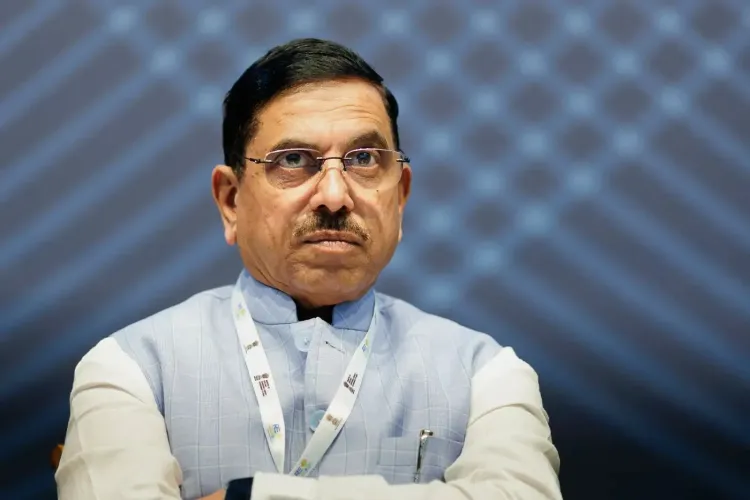
New Delhi, Jan 25 (NationPress) India has reaffirmed its dedication to hastening the clean energy transition through consistent policies, international collaboration, and long-term investments, establishing itself as a crucial player in the global energy shift, according to Union Minister for New and Renewable Energy Pralhad Joshi, following his return from the World Economic Forum (WEF) Annual Meeting 2026 in Davos.
Joshi remarked that his participation at WEF 2026 rekindled global trust in India's renewable energy endeavors and fortified strategic alliances with governments, investors, and industry leaders worldwide.
“The discussions emphasized India’s commitment to expedite clean energy growth underpinned by reliable regulations, policy consistency, and ongoing international cooperation,” Joshi stated.
During his time in Davos, the minister showcased India’s long-term narrative on clean energy investments, emphasizing robust coordination between the central and state governments, transparent policy frameworks, and ongoing engagement with stakeholders.
“Global leaders and investors conveyed confidence in India's capacity to swiftly amplify renewable energy while fostering economic development and social inclusion,” he added.
Throughout various sessions and media engagements, Joshi underscored India’s advancements in renewable energy via community-centric initiatives and effective execution.
He noted that international stakeholders expressed significant interest in India's project pipeline and commended flagship programs like PM-Surya Ghar and PM-KUSUM, which have showcased India's capability to efficiently implement large-scale clean energy initiatives.
India’s initiative to bolster domestic manufacturing across the solar PV value chain was met with positive reception, reinforcing its status as a dependable and competitive clean energy manufacturing hub.
Furthermore, the minister highlighted India's burgeoning export potential in green hydrogen derivatives, regarded as a key element in aiding energy transitions for partner nations.
Addressing a gathering of global leaders, Joshi elaborated on the increasing significance of artificial intelligence in the energy sector.
He stated that AI technology can enhance forecasting accuracy, minimize power losses, reduce costs, and improve grid reliability.
Additionally, he emphasized India's transition from pilot projects to platform-based solutions through Digital Public Infrastructure for Energy, facilitating large-scale adoption of advanced technologies.
Point of View
I observe that India's proactive stance at the WEF 2026 demonstrates a significant commitment to addressing global energy challenges. The emphasis on collaboration and innovation reflects a strategic approach that can serve as a model for other nations. While the path forward is filled with challenges, India's initiatives signal a promising future for sustainable energy.
NationPress
25/01/2026
Frequently Asked Questions
What is India's role in the global clean energy transition?
India is positioning itself as a key player in the global clean energy transition by implementing stable policies, fostering international cooperation, and making long-term investments.
What initiatives are being highlighted by Pralhad Joshi?
Minister Pralhad Joshi highlighted initiatives such as PM-Surya Ghar and PM-KUSUM, showcasing India's ability to efficiently execute large-scale clean energy programs.
How is India leveraging artificial intelligence in energy?
India is integrating artificial intelligence to improve forecasting, reduce power losses, cut costs, and enhance grid reliability in the energy sector.