India a contrarian EM bet as semiconductor rally narrows MSCI index

Synopsis
The MSCI Emerging Markets Index has recovered to 2021 highs — but 72% of those gains came from just three semiconductor firms. DSP Netra's latest report identifies India as the standout contrarian bet: below its own long-term valuation average while Taiwan and South Korea trade at premiums of 85% and 71% respectively. A sentiment shift away from AI stocks could redirect significant capital flows toward India.
Key Takeaways
India is trading at a 2.39% discount to its long-term average valuation, making it a contrarian opportunity in emerging markets, per DSP Netra .
The MSCI Emerging Markets Index recovered to 2021 levels, but 72% of gains came from just TSMC , Samsung Electronics , and SK Hynix .
Technology's weight in the index jumped from 28.3% in December 2025 to 44.2% by May 2026 .
Taiwan and South Korea are trading at premiums of 85% and 71% respectively above their long-term averages.
A broadening of investor participation beyond technology stocks could trigger renewed capital inflows into India , according to the report.
India has emerged as one of the most attractive contrarian investment opportunities in the emerging market (EM) universe, even as the broader MSCI Emerging Markets Index recovers to levels last seen in 2021 — a rally driven overwhelmingly by a handful of semiconductor stocks, according to a report by DSP Netra.
A Concentrated Rally, Not a Broad Recovery
The DSP Netra report notes that the MSCI Emerging Markets Index has clawed back to 2021 highs, but the recovery is far from broad-based. Technology's weight within the index surged from 28.3 per cent in December 2025 to 44.2 per cent by May 2026, crowding out communication services, consumer cyclicals, and healthcare in the process.
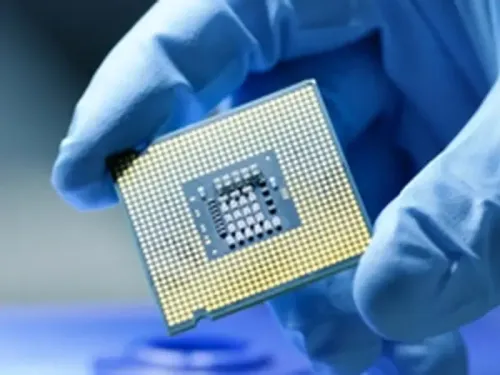
The numbers are striking: technology alone contributed 25.6 percentage points to the benchmark's 25.3 per cent year-to-date return. Nearly 72 per cent of the index's total gains came from just three semiconductor companies — Taiwan Semiconductor Manufacturing Co. (TSMC), Samsung Electronics, and SK Hynix — which together account for roughly 30 per cent of the benchmark.
Taiwan and South Korea at Steep Premiums
Among the four markets with index weights exceeding 5 per cent, Taiwan and South Korea stand out for their sharp outperformance — and their steep valuations. Taiwan is trading at a premium of approximately 85 per cent above its long-term average, while South Korea commands a premium of around 71 per cent, both well above the MSCI Emerging Markets Index's overall premium of 24.71 per cent.
The report attributes this outperformance directly to the global artificial intelligence (AI)-driven semiconductor boom, rather than any broad improvement in emerging market fundamentals. This distinction matters: the rally reflects a sectoral re-rating, not a structural shift in EM growth prospects.
India: Discount Valuation, Stronger Macro
Against this backdrop, India stands apart. According to the DSP Netra report, India is currently available at a discount of 2.39 per cent to its own long-term average valuation — a rare positioning for a market that has historically commanded a premium among EM peers.
Notably, despite recent underperformance relative to Taiwan and South Korea, India continues to hold relatively stronger macroeconomic fundamentals. The report describes this combination — below-average valuations alongside resilient macro — as the hallmark of a contrarian opportunity.
What Could Trigger a Re-Rating
The DSP Netra report warns that the index's heavy concentration in semiconductor stocks increases its vulnerability to any reversal in investor sentiment toward AI and chip-related equities. Should that sentiment shift — or should investor participation broaden beyond technology — India could be a primary beneficiary of redirected capital flows.
This comes amid a wider debate among global fund managers about the sustainability of the AI-driven valuation premium in EM indices. A rotation away from concentrated tech bets toward diversified, fundamentally anchored markets would put India firmly in the frame for renewed inflows.
Point of View
That is concentration risk dressed up as a bull market. India's below-average valuation is partly a function of being left out of the AI trade, but that same exclusion is now its hedge. The more interesting question is whether Indian equity managers will use this window to attract long-only EM mandates that are increasingly uncomfortable with their de facto semiconductor overweight. History suggests such rotations are slow — until they are sudden.
NationPress
5 Oct 2026
Frequently Asked Questions
Why is India considered a contrarian bet in emerging markets?
India is trading at a 2.39% discount to its own long-term average valuation at a time when the broader MSCI Emerging Markets Index rally is heavily concentrated in semiconductor stocks. With stronger macroeconomic fundamentals and relatively attractive valuations, India stands out as an underowned opportunity if investor sentiment shifts away from AI-driven tech stocks.
What is driving the MSCI Emerging Markets Index rally in 2026?
The rally is driven almost entirely by AI-related semiconductor stocks. Technology's weight in the index rose from 28.3% in December 2025 to 44.2% by May 2026, with TSMC, Samsung Electronics, and SK Hynix alone contributing nearly 72% of the index's year-to-date gains.
How overvalued are Taiwan and South Korea in the MSCI EM Index?
Taiwan is trading at a premium of approximately 85% above its long-term average valuation, and South Korea at around 71%, both significantly above the MSCI Emerging Markets Index's overall premium of 24.71%. The DSP Netra report attributes this to the global AI-driven semiconductor boom rather than broad EM growth.
What risk does the semiconductor concentration pose to the MSCI EM Index?
According to DSP Netra, the heavy concentration in semiconductor stocks makes the MSCI Emerging Markets Index highly vulnerable to any reversal in investor sentiment toward AI and chip equities. A correction in these stocks could disproportionately drag down the entire index.
What could trigger fresh capital inflows into India?
The DSP Netra report suggests that if investor participation broadens beyond technology stocks — or if sentiment toward AI and semiconductor equities reverses — India could attract renewed capital inflows, given its below-average valuations and relatively resilient macroeconomic fundamentals.